What is the pet insurance claim form template?
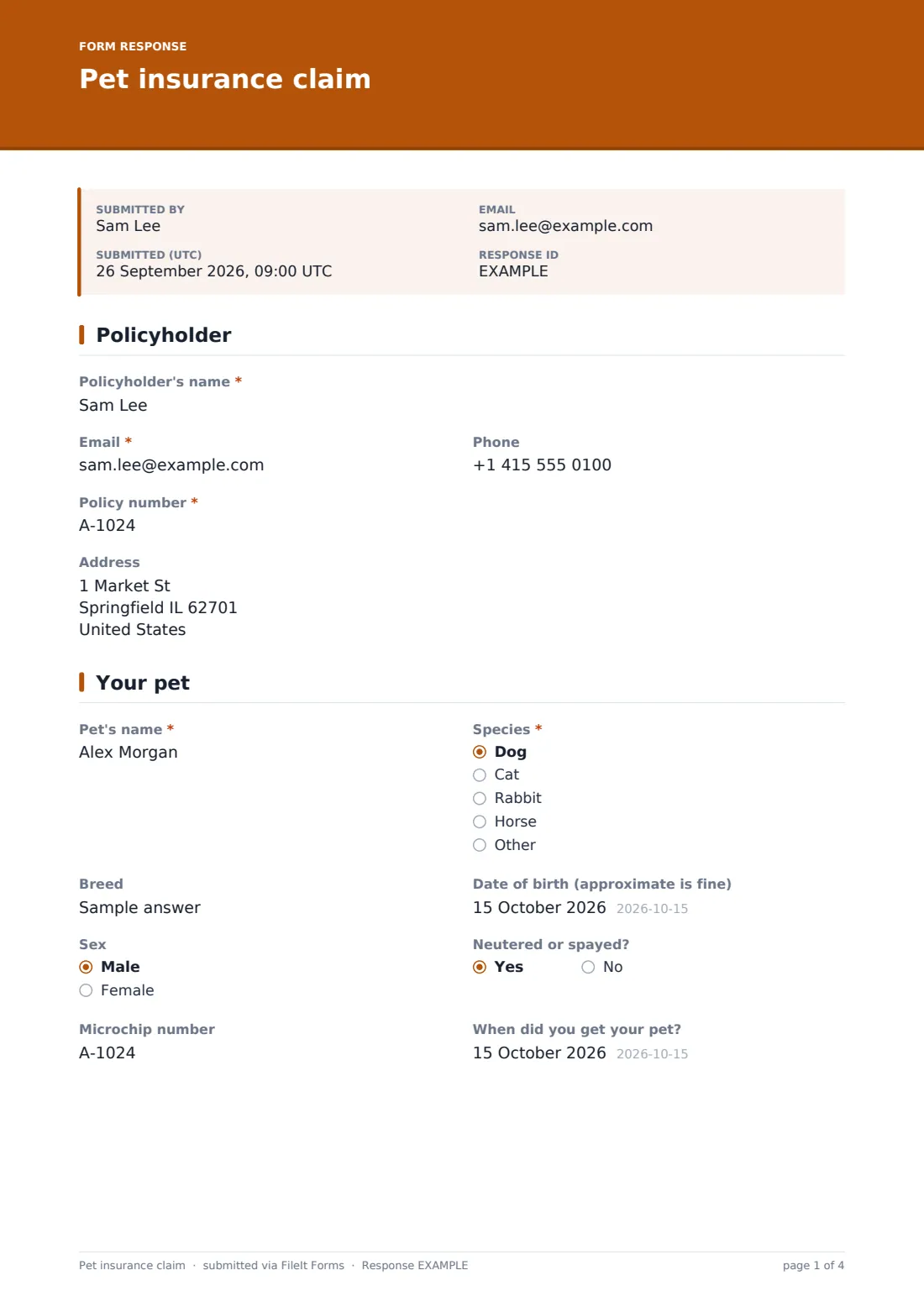
Pet insurance claims often bounce back for something small: a missing invoice, no date of first signs, or no way to tell whether the condition was claimed for before. This template collects every detail in one go, in a form a policyholder can fill in on their phone while sitting in the vet's waiting room.
It covers the policyholder, the pet (species, breed, age, microchip), the type of claim and the condition, the dates symptoms began and the vet was first seen, any previous claim for the same condition, and the vet practice. Accident claims ask what happened and whether another person or animal was involved. Theft claims ask whether it's been reported. The policyholder uploads itemised invoices and chooses whether to pay the vet directly or to reimburse them.
Each claim is filed as a PDF in your FileIt vault with all invoices and records attached.
- Best for
- Pet insurers, brokers, and vet practices that help clients claim
- Filled in by
- The policyholder, with help from their vet for the costs page
- Time to complete
- About 10 minutes
- Includes
- Accident, theft and payee follow-ups, invoice and record uploads, and a signed declaration
Who uses a pet insurance claim form?
- An insurer or broker replacing a paper or PDF claim form
- A vet practice sending clients a claim link with each large invoice
- Claims for ongoing treatment of the same condition
- Accident claims where another animal was involved
- Claims where the vet should be paid directly
Questions on this pet insurance claim form
40 questions over 5 pages · includes signature, file upload, conditional questions, multiple pages, consent checkbox.
1 Policyholder
- Policyholder's name*
- Email*
- Phone
- Policy number*
- Address
2 Your pet
- Pet's name*
- Species* Dog · Cat · Rabbit · Horse · Other
- Breed
- Date of birth (approximate is fine)
- Sex Male · Female
- Neutered or spayed?
- Microchip number
- When did you get your pet?
3 The claim
- What is the claim for?* Illness · Accident or injury · Dental treatment · Death from illness or injury · Theft or straying · Other
- Condition, illness or injury*
- When did you first notice signs?*
- Date of first vet visit for this*
- What happened?* asked only when it applies
- Was another person or animal involved? asked only when it applies
- Their name and contact details, if known asked only when it applies
- Has it been reported to the police and local animal warden or shelters?* asked only when it applies
- Have you claimed for this condition before?*
- Previous claim reference asked only when it applies
- Is treatment still ongoing?*
4 Vet & costs
- Vet practice name*
- Treating vet
- Practice phone
- Practice email
- Treatment from*
- Treatment to*
- Total amount claimed*
- Vet invoices*
- Clinical history or other documents
- Who should be paid?* Pay the vet directly · Pay me — I've already paid the vet
- Account holder name* asked only when it applies
- Account number or IBAN* asked only when it applies
- Sort code, routing number or SWIFT asked only when it applies
5 Declaration
- Declaration*
- Policyholder's signature*
- Date*
The pet insurance claim form, page by page
1 Policyholder
The policyholder gives their name, email, phone, policy number and address.
2 Your pet
Pet's name and Species are required. Breed, date of birth (approximate is fine), sex, whether neutered or spayed, microchip number and when they got the pet follow, mostly as half-width pairs so the page stays short.
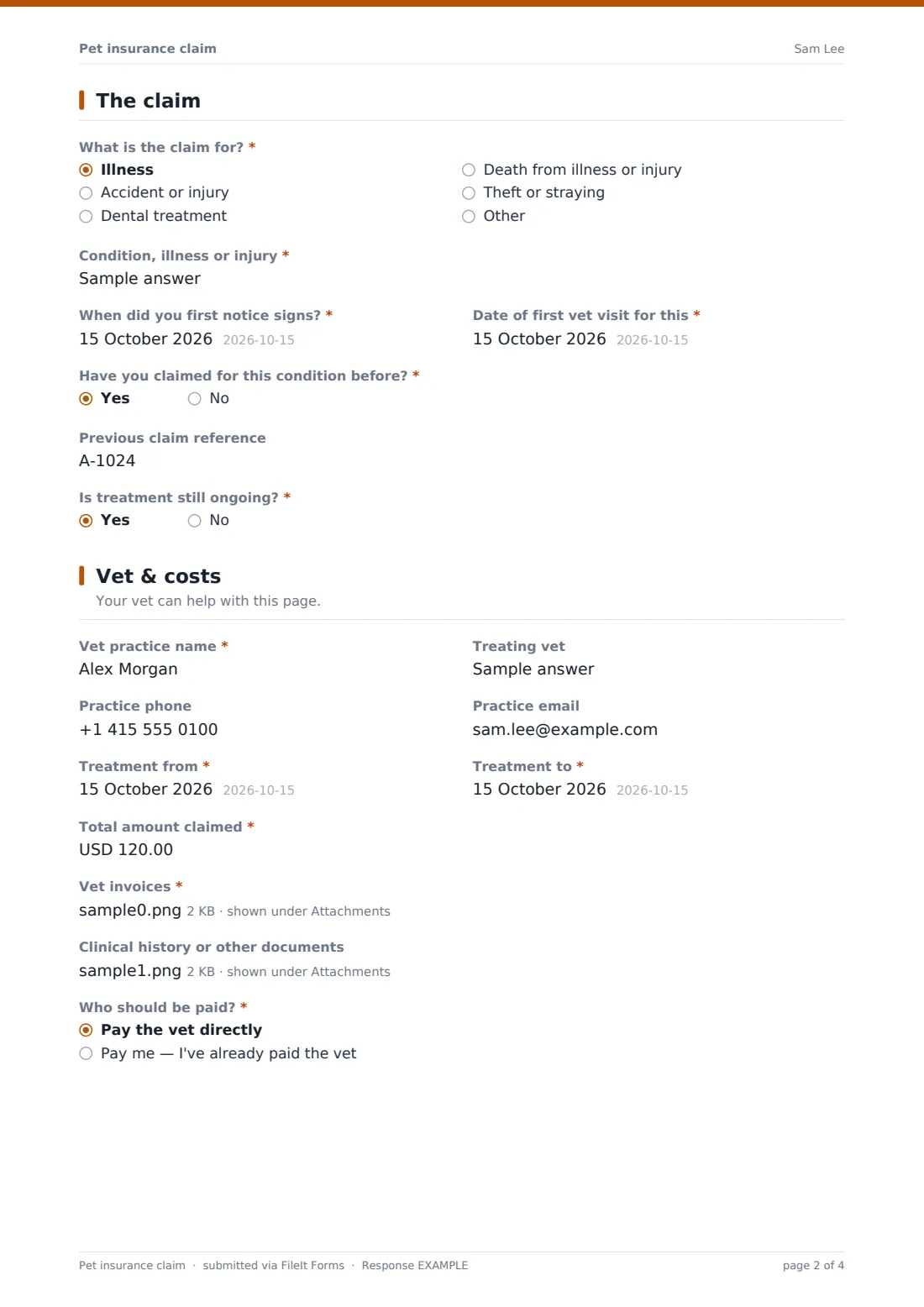
3 The claim
What is the claim for? offers illness, accident or injury, dental treatment, death, theft or straying, and other. The policyholder names the condition as written on the vet's invoice, then gives the dates of first signs and of the first vet visit. An accident asks what happened and whether another person or animal was involved, and if so their details. Theft or straying asks whether it has been reported. Every claim asks Have you claimed for this condition before?, with a reference if yes, and whether treatment is still ongoing.
4 Vet & costs
The vet practice name is required, with the treating vet, practice phone and email optional. Treatment from and to dates and the Total amount claimed follow. Itemised vet invoices are required (up to six files), and clinical history can be added too.
Who should be paid? offers paying the vet directly or paying the policyholder if they've already paid. Paying the policyholder asks for the account holder name, account number or IBAN, and sort code, routing number or SWIFT.
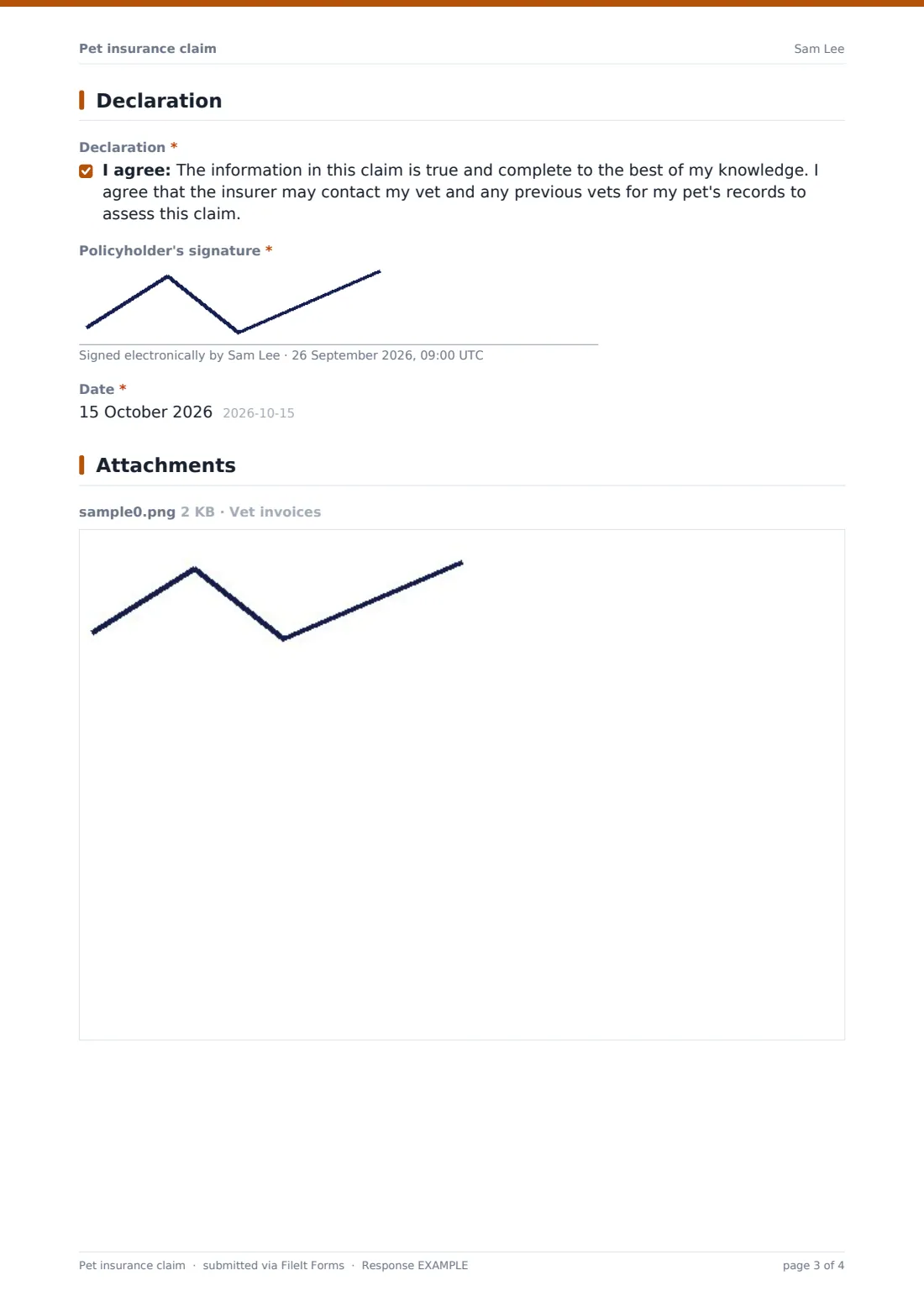
5 Declaration
The policyholder confirms the claim is true and complete and agrees that the insurer may contact the vet and any previous vets for records, then signs and dates it.
Make the template yours
- Set the currency and add your own claim types, such as boarding fees
- Add a question for the vet to sign, if your process needs it
- File claims into folders per claim type or per month
- Rewrite the declaration to match your policy wording
- Add claims handlers to the notification emails
Tips for a better pet insurance claim form
- Ask policyholders to request itemised invoices from the vet
- Remind policyholders to have their policy number and invoices to hand
- Ask about previous claims every time, as the form does
- Acknowledge each claim quickly and say what happens next
- Limit access to the folder, since claims include bank details
Every response becomes a PDF in your vault
Every claim is filed as a PDF in your chosen vault folder, titled with the policyholder's name and date, with invoices and clinical records attached to the document. You get an email for each new claim, and the policyholder can be sent a copy.
Work through claims from the Responses table, searching by name, pet or policy number, and export to CSV for a list of claim types, amounts and dates.
- Start from this template. It opens in the FileIt Forms designer — change any question, add pages, set the rules for when questions appear.
- Share it. Turn on a public link, or send it to people by email, each with their own link. They don’t need a FileIt account.
- Get the answers as PDFs. Each response is saved as a PDF in the vault folder you choose, with uploaded files attached — and listed in a Responses table you can export to CSV.
Pet insurance claim form: frequently asked questions
Is this pet insurance claim form free?
Yes. It's a starter template in FileIt's Forms app, and you can edit every question.
Does the form decide whether a claim is covered?
No. It collects the claim and documents. Cover decisions depend on the policy and are made by the insurer.
Can policyholders upload vet invoices from their phone?
Yes. They can photograph invoices or upload PDFs, up to six invoices and four other documents.
Can the vet be paid directly?
The form asks who should be paid. Whether direct payment is offered depends on your process.
Does it work for horses or exotic pets?
Yes. Species includes horse and other, and you can add more options.
Do policyholders need a FileIt account?
No. Share the public link or email them a request, and they fill it in without signing up.