What is a informed refusal of treatment?
Adults with capacity have the right to decline a test, procedure, medication or treatment, even when a clinician recommends it. When that happens, good practice is to explain the risks of declining, offer alternatives, and write down the discussion. A signed record protects the patient's choice and shows the conversation took place.
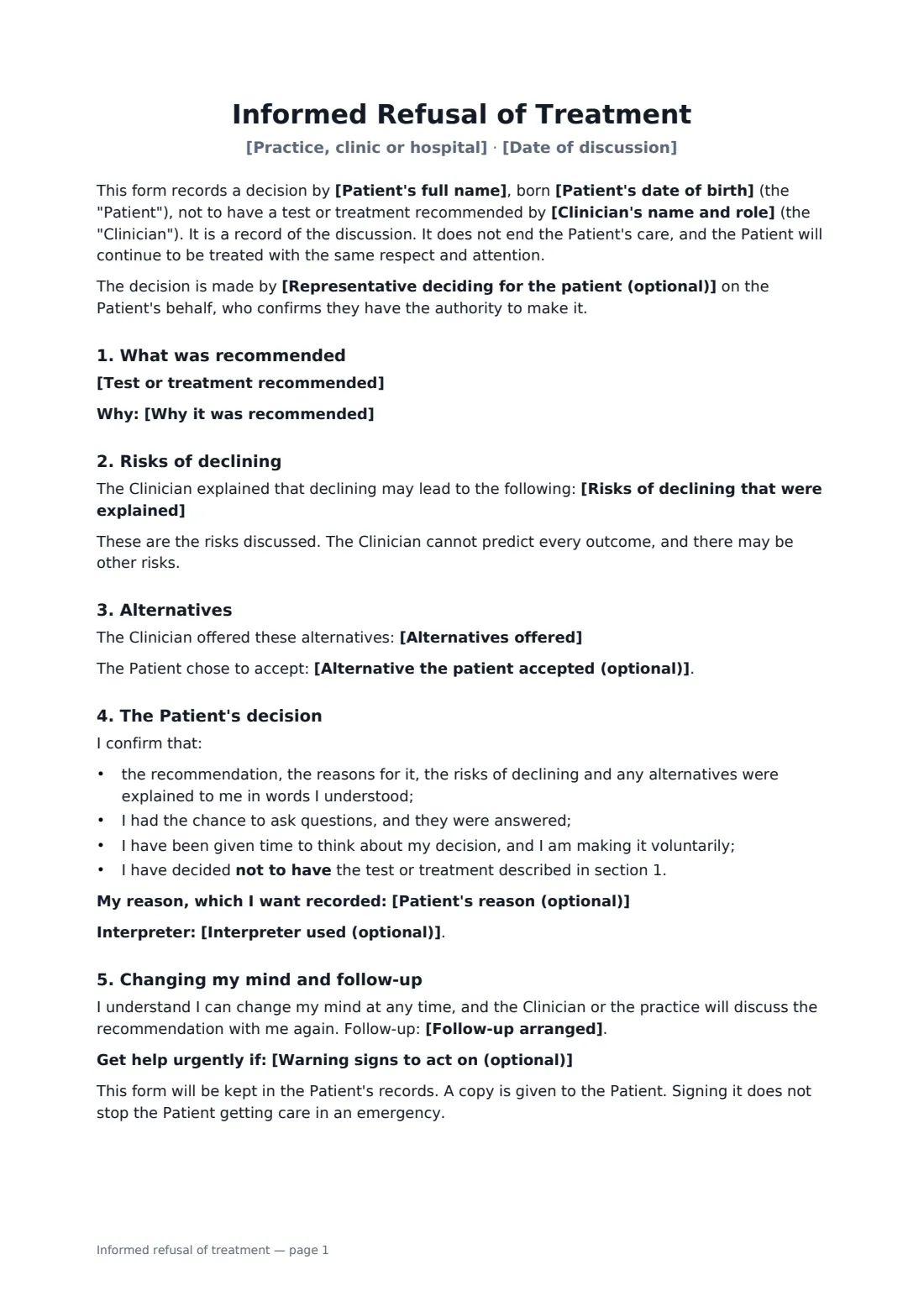
This form records what was recommended and why, the specific risks of declining that you explained, and any alternatives you offered and the patient accepted. The patient confirms it was explained in words they understood, that they could ask questions and had time to think, and that the decision is voluntary. They may record their reason if they want to. You can note an interpreter, a representative deciding for the patient, the follow-up arranged and warning signs to act on. The form makes clear the patient's care continues, they can change their mind, and it doesn't stop emergency care.
- Best for
- GPs, hospital clinicians, dentists, nurses, physiotherapists and other health professionals
- Signed by
- The patient (or representative) and the clinician
- Records
- Recommendation, reason, risks of declining, alternatives, follow-up, warning signs
- Length
- About 2 pages
When to use a informed refusal of treatment
- A patient declining a referral for a scan or colonoscopy
- A parent declining a recommended test for their child
- A dental patient declining X-rays or a recommended extraction
- A patient declining hospital admission or a medication
- Declining a screening test after it was discussed
What you fill in
15 blanks, then the name and email of each person who signs: patient, clinician.
1 The recommendation
- Practice, clinic or hospital*
- Clinician's name and role*
- Patient's full name*
- Patient's date of birth*
- Date of discussion*
- Test or treatment recommended*
- Why it was recommended*
2 Risks and alternatives
- Risks of declining that were explained*
- Alternatives offered
- Alternative the patient accepted (optional)
3 The patient's decision
- Patient's reason (optional)
- Interpreter used (optional)
- Representative deciding for the patient (optional)
- Follow-up arranged*
- Warning signs to act on (optional)
4 Who signs
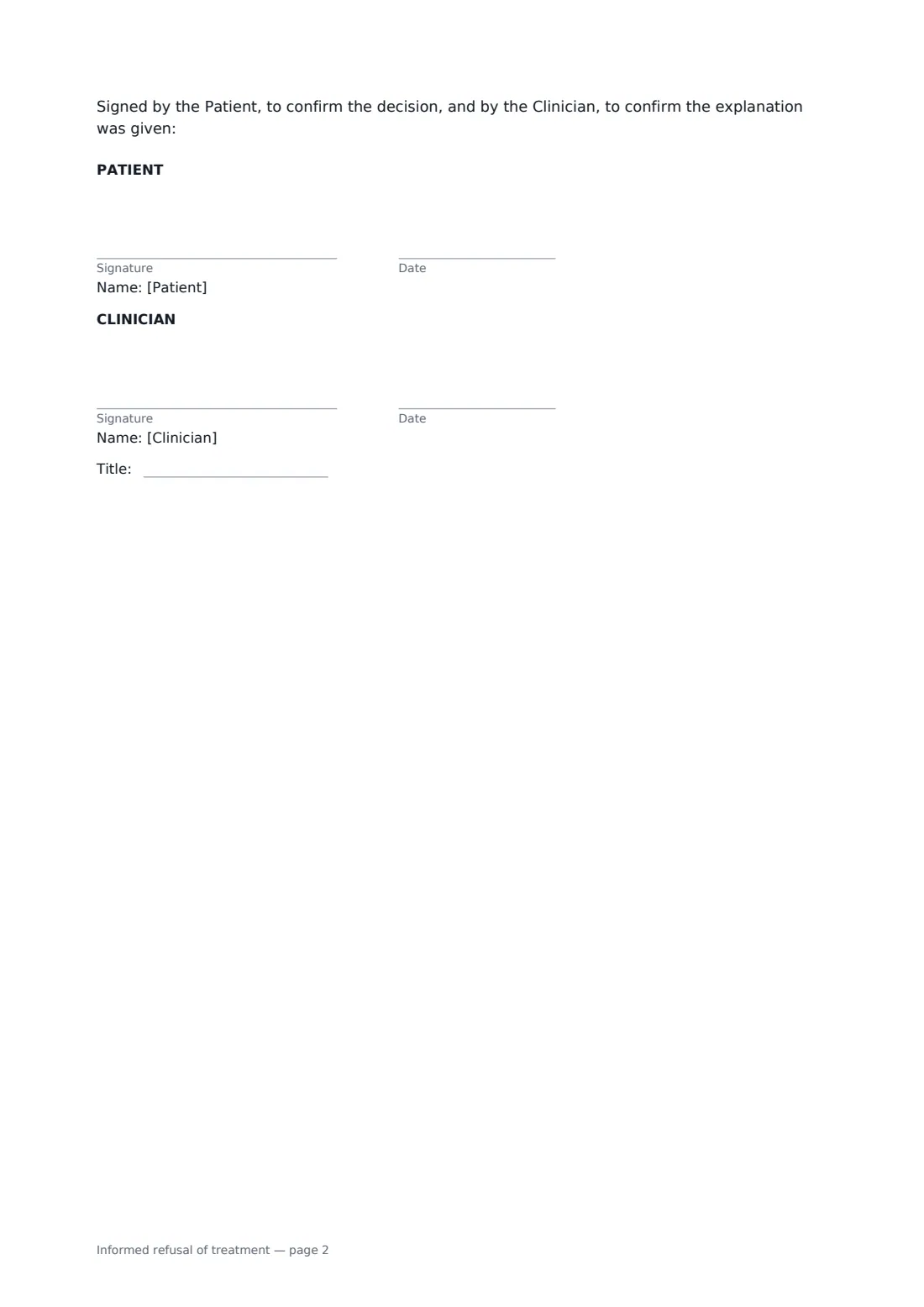
- Patient signature and date · The patient, or a parent, guardian or legal representative deciding for them.
- Clinician signature and date, job title · The clinician who explained the recommendation.
What the informed refusal of treatment covers
- What was recommended
- Risks of declining
- Alternatives
- The Patient's decision
- Changing my mind and follow-up
Using the informed refusal of treatment, step by step
1 The recommendation
Enter what was recommended and why, in plain words, with the date of the discussion.
2 Risks and alternatives
Write the specific risks of declining you explained and the alternatives offered, and note any the patient accepted.
3 The decision
Record the patient's reason only if they want it written down, plus any interpreter or representative.
4 Follow-up and sign
Add the follow-up arranged and any warning signs, then both sign. Keep the form in the patient's records and give them a copy.
Tips before you send it
- Write the risks you actually discussed, specifically and in plain language, rather than generic wording.
- Don't make the form a condition of continued care; the patient's care continues either way.
- If you doubt the patient's capacity to decide, follow your local capacity rules before relying on the form.
- Who may refuse treatment for a child or an adult without capacity depends on local law.
- Offer a follow-up and tell the patient how to change their mind.
Sign it online in minutes
- Fill in the blanks. Names, dates and amounts go straight into the agreement — the preview shows exactly where.
- Name who signs. Tick “This is me” for your own part. FileIt builds the PDF with every signature, date box on the right line, and you can check or move anything before sending.
- Send it. Each signer gets a secure link and signs from any device — no account needed. The signed PDF, with an audit trail and a Certificate of Completion, is filed in your vault and emailed to everyone.
Informed refusal of treatment: frequently asked questions
Is this an 'against medical advice' form?
It serves a similar purpose but in a respectful way. It records the recommendation, the risks explained and the patient's decision, without suggesting the patient is being discharged from care.
Does the patient have to give a reason?
No. There is an optional field for a reason the patient wants recorded.
Can the patient change their mind?
Yes, at any time. The form says the clinician or practice will discuss the recommendation again, and records the follow-up arranged.
Can a parent or representative sign?
Yes. Enter their name and relationship; they confirm they have authority. Who can make that decision depends on local law.
Does this protect the clinician from liability?
It is evidence that the discussion took place and the risks were explained. It is not a guarantee against claims, and it doesn't replace good clinical notes.