
What is a dental treatment consent?
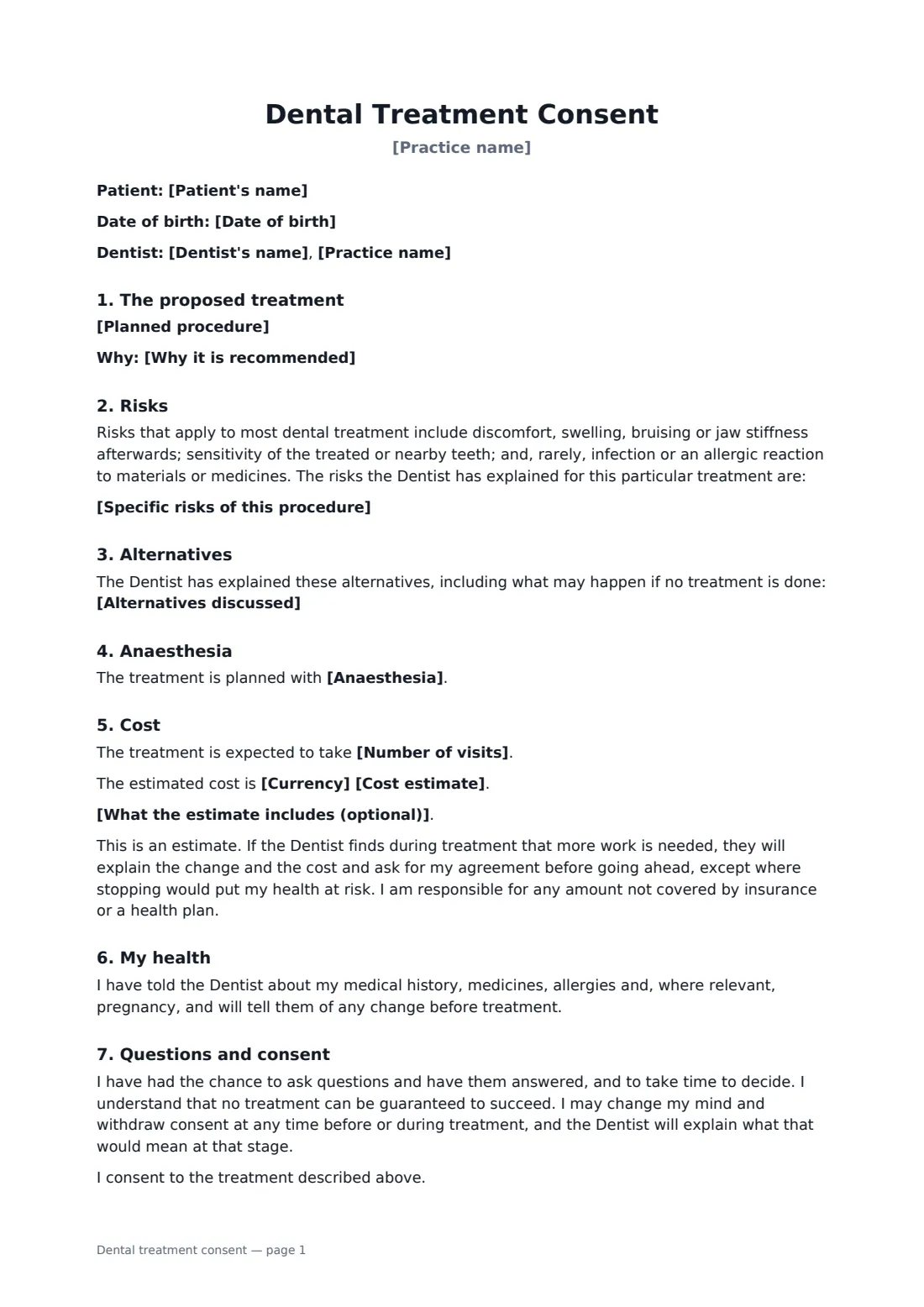
Good dental consent is specific. 'Treatment as discussed' tells a patient, or anyone looking back later, very little. This form puts the actual procedure, the reason for it, its particular risks and the other options in writing, alongside an honest cost estimate.
It names the practice, dentist and patient. It describes the planned procedure and why it's recommended, lists general risks with the ones specific to this treatment, and records the alternatives discussed, including no treatment. You choose the anaesthesia, and the form adds the right notes for local anaesthetic, sedation or a general anaesthetic. It sets out the number of visits, the cost estimate and what it includes, and says extra work needs the patient's agreement first. The patient confirms their health history, that they had time to ask questions, and that they can withdraw consent.
- Best for
- General dentists, oral surgeons, endodontists and implant clinics
- Signed by
- The patient and the dentist
- Anaesthesia
- Local, local with sedation, general, or none
- Length
- 2 pages
When to use a dental treatment consent
- Root canal treatment followed by a crown
- Wisdom tooth extraction
- Dental implants and bone grafts
- Bridges, veneers and larger cosmetic plans
- Treatment under conscious sedation
What you fill in
13 blanks, then the name and email of each person who signs: patient, dentist.
1 The practice
- Practice name*
- Dentist's name*
2 The patient
- Patient's name*
- Date of birth
3 The procedure
- Planned procedure*
- Why it is recommended*
4 Risks and alternatives
- Specific risks of this procedure*
- Alternatives discussed*
5 Anaesthesia
- Anaesthesia* local anaesthetic · local anaesthetic with conscious sedation · general anaesthetic · no anaesthetic
6 Cost
- Number of visits
- Currency*
- Cost estimate*
- What the estimate includes (optional)
7 Who signs
- Patient signature and date · The adult patient. For a child, a parent or guardian signs.
- Dentist signature and date, job title
What the dental treatment consent covers
- The proposed treatment
- Risks
- Alternatives
- Anaesthesia
- Cost
- My health
- Questions and consent
Using the dental treatment consent, step by step
1 Practice and patient
Your practice name fills in from your account. Add the dentist and the patient's name and date of birth.
2 The procedure
Describe the treatment, including the tooth, and why you're recommending it. Then list the risks specific to this procedure and the alternatives you discussed.
3 Anaesthesia and cost
Choose the anaesthesia, add the number of visits, the estimate and a note on what it includes or whether insurance is confirmed.
4 Give time to decide
Send it after the consultation so the patient can read it at home. They sign online, you countersign, and the consent sits with their record in FileIt.
Tips before you send it
- Write the risks for this patient and this tooth, not a generic list.
- Always record 'no treatment' as an alternative, with what's likely to happen.
- Use a separate sedation consent with fasting and escort instructions where you sedate.
- Update the estimate in writing if the plan changes.
Sign it online in minutes
- Fill in the blanks. Names, dates and amounts go straight into the agreement — the preview shows exactly where.
- Name who signs. Tick “This is me” for your own part. FileIt builds the PDF with every signature, date box on the right line, and you can check or move anything before sending.
- Send it. Each signer gets a secure link and signs from any device — no account needed. The signed PDF, with an audit trail and a Certificate of Completion, is filed in your vault and emailed to everyone.
Dental treatment consent: frequently asked questions
Is the cost binding?
It's an estimate. If more work turns out to be needed, the dentist explains the change and the cost and asks first, unless stopping would put the patient's health at risk.
Can a parent sign for a child?
Yes. The form is written for the patient, and for a child a parent or guardian signs as the patient's representative.
Does it cover sedation in full?
It notes the key points for sedation and general anaesthesia, and says those are explained and agreed separately with their own instructions.
Can the patient change their mind?
Yes, before or during treatment. The dentist explains what stopping would mean at that stage.