What is a chiropractic informed consent?
Informed consent in chiropractic means more than a tick box. Patients should understand what an adjustment is, what usually follows it, the rare but serious risks, and that other options exist, including doing nothing while a sore back settles on its own.
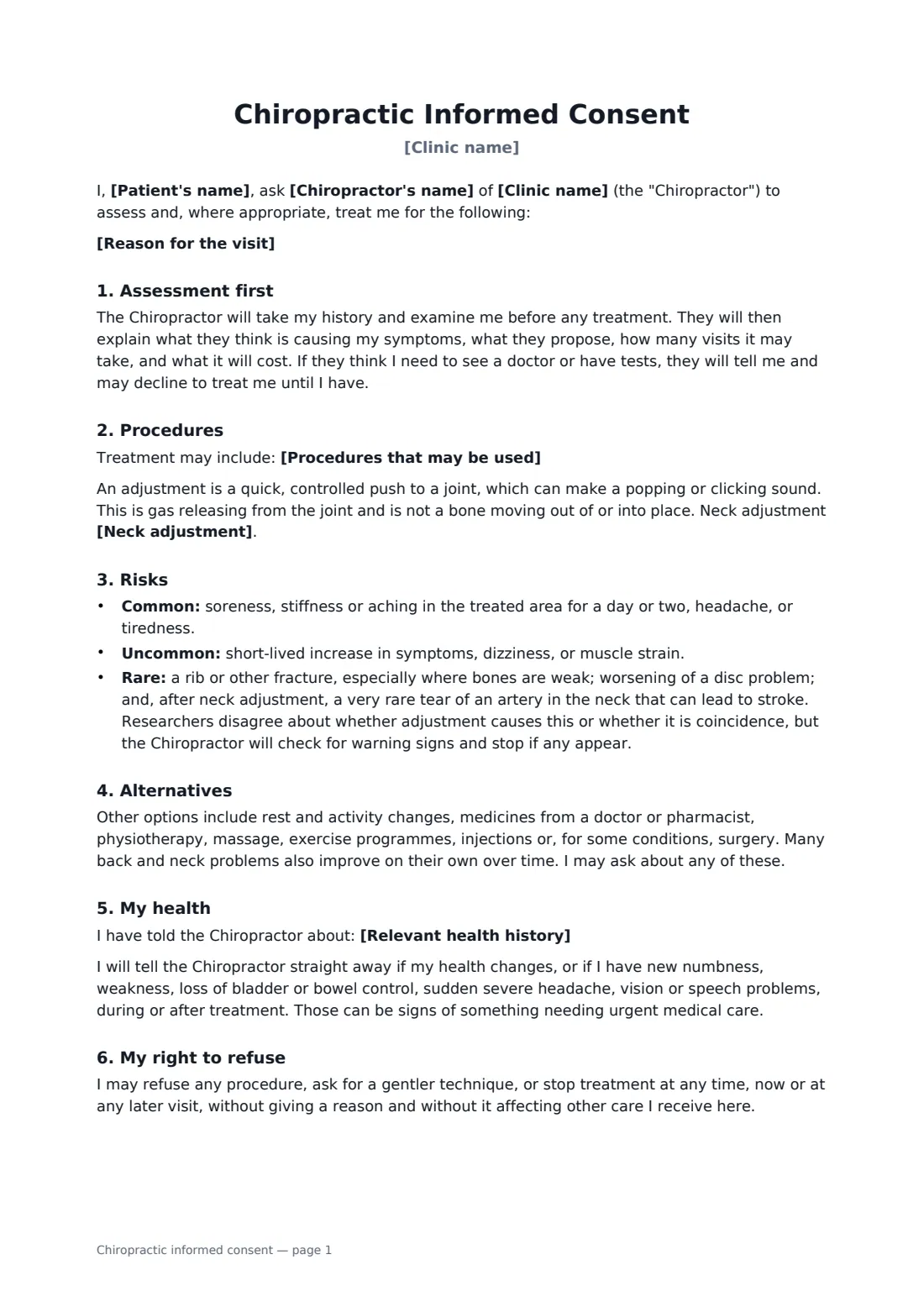
This form records the clinic, the chiropractor and the reason for the visit. It commits to taking a history and examining before any treatment, explains the proposed plan and when a referral to a doctor comes first, and lists the procedures you offer. It explains what the popping sound is, lets you state whether neck adjustment will be used, and sets out common, uncommon and rare risks in plain words. It lists alternatives, records health history, names the warning signs that need urgent care, and confirms the patient may refuse any procedure at any visit.
- Best for
- Chiropractors, osteopaths and manual therapists
- Signed by
- The patient and the chiropractor
- Neck adjustment
- Your choice: may be used after discussion, or not used
- Length
- 2 pages
When to use a chiropractic informed consent
- A new patient with lower back pain
- Neck and shoulder pain from desk work
- Sports injuries and mobility problems
- Patients with osteoporosis or past spinal surgery, with history recorded
- Clinics updating older consent forms to cover alternatives
What you fill in
7 blanks, then the name and email of each person who signs: patient, chiropractor.
1 The chiropractor
- Clinic name*
- Chiropractor's name*
2 The patient
- Patient's name*
- Reason for the visit*
3 Health
- Relevant health history
4 Treatment
- Procedures that may be used*
- Neck adjustment* may be used, and will be discussed before it is · will not be used
5 Who signs
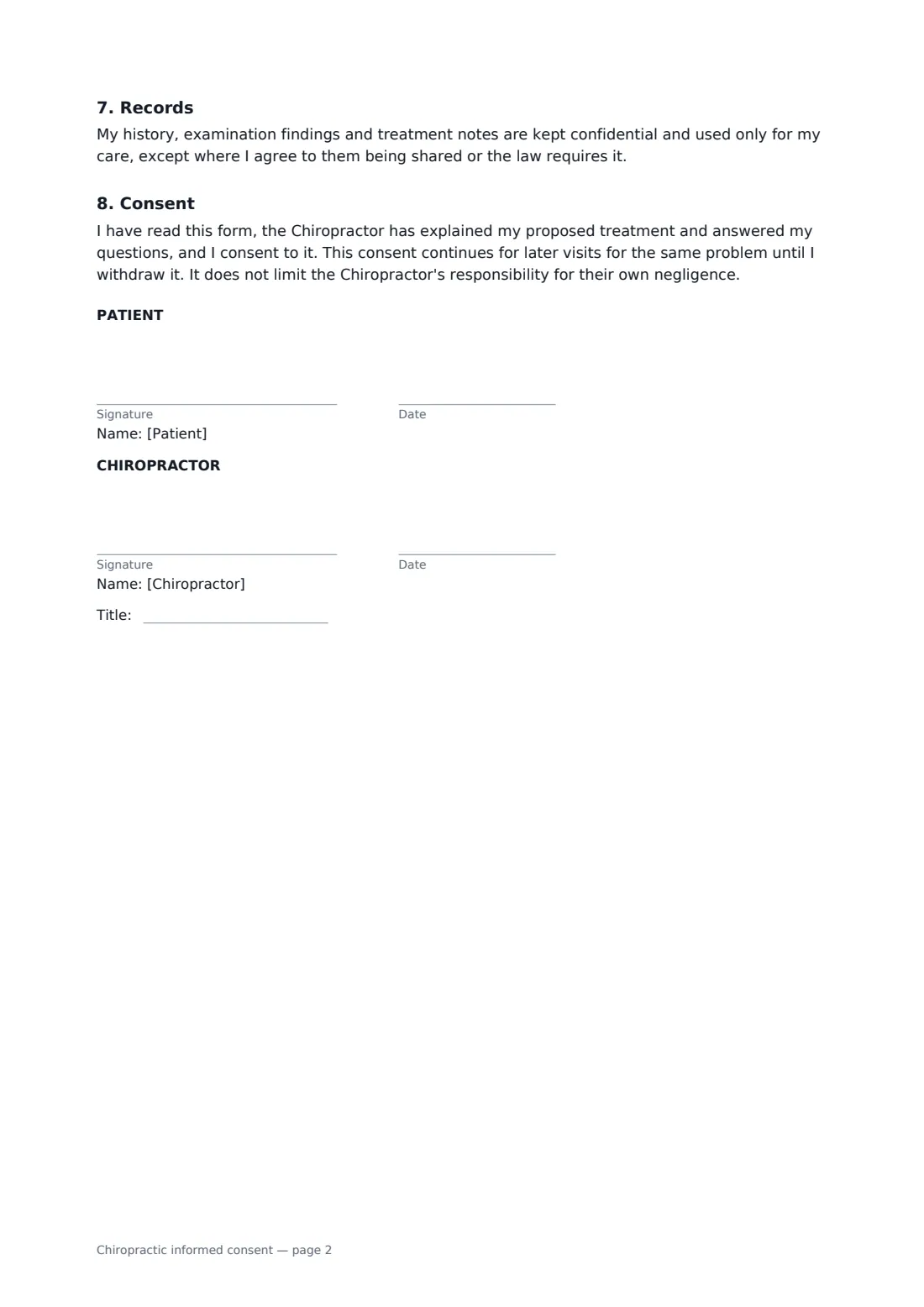
- Patient signature and date · An adult patient. For a minor, a parent or guardian should sign.
- Chiropractor signature and date, job title
What the chiropractic informed consent covers
- Assessment first
- Procedures
- Risks
- Alternatives
- My health
- My right to refuse
- Records
- Consent
Using the chiropractic informed consent, step by step
1 Clinic and patient
Your clinic name fills in from your account. Add your name, the patient's name and why they've come.
2 Health history
Record osteoporosis, fractures, surgery, blood thinners, stroke, numbness or pregnancy, or leave it empty for the patient to confirm there's nothing relevant.
3 Procedures
Edit the list to match what you actually offer, and choose whether neck adjustment may be used.
4 Sign at the first visit
Send it before the appointment or hand over a tablet in clinic. The patient signs, you countersign, and it's stored in your FileIt vault.
Tips before you send it
- Talk through the risks in person as well. The form backs up the conversation; it doesn't replace it.
- Record the patient's questions and your answers in your notes.
- Take a fresh consent when the treatment plan changes significantly.
- Check your regulator's or association's current guidance on consent for neck manipulation.
Sign it online in minutes
- Fill in the blanks. Names, dates and amounts go straight into the agreement — the preview shows exactly where.
- Name who signs. Tick “This is me” for your own part. FileIt builds the PDF with every signature, date box on the right line, and you can check or move anything before sending.
- Send it. Each signer gets a secure link and signs from any device — no account needed. The signed PDF, with an audit trail and a Certificate of Completion, is filed in your vault and emailed to everyone.
Chiropractic informed consent: frequently asked questions
Does it mention stroke risk?
Yes, in plain terms: a very rare artery tear in the neck after neck adjustment, noting that researchers disagree about cause, and that the chiropractor checks for warning signs.
Can I leave out neck adjustment?
Yes. Choose 'will not be used' and the form says so.
What alternatives are listed?
Rest and activity changes, medicines, physiotherapy, massage, exercise, injections or surgery, and the fact that many back and neck problems improve on their own.
Does the consent last for later visits?
It covers later visits for the same problem until the patient withdraws it.