What is a physical therapy consent?
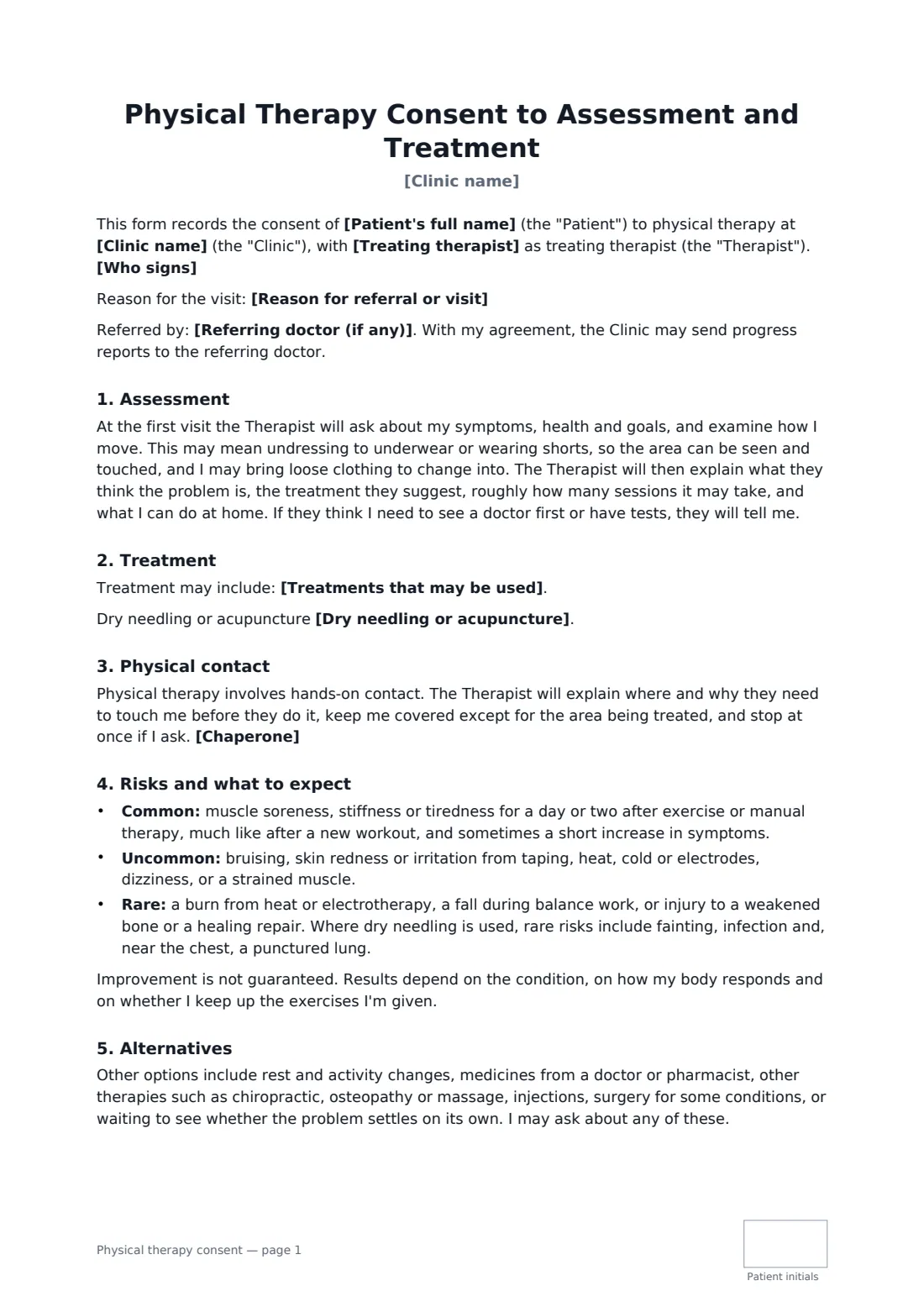
Physical therapy is hands-on. Patients undress to shorts, therapists move joints and press on sore muscles, and a good session can leave someone stiff the next day. A consent form should say all of that up front, so nothing comes as a surprise and the patient knows they can stop or refuse a technique at any point.
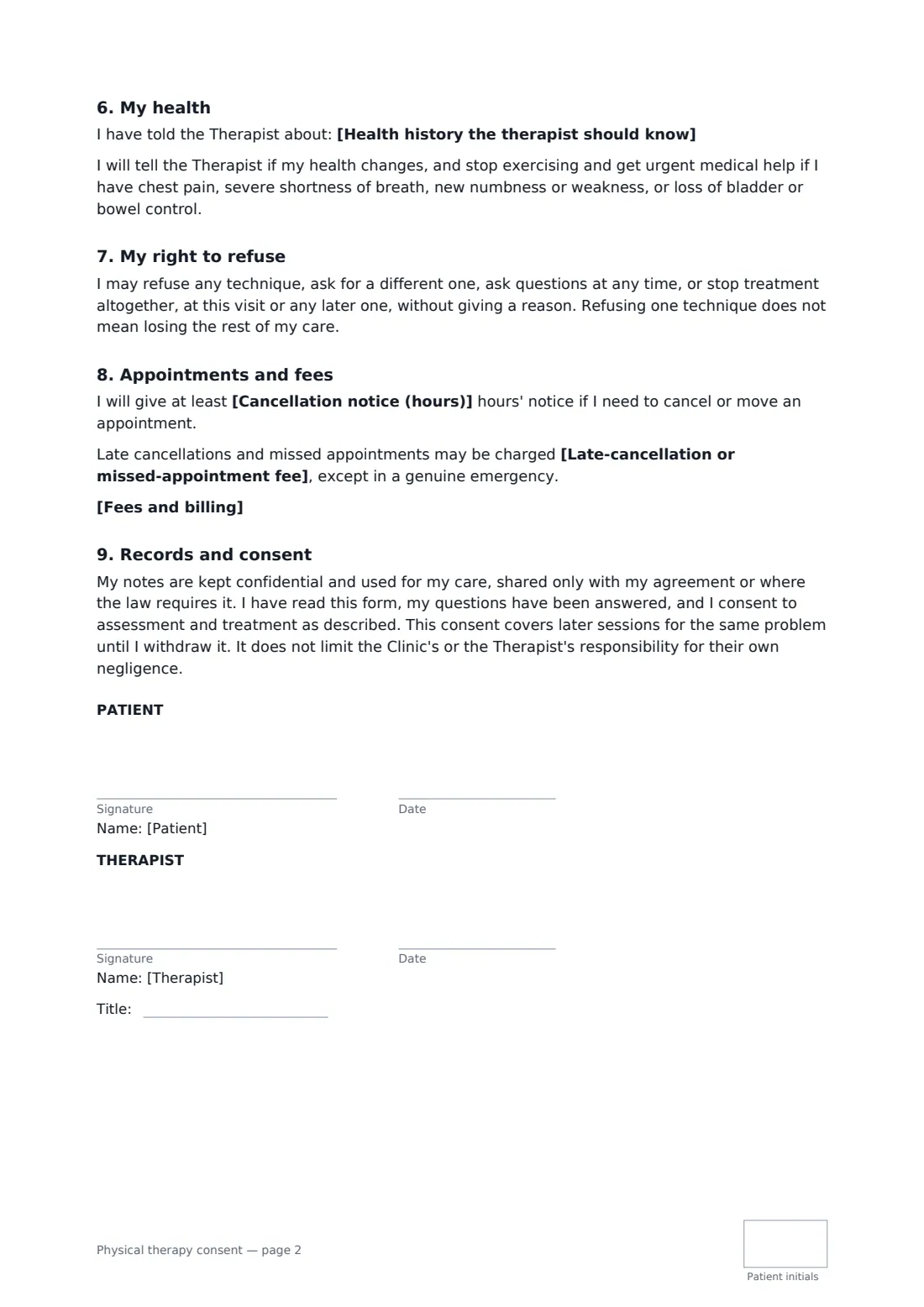
This template records the clinic, the treating therapist, the patient and the reason for the visit, with an optional referring doctor. It explains the first assessment, lists the treatments you actually use (exercise, mobilisation, massage, taping, heat and cold, electrotherapy), and lets you say whether dry needling may be used. A section on physical contact covers explaining before touching, draping and a chaperone. It sets out common, uncommon and rare risks in plain words, lists alternatives, records health history and red-flag symptoms, and confirms the right to refuse. It ends with your cancellation notice, an optional late fee and billing terms. The patient initials each page.
- Best for
- Physical therapists, physiotherapists and sports rehab clinics
- Signed by
- The patient (or a parent for under-18s) and the therapist
- Covers
- Assessment, treatment, contact, risks, refusal, cancellations and fees
- Length
- 2 pages, initialled by the patient
When to use a physical therapy consent
- A new patient booking an assessment for back or neck pain
- Rehabilitation after knee, hip or shoulder surgery
- Sports injury clinics treating athletes, including teenagers with a parent signing
- Practices that offer dry needling alongside exercise and manual therapy
- Clinics adding a clear cancellation and late-fee policy to their intake
What you fill in
13 blanks, then the name and email of each person who signs: patient, therapist.
1 The clinic
- Clinic name*
- Treating therapist*
2 The patient
- Patient's full name*
- Who signs* The patient signs for themselves. · A parent or legal guardian signs for a patient under 18.
- Reason for referral or visit*
- Referring doctor (if any)
3 Health
- Health history the therapist should know
4 Treatment
- Treatments that may be used*
- Dry needling or acupuncture* will not be used · may be used, after a separate explanation and the patient's spoken agreement
- Chaperone* The patient may ask for a chaperone or a therapist of a particular gender at any appointment. · A chaperone will be present when treatment involves the pelvic region or the patient is under 18.
5 Appointments
- Cancellation notice (hours)*
- Late-cancellation or missed-appointment fee
- Fees and billing
6 Who signs
- Patient signature and date, initials on every page · An adult patient. For a patient under 18, a parent or legal guardian signs here and the patient's name goes in the form.
- Therapist signature and date, job title, initials on every page · The physical therapist or physiotherapist treating the patient, or the clinic manager.
What the physical therapy consent covers
- Assessment
- Treatment
- Physical contact
- Risks and what to expect
- Alternatives
- My health
- My right to refuse
- Appointments and fees
- Records and consent
Using the physical therapy consent, step by step
1 Clinic and patient
Your clinic name fills in from your account. Add the therapist, the patient, why they're coming in, and the referring doctor if there is one.
2 Treatments and contact
Edit the list of treatments to match your practice, choose whether dry needling may be used, and pick your chaperone wording.
3 Appointments
Set the cancellation notice in hours, add a late fee if you charge one, and describe fees and insurance billing.
4 Sign before the first session
Send it with the booking confirmation. The patient fills in their health history, initials and signs; you countersign and it's kept in your FileIt vault.
Tips before you send it
- Talk through the plan and the risks in person too. The form backs up that conversation rather than replacing it.
- If you use dry needling or spinal manipulation, explain it separately and note the patient's agreement in your records at the time.
- Take fresh consent when the problem or the treatment plan changes significantly.
- Check your licensing board's or professional body's guidance on consent, chaperones and treating minors where you practise.
Sign it online in minutes
- Fill in the blanks. Names, dates and amounts go straight into the agreement — the preview shows exactly where.
- Name who signs. Tick “This is me” for your own part. FileIt builds the PDF with every signature, date and initials box on the right line, and you can check or move anything before sending.
- Send it. Each signer gets a secure link and signs from any device — no account needed. The signed PDF, with an audit trail and a Certificate of Completion, is filed in your vault and emailed to everyone.
Physical therapy consent: frequently asked questions
Can a parent sign for a teenager?
Yes. Choose the parent or guardian option. The form then makes clear the parent consents on the patient's behalf, and the therapist still explains treatment to the patient.
Does it cover dry needling?
Only if you say so. The default says it won't be used. The other option says it may be used after a separate explanation and the patient's spoken agreement, and its rare risks are listed.
Does the consent last for later sessions?
Yes, for the same problem, until the patient withdraws it. A new problem should get a new form.
Is a late-cancellation fee required?
No. Leave the fee empty and the form only asks for the notice period you set.