What is a aircraft rental agreement?
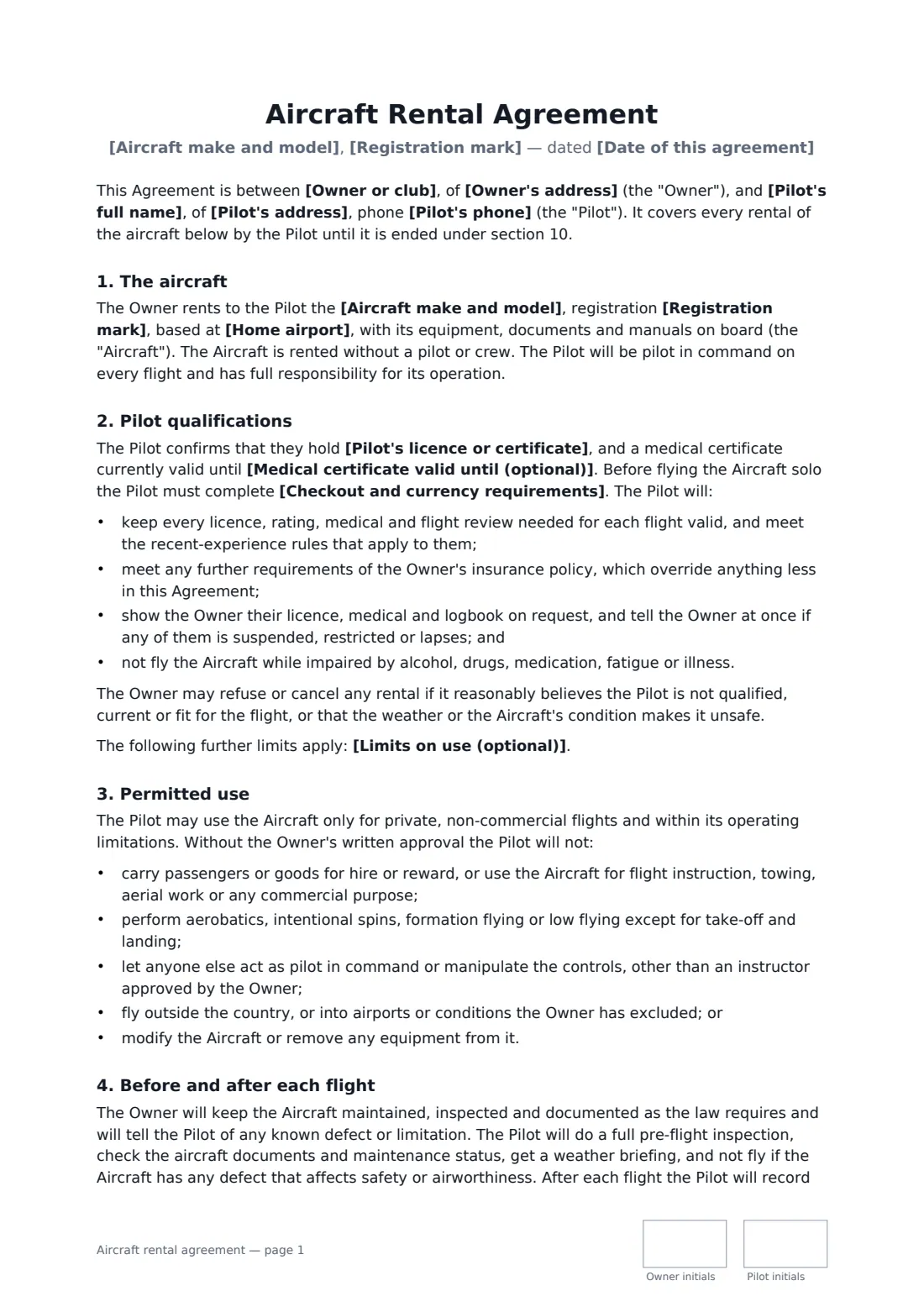
Owners and flying clubs who rent out a light aircraft need the same things settled with every renter pilot: who is qualified to fly it, what they pay per hour, what the aircraft may and may not be used for, and who pays when something gets bent. This agreement covers all of it and stays in place for every rental until either side ends it.
You enter the aircraft and its registration, the pilot's licence and medical, the checkout and currency rules (matched to your insurance), and an hourly rate that is wet or dry and measured by Hobbs, tach or block time. You can add an overnight minimum, a deposit, a booking method, a cancellation notice and a no-show fee. The insurance section caps the pilot's share of covered damage at a deductible you choose, and can require the pilot to carry renter's insurance. Then comes a clear list of what to do after an accident, incident or prop strike.
- Best for
- Private owners, flying clubs and flight schools renting light aircraft to qualified pilots
- Signed by
- Owner and pilot, initialled on every page
- Rate options
- Wet or dry, by Hobbs, tach or block time
- Length
- 3 pages
When to use a aircraft rental agreement
- An owner renting a Cessna 172 to a few checked-out local pilots
- A flying club signing up a new member who will rent club aircraft
- A flight school renting aircraft to certificated pilots for solo flying
- A pilot borrowing a friend's aircraft for a weekend trip and paying by the hour
- Resetting terms with existing renters after the insurer changed its pilot requirements
What you fill in
27 blanks, then the name and email of each person who signs: owner, pilot.
1 The parties
- Date of this agreement*
- Owner or club*
- Owner's address
- Pilot's full name*
- Pilot's address
- Pilot's phone
2 The aircraft
- Aircraft make and model*
- Registration mark*
- Home airport*
3 Pilot qualifications
- Pilot's licence or certificate*
- Medical certificate valid until (optional)
- Checkout and currency requirements*
- Limits on use (optional)
4 Rates
- Currency*
- Rate per hour*
- The rate is* wet: it includes fuel and oil · dry: fuel is extra, and the Pilot buys fuel or pays for it at the Owner's price
- Time measured by* the Hobbs meter · the tachometer · block time from engine start to shutdown
- Minimum charge per day away from base (optional)
- Deposit or account balance held (optional)
5 Scheduling
- How to book*
- Cancellation notice*
- No-show or late cancellation fee (optional)
6 Insurance
- Owner's insurer (optional)
- Pilot's share of any damage (deductible)*
- Must the pilot carry renter's insurance?* Yes · No
- Minimum renter's insurance
- Governing law*
7 Who signs
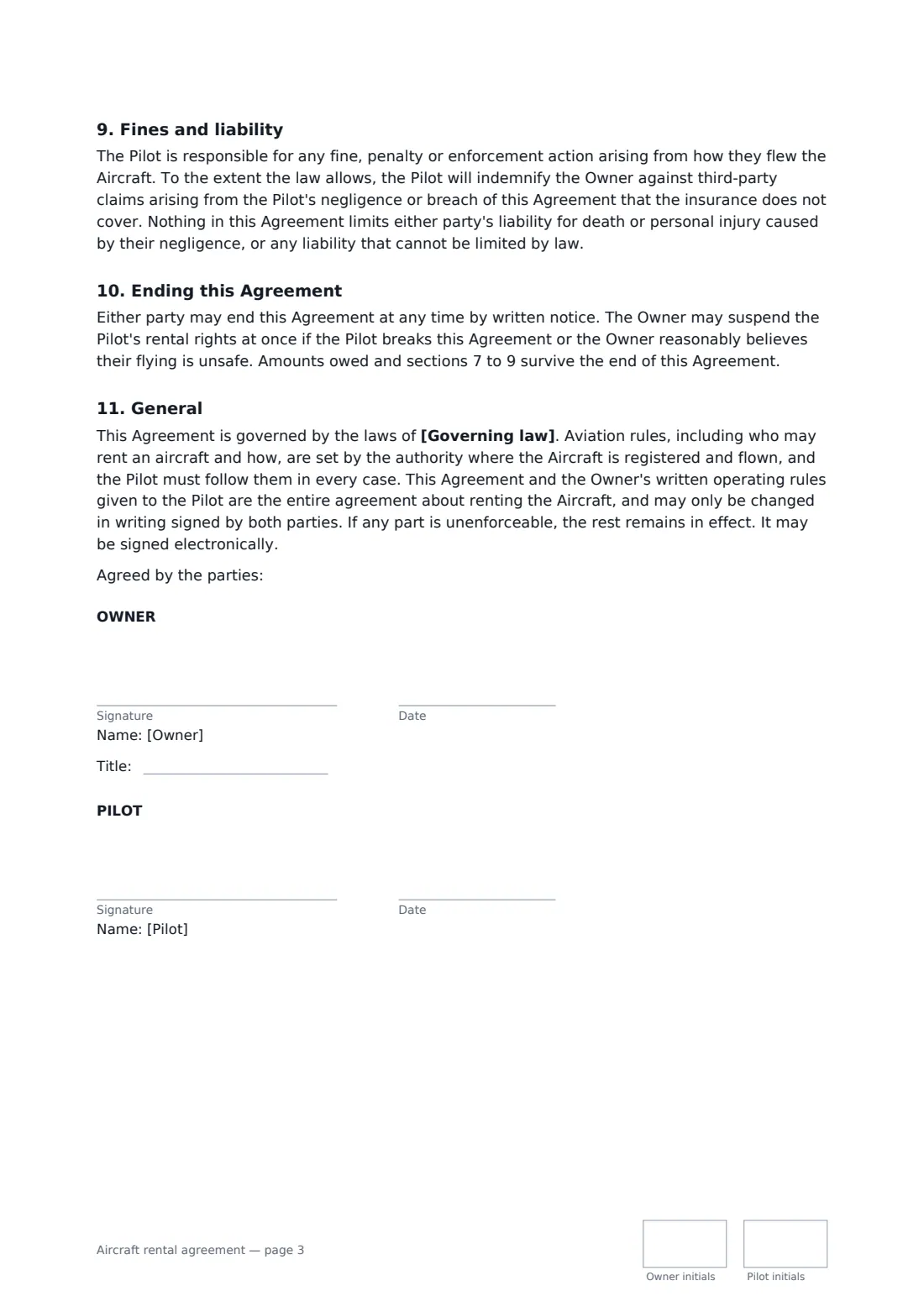
- Owner signature and date, job title, initials on every page · The aircraft owner, flying club or flight school renting out the aircraft.
- Pilot signature and date, initials on every page · The pilot renting the aircraft, who will act as pilot in command.
What the aircraft rental agreement covers
- The aircraft
- Pilot qualifications
- Permitted use
- Before and after each flight
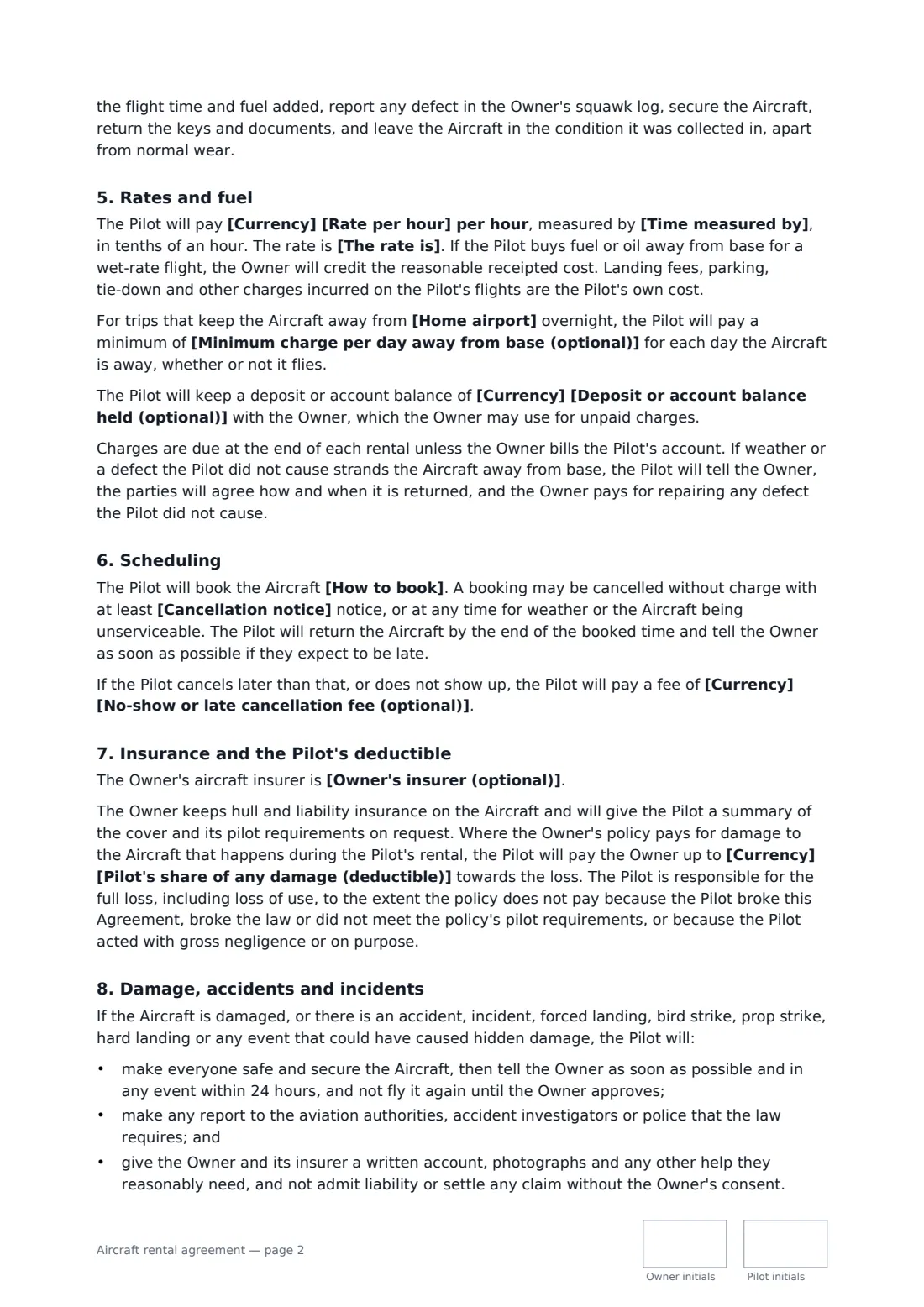
- Rates and fuel
- Scheduling
- Insurance and the Pilot's deductible
- Damage, accidents and incidents
- Fines and liability
- Ending this Agreement
- General
Using the aircraft rental agreement, step by step
1 Describe the aircraft
Enter the make, model, registration and home airport.
2 Record the pilot's qualifications
Enter the pilot's licence and ratings, medical expiry and the checkout and currency rules, then add any limits such as day VFR only.
3 Set the rate and booking rules
Choose wet or dry, how time is measured, any overnight minimum or deposit, how to book and the cancellation notice.
4 Settle insurance and send
Name the insurer, set the pilot's deductible and decide whether renter's insurance is required. FileIt sends it to the pilot to sign.
Tips before you send it
- Read your hull and liability policy first. It usually has its own named-pilot or open-pilot rules, and those override anything weaker in this agreement.
- Collect a copy of the pilot's licence, medical and recent logbook pages at checkout and keep them with the signed agreement.
- File the agreement and the pilot's medical in FileIt with expiry dates so you get a reminder before currency lapses.
- A renter's (non-owned aircraft) policy can cover the pilot's deductible and their personal liability. Ask pilots to check what theirs pays before the first flight.
Sign it online in minutes
- Fill in the blanks. Names, dates and amounts go straight into the agreement — the preview shows exactly where.
- Name who signs. Tick “This is me” for your own part. FileIt builds the PDF with every signature, date and initials box on the right line, and you can check or move anything before sending.
- Send it. Each signer gets a secure link and signs from any device — no account needed. The signed PDF, with an audit trail and a Certificate of Completion, is filed in your vault and emailed to everyone.
Aircraft rental agreement: frequently asked questions
What is the difference between a wet and dry rate?
A wet rate includes fuel and oil. A dry rate doesn't, so the pilot buys fuel or pays for it separately. Choose one in the template; receipted fuel bought away from base is credited on a wet-rate flight.
How much does the pilot pay if they damage the aircraft?
Up to the deductible you set, where the owner's insurance pays the claim. If the insurer refuses because the pilot broke the agreement, broke the law, didn't meet the policy's pilot requirements or was grossly negligent, the pilot is responsible for the full loss.
Does this let the pilot carry paying passengers?
No. Use is limited to private, non-commercial flying unless the owner approves otherwise in writing, and commercial operations need their own authorisations where you are.
Does it replace aviation regulations?
No. The pilot must follow the rules of the aviation authority where the aircraft is registered and flown in every case. The agreement adds the owner's own requirements on top.