What is a aircraft hangar rental agreement?
Hangar space is scarce and the risks inside it are not ordinary storage risks: fuel vapour, engine runs, solvents and someone else's aircraft parked a metre away. A written agreement sets the rent and also the safety rules everyone in the building depends on.
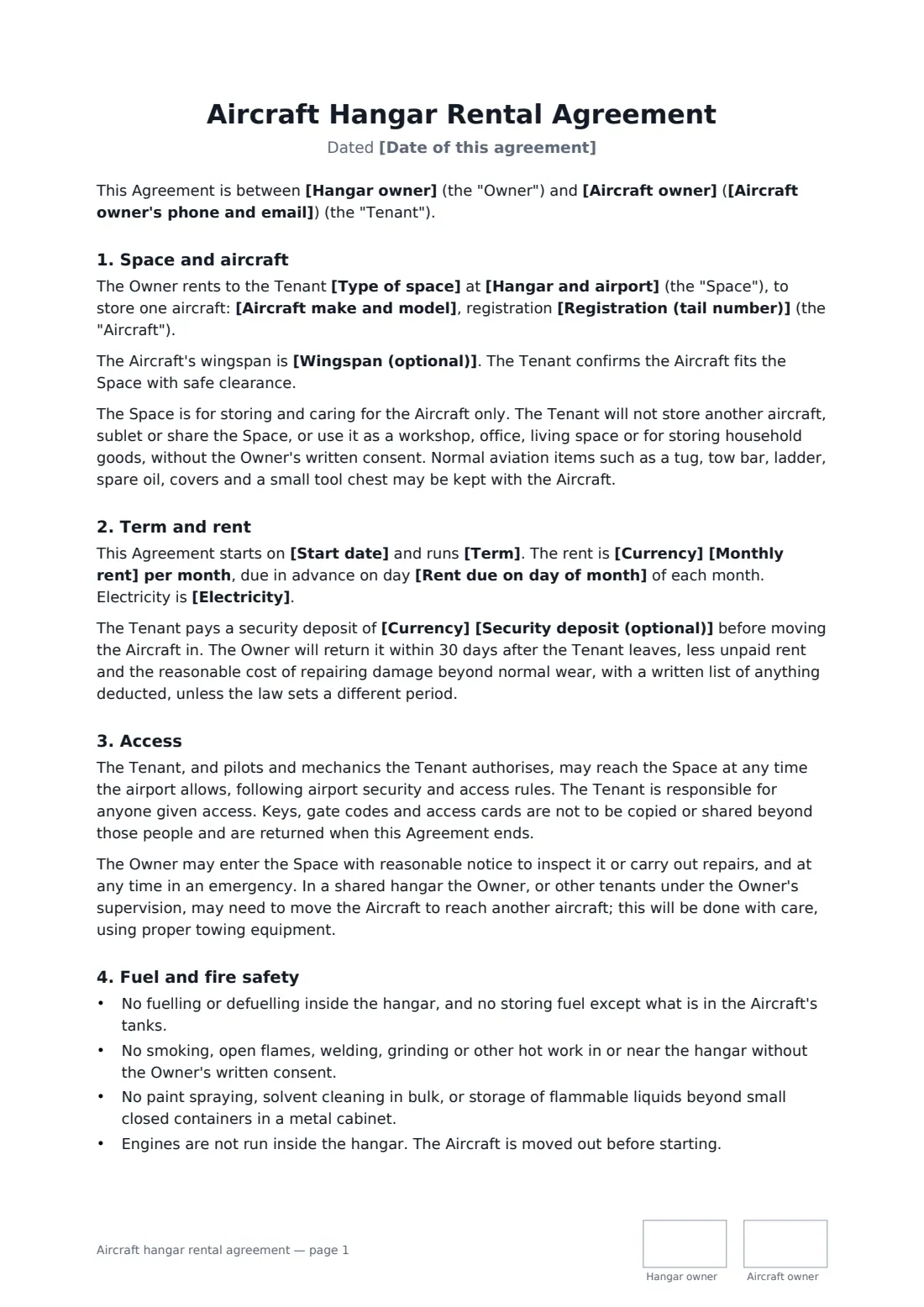
This template identifies the hangar and the airport, the aircraft by make, model and tail number, and whether the space is an individual hangar, a spot in a community hangar or a shade port. It covers rent, an optional deposit, electricity, access for authorised pilots and mechanics, a fuel and fire safety list, which maintenance the tenant may do on site, liability insurance with a certificate, notice to end and removal of the aircraft.
- Best for
- Private hangar owners, hangar associations and small airports
- Signed by
- Hangar owner and aircraft owner, initialled on every page
- Safety rules
- No fuelling, hot work or engine runs inside; extinguishers kept clear
- Length
- 2-3 pages
When to use a aircraft hangar rental agreement
- Renting out a spare T-hangar by the month
- Sharing a large hangar among several light aircraft
- A flying club placing a member's plane in its hangar
- Letting an aircraft owner do owner-performed maintenance on site
- Putting an informal handshake arrangement in writing before renewal
What you fill in
19 blanks, then the name and email of each person who signs: hangar owner, aircraft owner.
1 The parties
- Date of this agreement*
- Hangar owner*
- Aircraft owner*
- Aircraft owner's phone and email*
2 The space
- Hangar and airport*
- Type of space* an individual enclosed hangar for the Aircraft only · a marked space in a shared (community) hangar · an open-front shade hangar or port
3 The aircraft
- Aircraft make and model*
- Registration (tail number)*
- Wingspan (optional)
4 Term and rent
- Start date*
- Term* month to month · for 6 months, then month to month · for 12 months, then month to month
- Currency*
- Monthly rent*
- Rent due on day of month*
- Security deposit (optional)
- Electricity* included in the rent, for lighting, battery tenders, engine heaters and hand tools only · metered separately and billed to the Tenant monthly · not provided
5 Insurance
- Minimum liability insurance*
6 Ending
- Notice to end (days)*
- Governing law*
7 Who signs
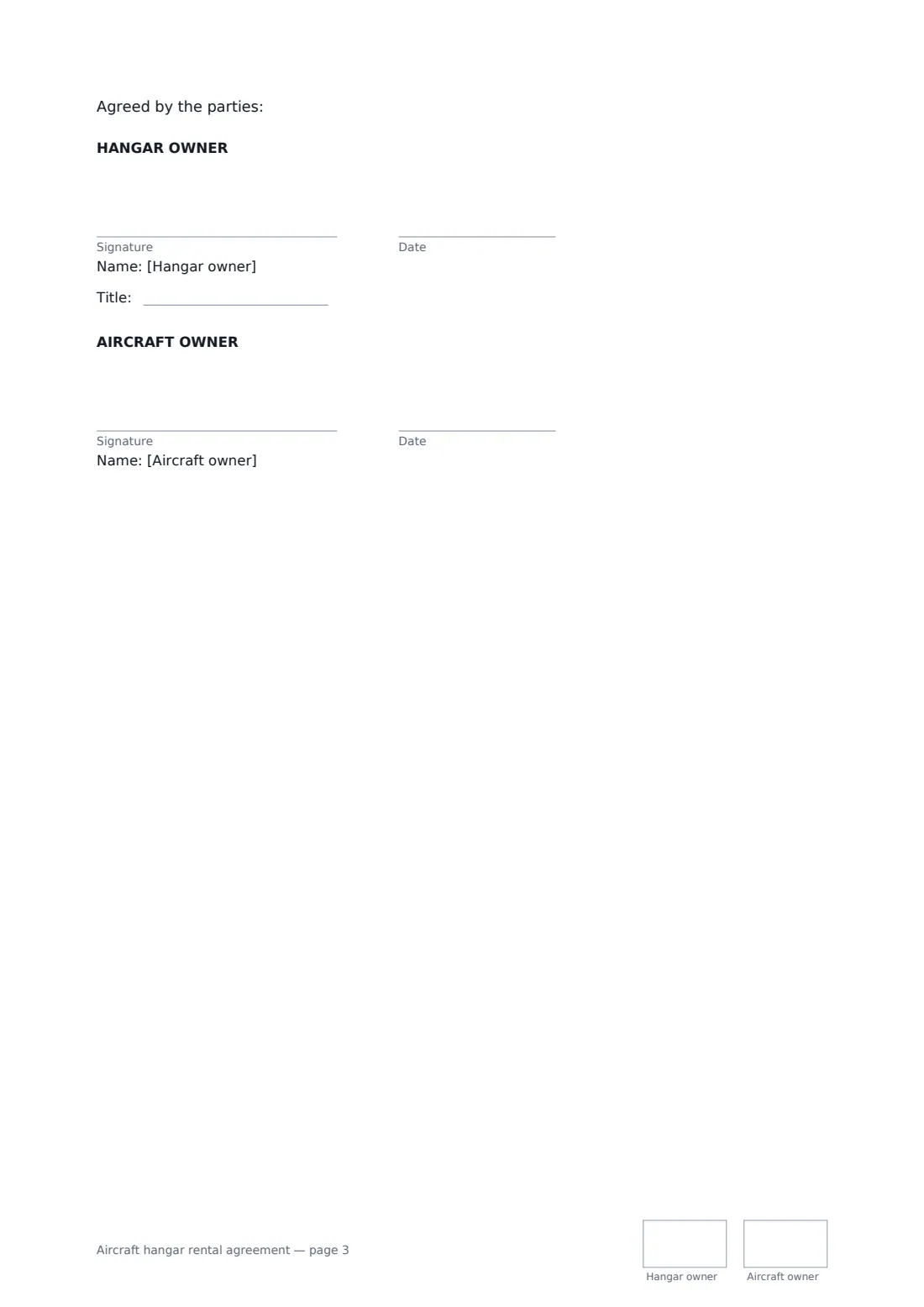
- Hangar owner signature and date, job title, initials on every page · The owner of the hangar, or the airport operator or manager renting it out.
- Aircraft owner signature and date, initials on every page · The person or company renting the space for their aircraft.
What the aircraft hangar rental agreement covers
- Space and aircraft
- Term and rent
- Access
- Fuel and fire safety
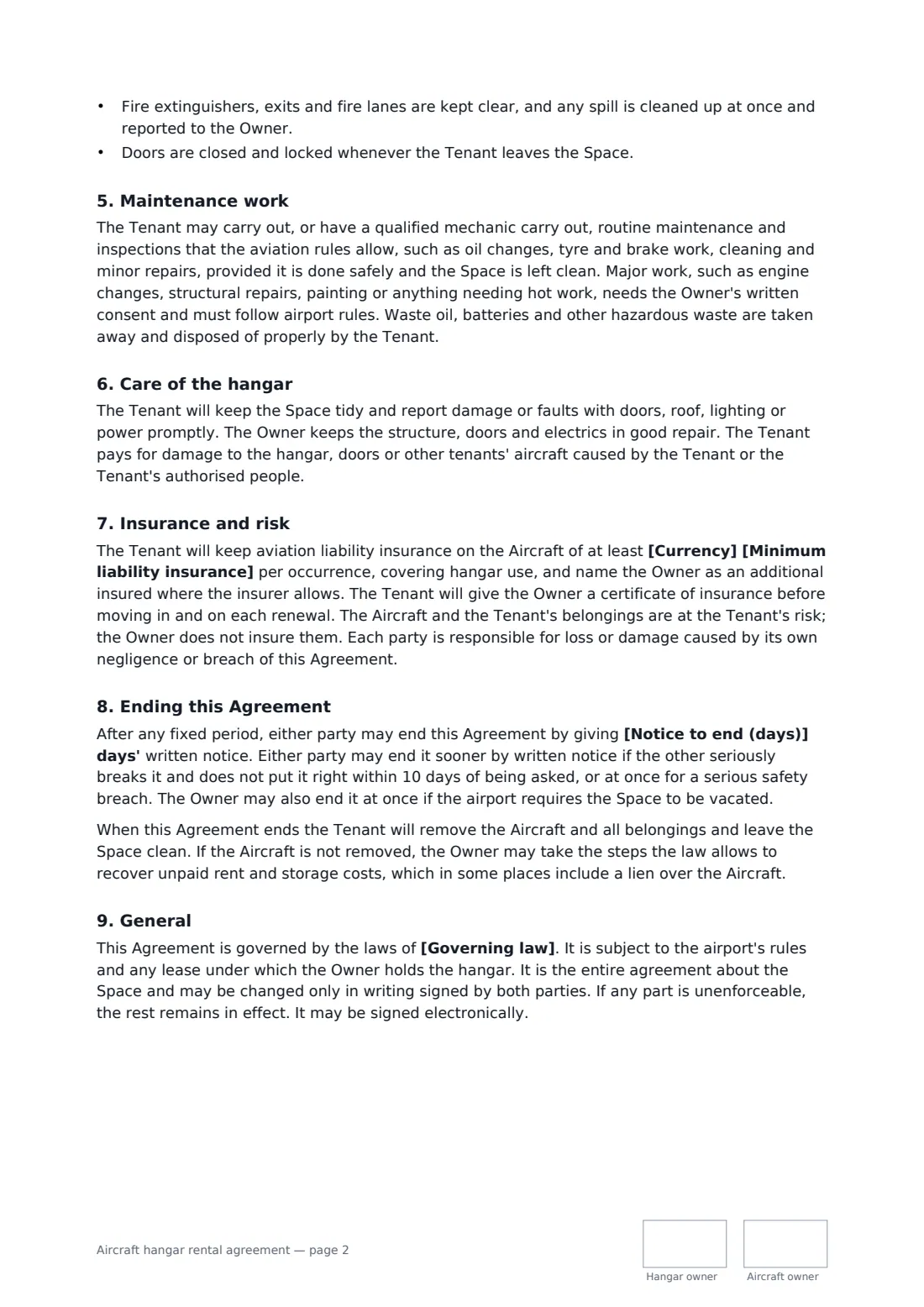
- Maintenance work
- Care of the hangar
- Insurance and risk
- Ending this Agreement
- General
Using the aircraft hangar rental agreement, step by step
1 Describe the space
Name the hangar and airport and choose the type of space. Add the aircraft make, model, tail number and wingspan.
2 Set the money
Pick the start date and term, then enter the monthly rent, due day, any deposit and how electricity is handled.
3 Set insurance and notice
Enter the minimum liability cover, the notice period and the governing law.
4 Sign and collect the certificate
Send it to the aircraft owner to sign. Attach their certificate of insurance to the envelope or keep it in your vault.
Tips before you send it
- Check your airport ground lease and minimum standards first; some airports must approve hangar sub-tenants.
- Ask for the insurance certificate every renewal, and note its expiry in FileIt so you get a reminder.
- Walk the hangar together at move-in and take dated photos of the doors and floor.
- In a shared hangar, agree how aircraft are moved for each other before the first time it happens.
Sign it online in minutes
- Fill in the blanks. Names, dates and amounts go straight into the agreement — the preview shows exactly where.
- Name who signs. Tick “This is me” for your own part. FileIt builds the PDF with every signature, date and initials box on the right line, and you can check or move anything before sending.
- Send it. Each signer gets a secure link and signs from any device — no account needed. The signed PDF, with an audit trail and a Certificate of Completion, is filed in your vault and emailed to everyone.
Aircraft hangar rental agreement: frequently asked questions
Can the tenant work on their own aircraft in the hangar?
Routine maintenance the aviation rules allow, like oil changes and tyre work, is permitted. Major work, painting or anything involving hot work needs the owner's written consent and must follow airport rules.
Who insures the aircraft?
The aircraft owner. The template requires them to carry aviation liability cover at the amount you set and to show a certificate. The hangar owner doesn't insure the aircraft.
What if the tenant leaves the aircraft behind?
The tenant must remove it when the agreement ends. If they don't, the owner may use the remedies the law allows, which in some places include a lien for unpaid rent.
Is an e-signed hangar agreement valid?
Electronic signatures are generally accepted for rental agreements like this in the US (ESIGN Act and UETA), the UK, the EU (eIDAS) and Canada. FileIt adds an audit trail and a Certificate of Completion to the signed PDF.