What is a parking lot lease?
Landowners with a vacant or underused lot often lease it to a professional parking operator, who installs pay stations, sells permits, enforces the rules and sends a cheque each month. The deal is simple in outline, but the details matter: is the rent fixed, a share of takings, or both? Who decides the rates? Can the operator tow? Who pays for the lights and for resurfacing?
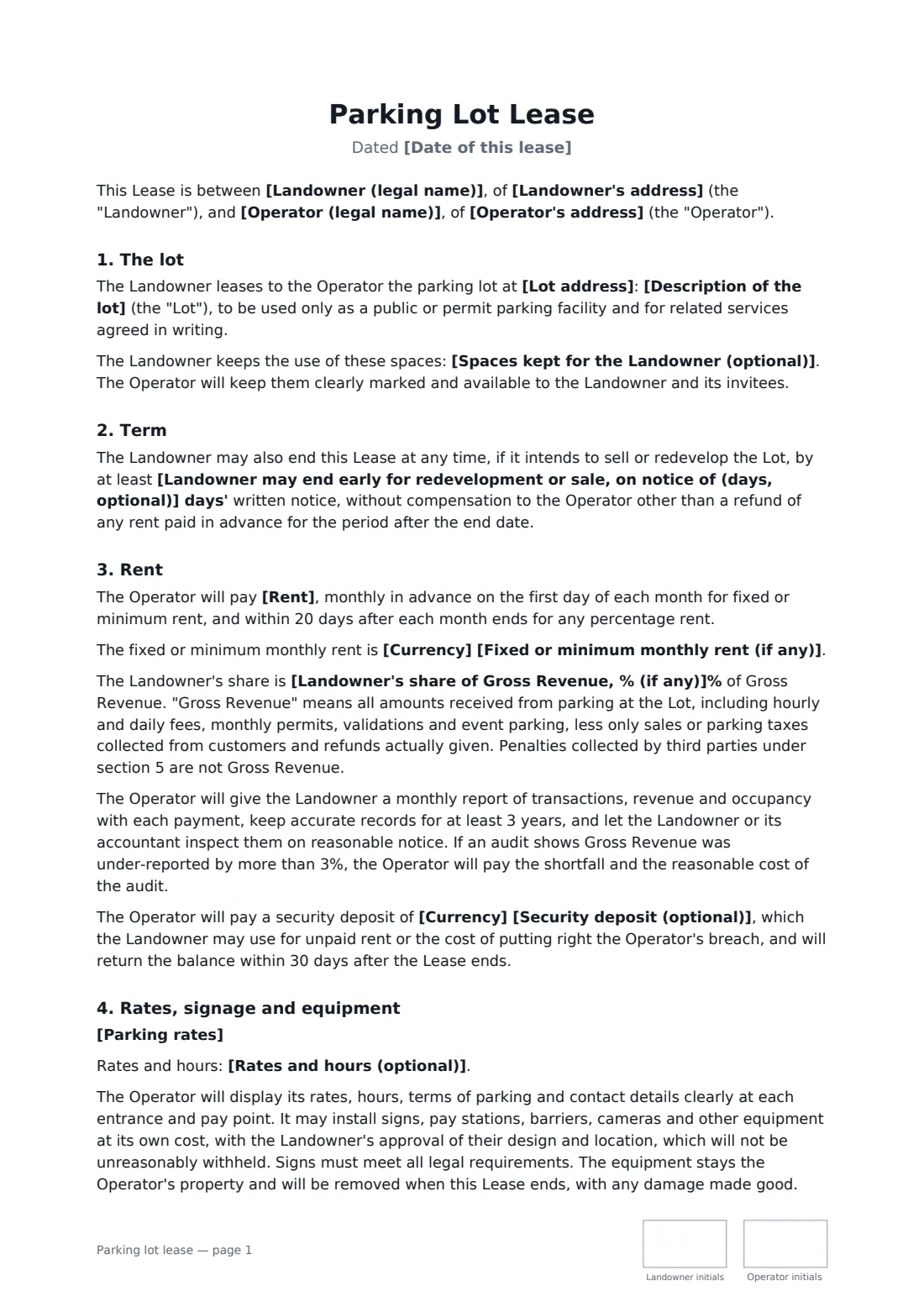
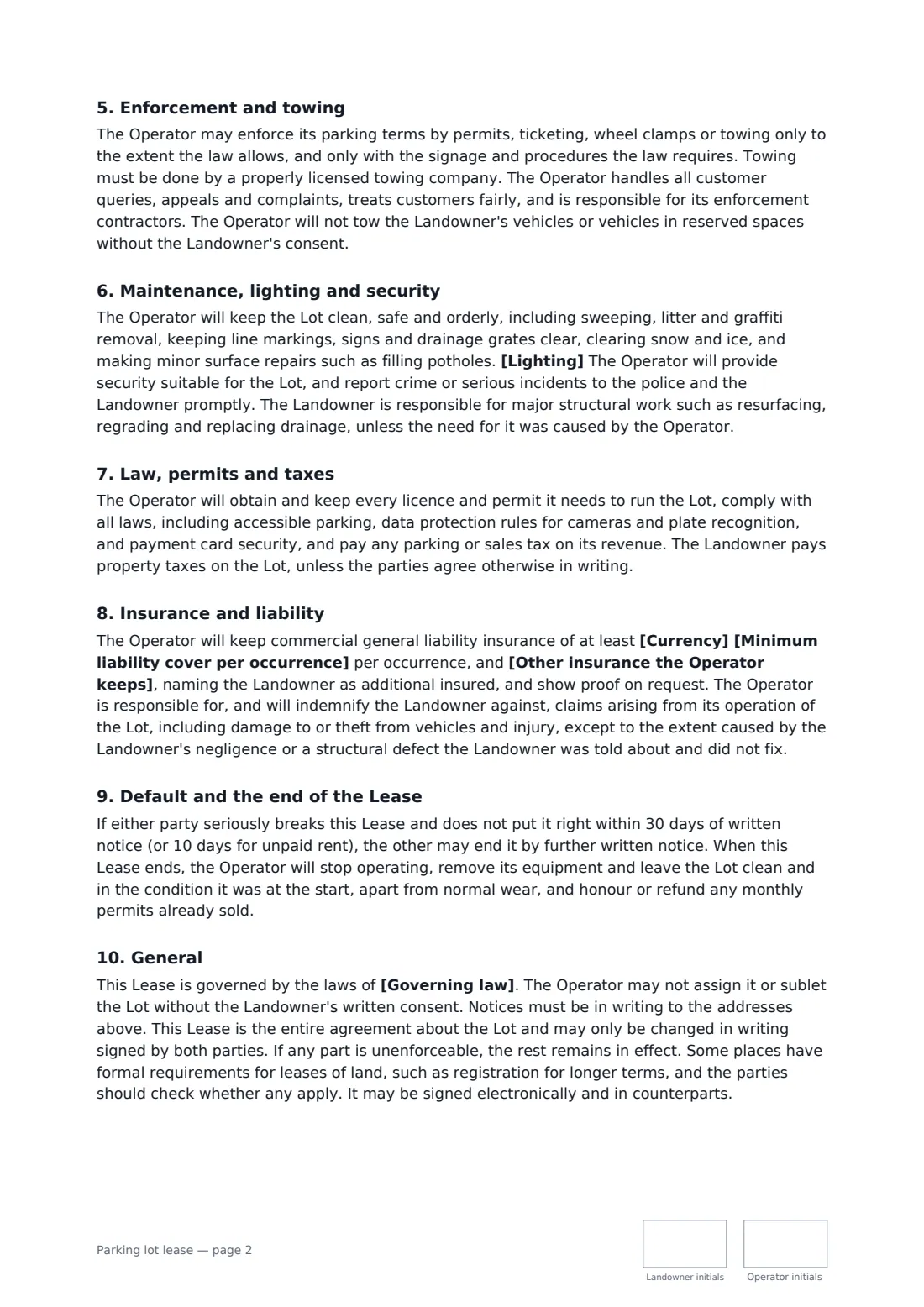
This lease covers the lot and any spaces kept for the landowner, and a term with renewal and notice, plus an optional early-termination right if the landowner sells or redevelops. Rent can be fixed, a percentage of a clearly defined Gross Revenue, or the greater of the two, with monthly reports, record keeping and an audit right. It covers rate setting, signage and the operator's equipment, and limits enforcement and towing to what the law allows. It splits maintenance, lighting and security, covers permits, taxes, accessible parking and camera data rules, and sets insurance and indemnity, default and hand-back at the end.
- Best for
- Surface lots and car parks leased to a parking operator
- Signed by
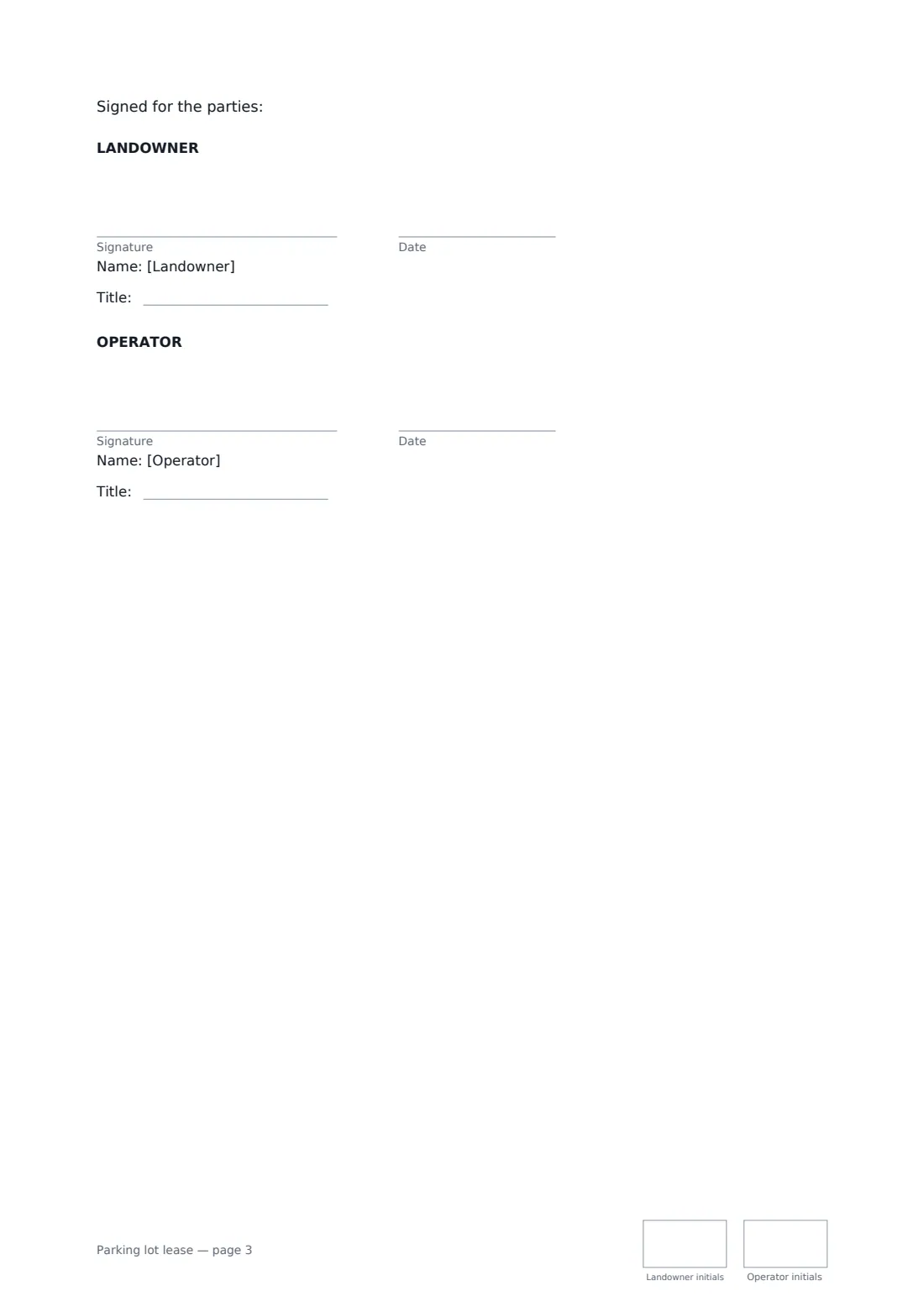
- Landowner and operator, with job titles and initials on every page
- Rent options
- Fixed monthly, percentage of Gross Revenue, or the greater of the two
- Length
- 3 pages
When to use a parking lot lease
- Leasing a vacant downtown lot to a parking company while plans for it are made
- A church or school letting its lot to an operator on weekdays
- An office owner outsourcing its surface car park, keeping reserved spaces
- A landowner near a stadium sharing event-day revenue with an operator
- Replacing a handshake deal with an existing operator with a written lease
What you fill in
24 blanks, then the name and email of each person who signs: landowner, operator.
1 The parties
- Date of this lease*
- Landowner (legal name)*
- Landowner's address
- Operator (legal name)*
- Operator's address
2 The lot
- Lot address*
- Description of the lot*
- Spaces kept for the Landowner (optional)
3 Term
- Start date*
- Term* 1 year · 2 years · 3 years · 5 years · 10 years
- Renewal* It continues from year to year until either party gives the notice below. · It ends at the end of the term unless the parties agree a renewal in writing.
- Notice to end at the end of the term or a renewal year (days)*
- Landowner may end early for redevelopment or sale, on notice of (days, optional)
4 Rent
- Rent* a fixed monthly rent · a percentage of Gross Revenue · the greater of a fixed monthly minimum rent and a percentage of Gross Revenue
- Currency*
- Fixed or minimum monthly rent (if any)
- Landowner's share of Gross Revenue, % (if any)
- Security deposit (optional)
5 Operations
- Parking rates* The Operator sets parking rates and hours at its discretion. · The Operator sets parking rates and hours, but needs the Landowner's written approval for any change, which will not be unreasonably withheld. · The Operator will charge the rates set out below unless the Landowner agrees otherwise in writing.
- Rates and hours (optional)
- Lighting* The Operator maintains the lot's lighting and pays for its electricity. · The Landowner maintains the lot's lighting and pays for its electricity, and the Operator reports any failure promptly.
6 Insurance
- Minimum liability cover per occurrence*
- Other insurance the Operator keeps*
- Governing law*
7 Who signs
- Landowner signature and date, job title, initials on every page · The owner of the lot, signed by an authorised person.
- Operator signature and date, job title, initials on every page · The parking company that will run the lot, signed by an authorised person.
What the parking lot lease covers
- The lot
- Term
- Rent
- Rates, signage and equipment
- Enforcement and towing
- Maintenance, lighting and security
- Law, permits and taxes
- Insurance and liability
- Default and the end of the Lease
- General
Using the parking lot lease, step by step
1 Describe the lot
Enter both parties, the lot's address and description, and any spaces kept for the landowner.
2 Set the term
Choose the start date, term and renewal, the notice period, and if you want it, the landowner's notice to end early for a sale or redevelopment.
3 Agree the rent
Choose fixed, percentage or greater-of rent, enter the amounts and share, and add a security deposit if you want one.
4 Operations, insurance and sending
Choose how rates are set and who handles lighting, enter the liability cover and other insurance, and send it to the operator to sign.
Tips before you send it
- Towing and clamping on private land is tightly regulated in many places. Make sure the operator's signs and procedures meet local rules before enforcement starts.
- If you choose a revenue share, ask for read-only access to the operator's pay-station or app reporting as well as the monthly report.
- Agree with your insurer what cover the operator must carry, then put those figures in the lease.
- File the lease in FileIt with the end of the term as its expiry date and the operator's insurance certificate as a separate document with its own expiry.
Sign it online in minutes
- Fill in the blanks. Names, dates and amounts go straight into the agreement — the preview shows exactly where.
- Name who signs. Tick “This is me” for your own part. FileIt builds the PDF with every signature, date and initials box on the right line, and you can check or move anything before sending.
- Send it. Each signer gets a secure link and signs from any device — no account needed. The signed PDF, with an audit trail and a Certificate of Completion, is filed in your vault and emailed to everyone.
Parking lot lease: frequently asked questions
What counts as Gross Revenue?
Everything received from parking at the lot, including hourly and daily fees, permits, validations and event parking, less only taxes collected from customers and actual refunds. Penalties collected by third parties are excluded.
Can the operator tow cars?
Only to the extent the law allows, with the signs and procedures the law requires, and using a licensed towing company. The operator handles appeals and complaints and can't tow the landowner's vehicles without consent.
Who pays for resurfacing?
The landowner pays for major structural work such as resurfacing, regrading and drainage replacement, unless the operator caused the need for it. The operator handles day-to-day upkeep like sweeping, line markings, snow and potholes.
Can I end the lease if I want to build on the lot?
Only if you fill in the redevelopment notice period. Then you can end it on that notice if you intend to sell or redevelop, refunding any rent paid in advance for the period after the end date. The operator then honours or refunds monthly permits it has sold.