What is a ground lease agreement?
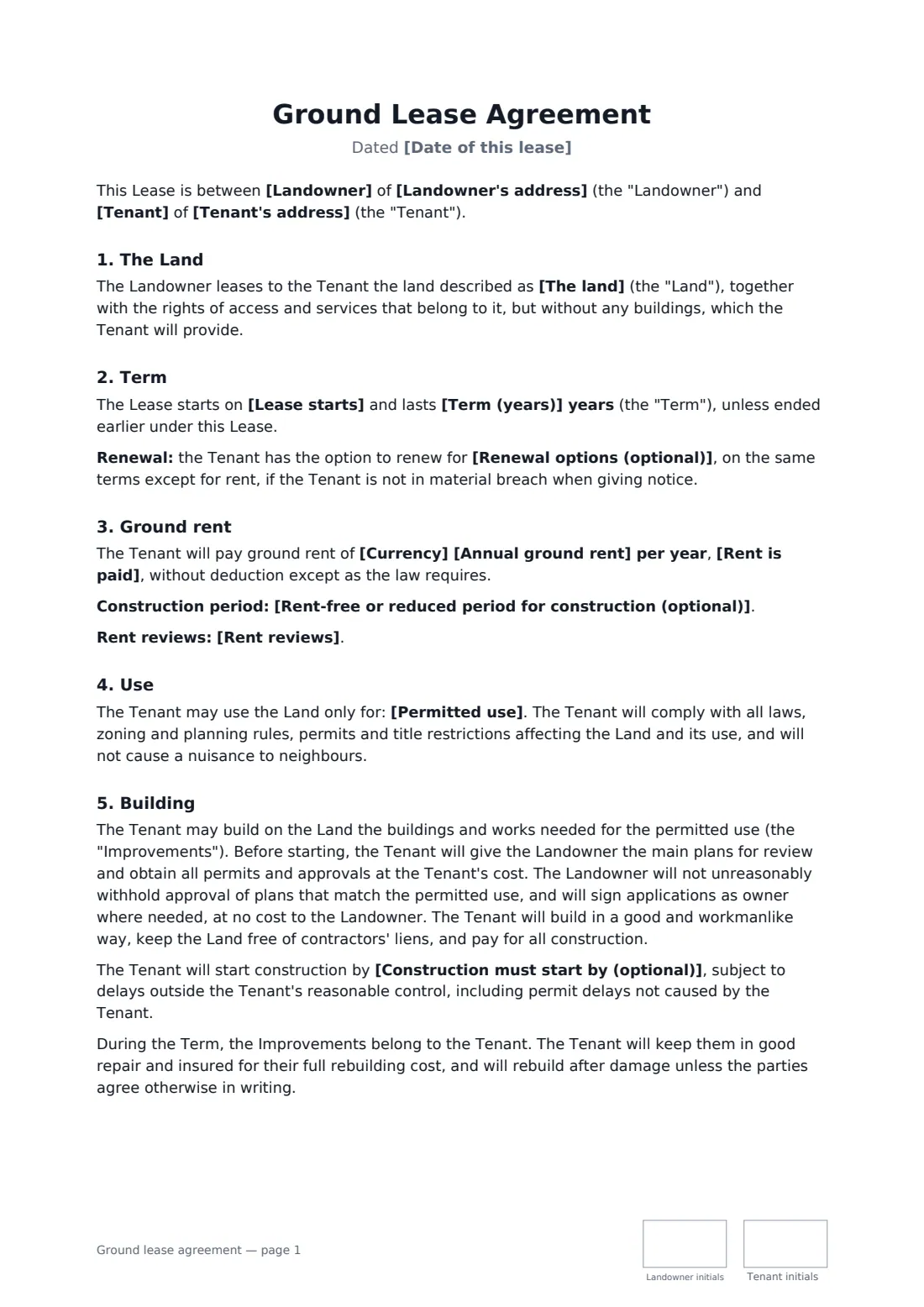
In a ground lease, a landowner keeps ownership of the land but leases it, usually for decades, to a tenant who builds and runs something on it — a shop, offices, homes or a facility. The tenant gets to develop without buying the land; the owner gets long-term income and, often, the buildings at the end.
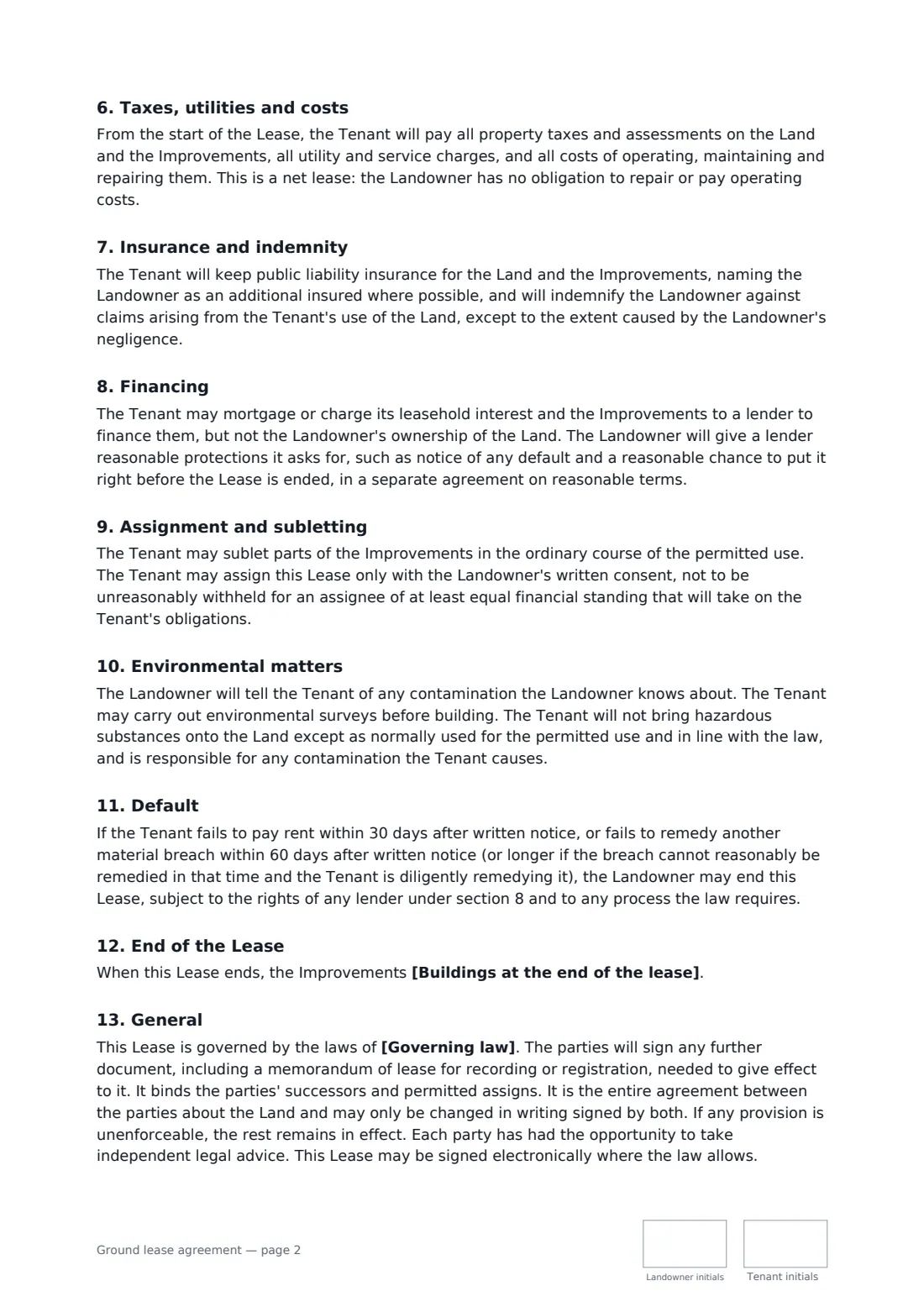
This template covers the land and permitted use, the term and renewal options, ground rent with a construction rent-free period and reviews, building approvals and a start deadline, ownership and insurance of the improvements, a net-lease cost allocation, liability insurance, leasehold financing with lender protections, assignment and subletting, environmental matters, default and cure periods, and three choices for what happens to the buildings at the end. Long land leases usually need a lawyer's final form and recording, so use it as a starting draft or term sheet.
- Best for
- Long-term leases of vacant land for building on
- Signed by
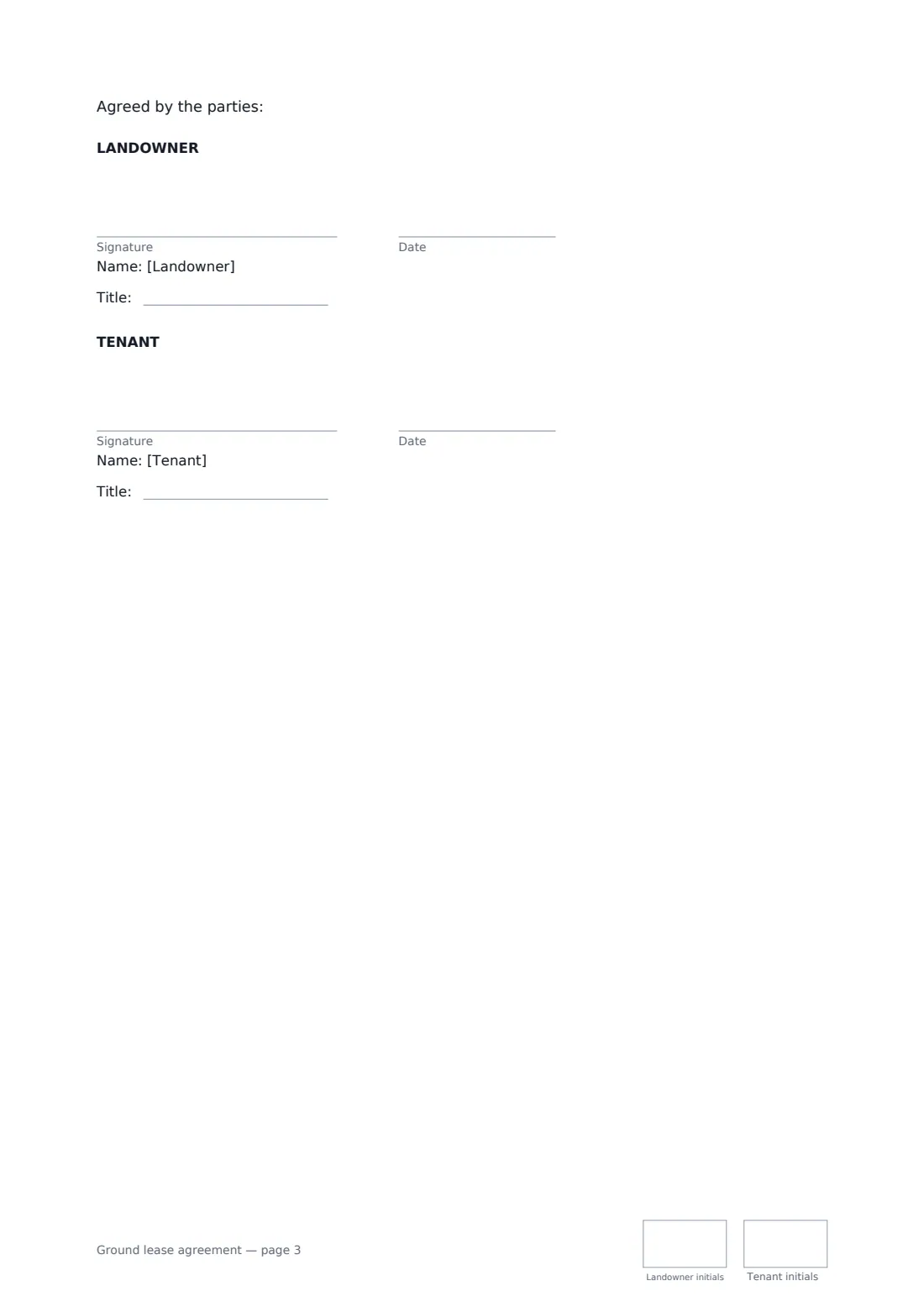
- Landowner and tenant (both with job titles)
- End of term
- Buildings revert free, revert at market value, or are removed
- Length
- 3 pages
When to use a ground lease agreement
- A landowner leasing a plot for a retail or commercial building
- A family keeping land in the family while letting a developer build
- A church, school or charity leasing spare land
- Leasing land for a self-storage or car wash development
- Agreeing heads of terms before lawyers draft the final lease
What you fill in
18 blanks, then the name and email of each person who signs: landowner, tenant.
1 The parties
- Date of this lease*
- Landowner*
- Landowner's address*
- Tenant*
- Tenant's address*
2 The land
- The land*
- Permitted use*
3 Term and rent
- Lease starts*
- Term (years)*
- Renewal options (optional)
- Currency*
- Annual ground rent*
- Rent is paid* in equal monthly instalments in advance · in equal quarterly instalments in advance · yearly in advance
- Rent-free or reduced period for construction (optional)
- Rent reviews*
4 Building
- Construction must start by (optional)
- Buildings at the end of the lease* become the property of the Landowner, without payment, in good repair · become the property of the Landowner, who will pay the Tenant their fair market value as agreed or determined by an independent valuer · must be removed by the Tenant, at the Tenant's cost, and the Land returned cleared and level, unless the Landowner chooses in writing to keep them
5 Other terms
- Governing law*
6 Who signs
- Landowner signature and date, job title, initials on every page · The owner of the land. For a company or trust, the person signing for it.
- Tenant signature and date, job title, initials on every page · The person or business leasing the land to build on it.
What the ground lease agreement covers
- The Land
- Term
- Ground rent
- Use
- Building
- Taxes, utilities and costs
- Insurance and indemnity
- Financing
- Assignment and subletting
- Environmental matters
- Default
- End of the Lease
- General
Using the ground lease agreement, step by step
1 Name the parties and land
Enter the landowner, tenant, a description of the land with any parcel number, and the permitted use.
2 Set term and rent
Enter the start date, length, renewal options, annual ground rent, how it's paid, any construction rent-free period and the review mechanism.
3 Decide the building terms
Add a construction start deadline if you want one, and choose what happens to the buildings at the end.
4 Review with advisers
Add the governing law, have both sides' advisers review it, then send for signature.
Tips before you send it
- Long leases of land often must be witnessed, notarised or registered to bind buyers and lenders — have a lawyer put it in final form.
- Lenders financing the tenant's building will want notice and cure rights; the agreement provides for a separate lender agreement.
- Index-linked reviews should say whether rent can go down.
- Keep the signed lease, plans and permits together in your vault — the term may outlast everyone's memory.
Sign it online in minutes
- Fill in the blanks. Names, dates and amounts go straight into the agreement — the preview shows exactly where.
- Name who signs. Tick “This is me” for your own part. FileIt builds the PDF with every signature, date and initials box on the right line, and you can check or move anything before sending.
- Send it. Each signer gets a secure link and signs from any device — no account needed. The signed PDF, with an audit trail and a Certificate of Completion, is filed in your vault and emailed to everyone.
Ground lease agreement: frequently asked questions
Who owns the buildings?
During the term the tenant owns the improvements. At the end they revert to the landowner free, revert for fair market value, or must be removed — you choose.
Can the tenant get a mortgage?
Yes, on its leasehold interest and the improvements, but not on the landowner's ownership of the land. The landowner agrees to give a lender reasonable protections.
Who pays property taxes?
The tenant. It's a net lease: the tenant pays taxes, utilities and all running, maintenance and repair costs.
Is an e-signed ground lease valid?
Electronic signatures are generally accepted for ordinary agreements like a ground lease in the US (ESIGN Act and UETA), the UK, the EU (eIDAS) and Canada, though local rules can add requirements. FileIt keeps an audit trail and a Certificate of Completion with the signed PDF.