What is a lone worker policy acknowledgement?
Home visitors, field engineers, security staff, night-shift workers and people who open or close a site all work without colleagues close by. If something goes wrong, the check-in routine is what brings help. A signed acknowledgement confirms each lone worker knows it and has the equipment and training to follow it.
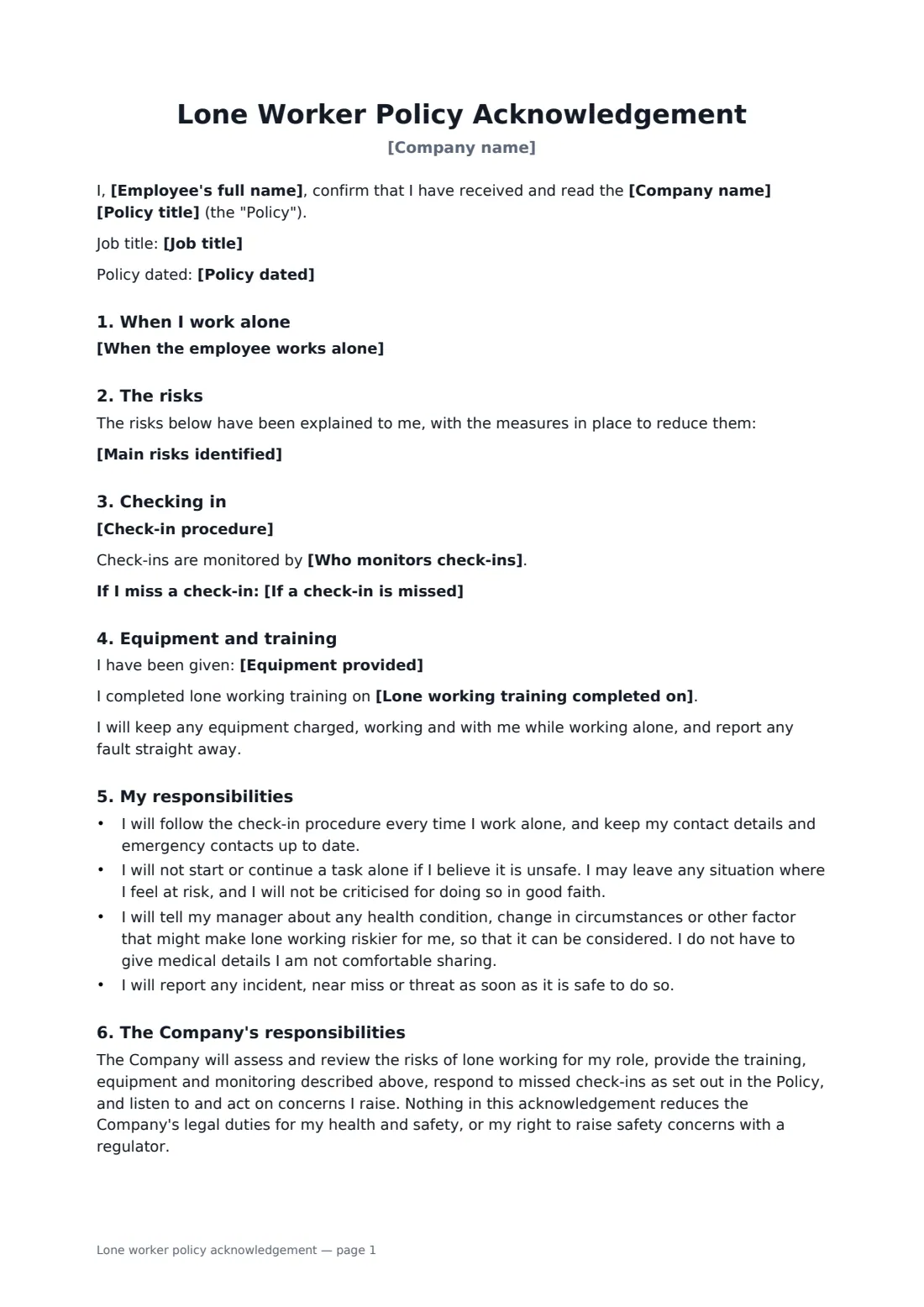
This acknowledgement lists when the employee works alone and the main risks from your risk assessment. It sets out the check-in procedure, who monitors it, and the escalation steps when a check-in is missed, and can record that a distress code word was agreed verbally — without writing it down. It covers equipment and training, the employee's right to leave an unsafe situation, and the company's own responsibilities.
- Best for
- Field staff, home visitors, night workers and anyone opening or closing alone
- Signed by
- The employee and the employer
- Covers
- Risks, check-ins, missed check-ins, equipment and training
- Length
- About 2 pages
When to use a lone worker policy acknowledgement
- Carers and health visitors working in clients' homes
- Engineers and surveyors visiting remote sites
- Retail staff opening or closing a shop alone
- Security guards and night-shift workers
- Estate agents conducting viewings on their own
What you fill in
13 blanks, then the name and email of each person who signs: employee, employer.
1 Details
- Company name*
- Employee's full name*
- Job title
- Policy title*
- Policy dated
2 Lone work
- When the employee works alone*
- Main risks identified*
3 Check-in
- Check-in procedure*
- Who monitors check-ins*
- If a check-in is missed*
4 Equipment and training
- Equipment provided
- Lone working training completed on
- Distress code word arranged* No · Yes — given to the Employee verbally, not written here
5 Who signs
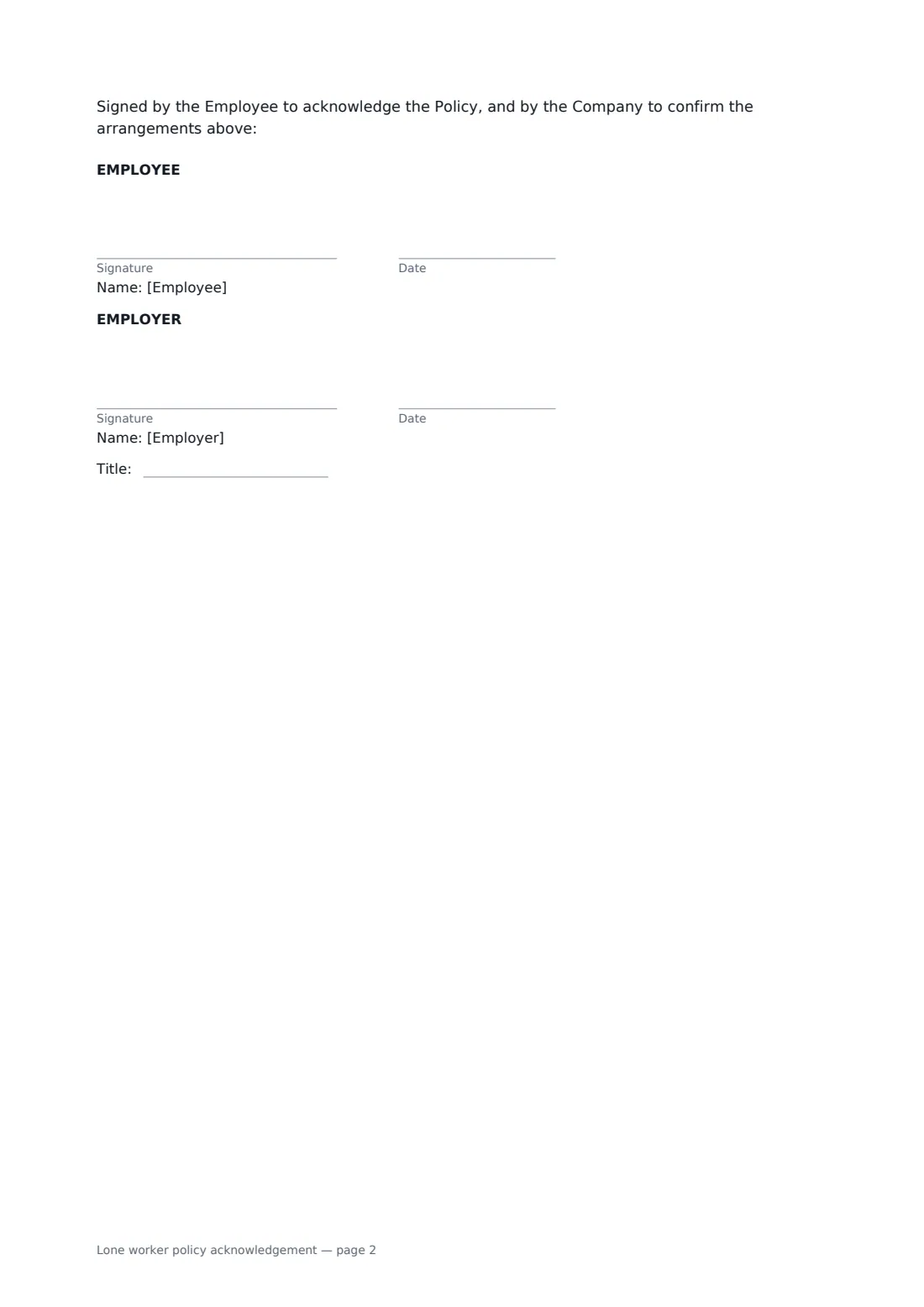
- Employee signature and date
- Employer signature and date, job title · The manager or health and safety lead recording the acknowledgement.
What the lone worker policy acknowledgement covers
- When I work alone
- The risks
- Checking in
- Equipment and training
- My responsibilities
- The Company's responsibilities
Using the lone worker policy acknowledgement, step by step
1 Describe the lone work
Explain when the employee works alone and list the main risks from your risk assessment, one per line.
2 Set out the check-in procedure
Describe how and when the employee checks in, who monitors it, and exactly what happens if a check-in is missed.
3 Record equipment and training
List the equipment provided, the training date, and whether a distress code word has been agreed. Never write the code word itself on the form.
4 Send for signature
The employee signs first to acknowledge, and you sign to confirm the arrangements. The record is kept in your vault.
Tips before you send it
- Test the check-in system before relying on it — including what happens out of hours.
- Make sure the person monitoring check-ins knows the escalation steps and has the emergency contacts to hand.
- Review the arrangements after any incident or near miss.
- Pair this with the emergency contact form so the monitor knows who to call.
Sign it online in minutes
- Fill in the blanks. Names, dates and amounts go straight into the agreement — the preview shows exactly where.
- Name who signs. Tick “This is me” for your own part. FileIt builds the PDF with every signature, date box on the right line, and you can check or move anything before sending.
- Send it. Each signer gets a secure link and signs from any device — no account needed. The signed PDF, with an audit trail and a Certificate of Completion, is filed in your vault and emailed to everyone.
Lone worker policy acknowledgement: frequently asked questions
Is lone working allowed?
Generally yes, as long as the risks are assessed and controlled. Some high-risk tasks may not be suitable for lone working at all. Check the health and safety rules where you operate.
Why isn't the code word written on the form?
A distress code word only works if it stays secret. The form records that one was agreed verbally, without writing it down.
Can the employee refuse an unsafe task?
The acknowledgement says the employee won't start or continue a task alone if they believe it's unsafe, may leave any situation where they feel at risk, and won't be criticised for doing so in good faith.
Does signing shift safety responsibility to the employee?
No. It says nothing reduces the company's legal duties for the employee's health and safety.