What is a insulation installation contract?
Insulation is out of sight once it's in, which is why the paperwork matters. An insulation installation contract records the material, the depth or thickness and the rating the customer is paying for, and what the installer will do about ventilation, old insulation and anything unpleasant found in the attic.
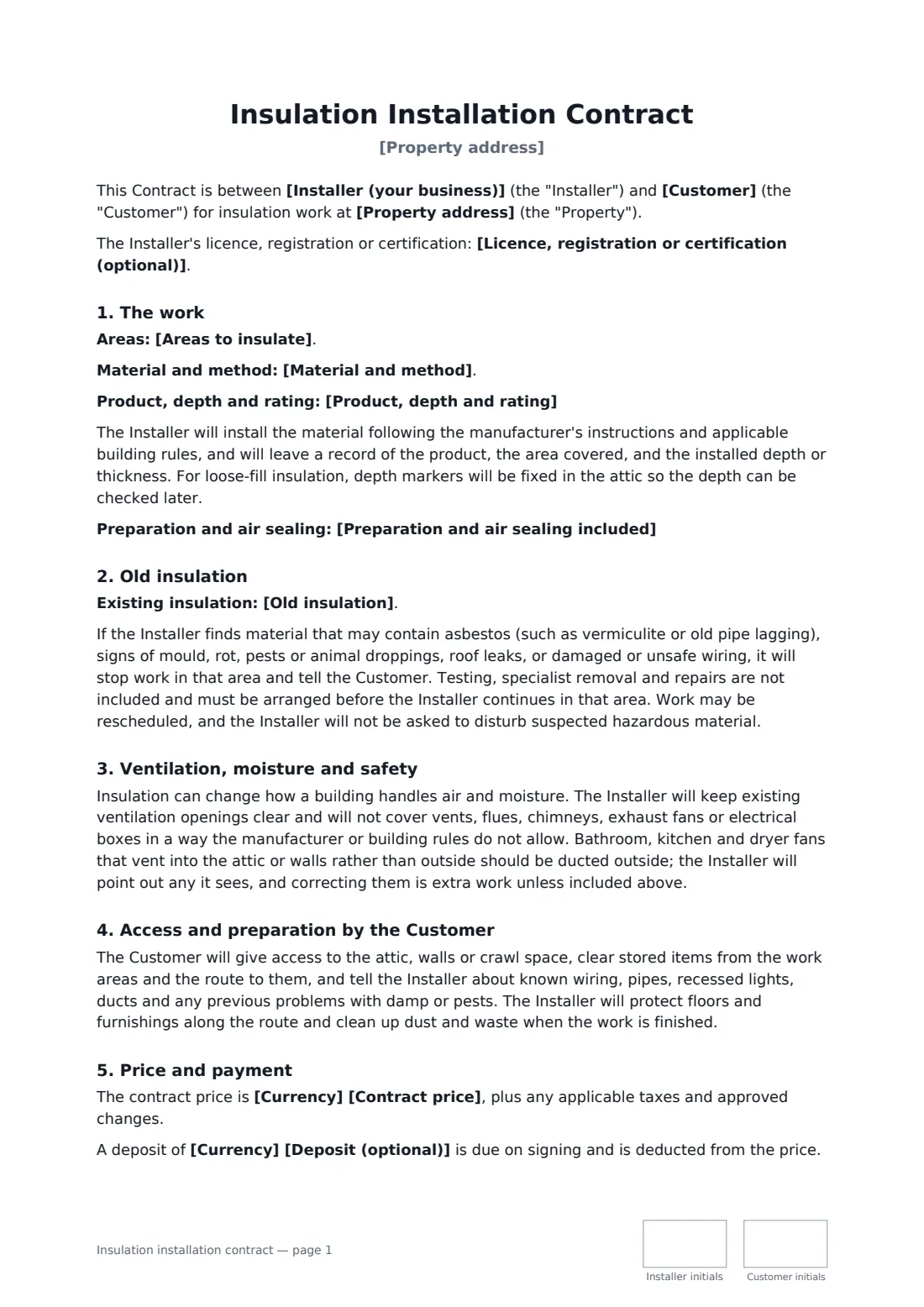
This template covers attics and lofts, walls, crawl spaces and cavity walls, in blown-in loose fill, batts, spray foam, rigid boards or a combination. It records the areas, the product, depth and rating, an editable list of air sealing and preparation, and whether old insulation is left, removed in the price or removed for a separate price. It has a stop-work rule for suspected asbestos, mould, pests, leaks and unsafe wiring, a ventilation and moisture clause, and a re-occupancy clause that appears when spray foam is chosen. It also sets the customer's access and clearing duties, the price, deposit and installation date, an optional rebate clause that keeps the scheme's decision separate from the price, and a workmanship warranty that makes no promises about energy savings.
- Best for
- Insulation installers, energy retrofit firms and builders
- Signed by
- The installer and the customer
- Covers
- Depth and rating, old insulation, ventilation, hazards, rebates, warranty
- Length
- About 2 to 3 pages, initialled on every page
When to use a insulation installation contract
- Topping up attic insulation with blown-in cellulose
- Removing rodent-damaged insulation and re-insulating the attic
- Spray foam insulation in a crawl space or rim joists
- Injecting cavity wall insulation in an older house
- Insulation work claimed under a utility rebate scheme
What you fill in
19 blanks, then the name and email of each person who signs: installer, customer.
1 The parties
- Installer (your business)*
- Your phone or email*
- Licence, registration or certification (optional)
- Customer*
- Customer phone or email*
2 The work
- Property address*
- Areas to insulate*
- Material and method* blown-in loose-fill insulation · batts or rolls · spray foam insulation · rigid insulation boards · injected cavity wall insulation · a combination of materials described below
- Product, depth and rating*
- Old insulation* left in place, with new insulation added on top · removed and disposed of by the Installer, included in the price · removed and disposed of by the Installer, priced separately below · none in the work areas
- Removal price (if priced separately)
- Preparation and air sealing included
3 Price and payment
- Currency*
- Contract price*
- Deposit (optional)
- Rebate, grant or incentive (optional)
4 Schedule and warranty
- Installation date*
- Workmanship warranty (months)*
- Governing law*
5 Who signs
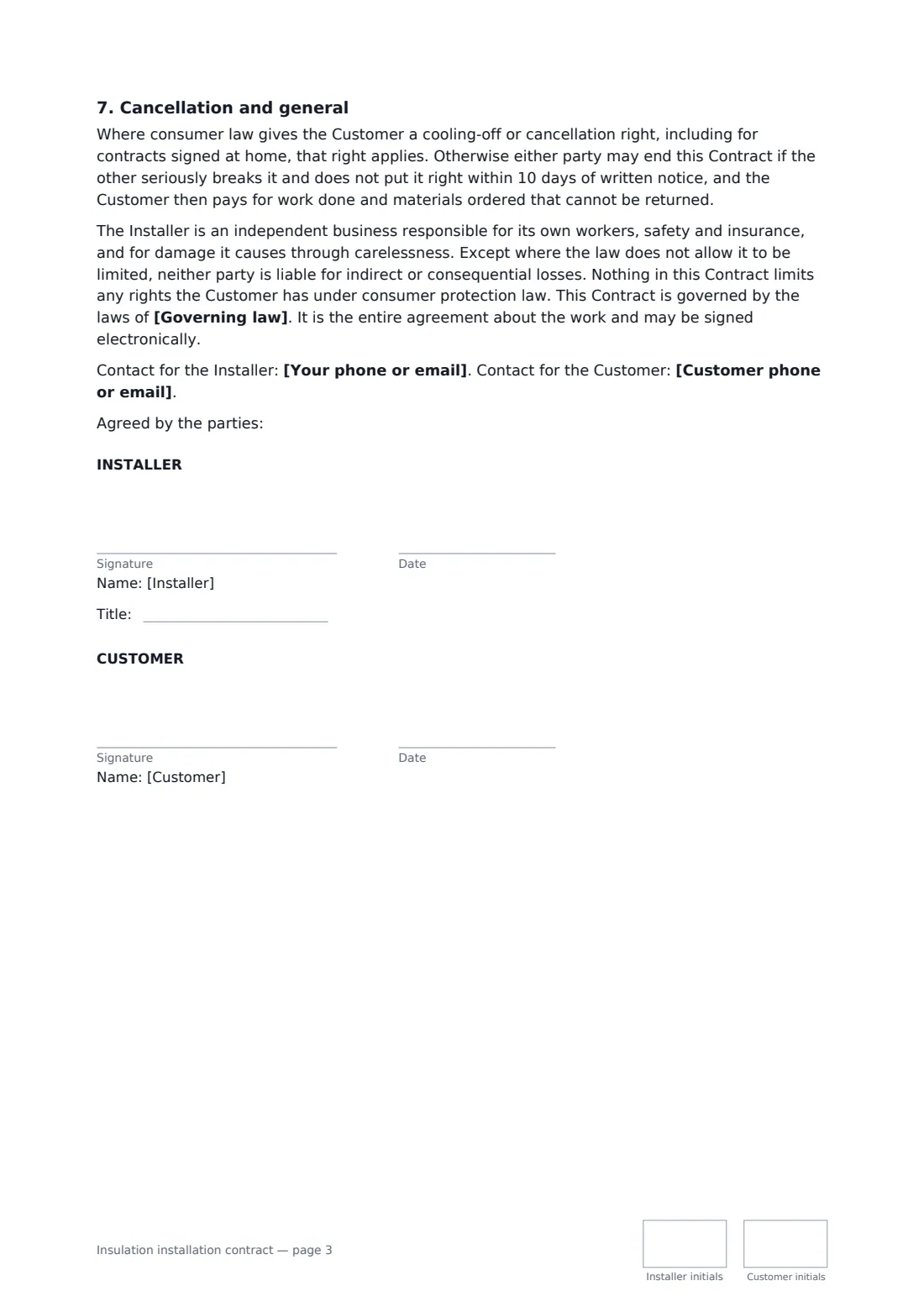
- Installer signature and date, job title, initials on every page · The insulation business doing the work.
- Customer signature and date, initials on every page · The property owner, or someone authorised by the owner.
What the insulation installation contract covers
- The work
- Old insulation
- Ventilation, moisture and safety
- Access and preparation by the Customer
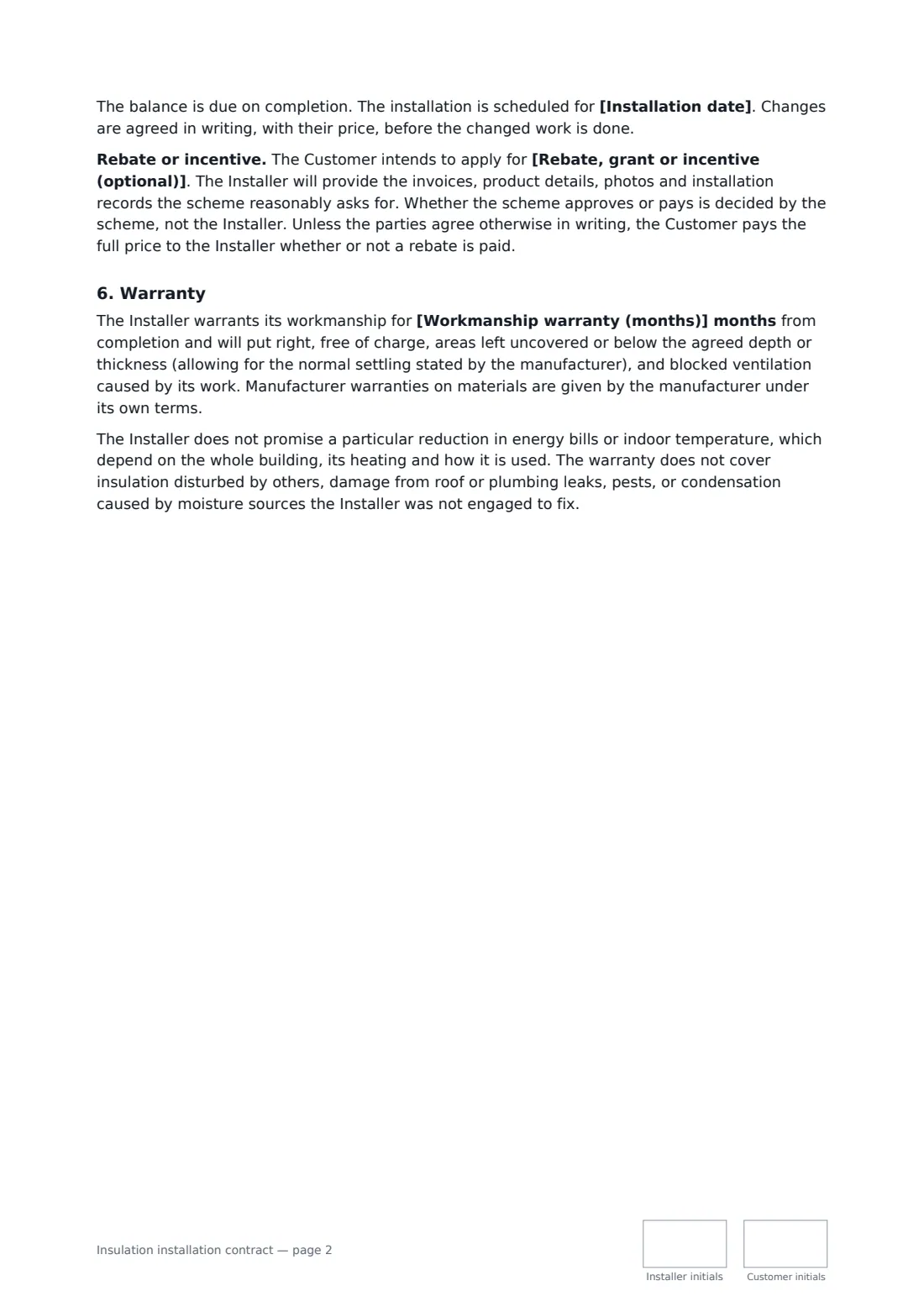
- Price and payment
- Warranty
- Cancellation and general
Using the insulation installation contract, step by step
1 Describe the work
Enter the areas, choose the material and method, and quote the product, depth or thickness and rating as the manufacturer states them.
2 Old insulation and preparation
Choose whether old insulation stays or is removed, add a removal price if separate, and edit the pre-filled air sealing and preparation list.
3 Price and rebate
Enter the price, an optional deposit and the installation date. Name any rebate scheme the customer is applying for to add the paperwork clause.
4 Warranty and send
Set the workmanship warranty in months and the governing law, then send it to the customer to sign.
Tips before you send it
- Photograph the attic before and after, with the depth markers visible. Rebate schemes often ask for exactly that.
- Never disturb vermiculite or other material that may contain asbestos. The contract has you stop and the customer arrange testing.
- Check that bathroom and kitchen fans vent outside, not into the attic. Insulating over them can trap moisture.
- Some rebate schemes only accept registered installers or specific products. Check the scheme's rules before you quote.
Sign it online in minutes
- Fill in the blanks. Names, dates and amounts go straight into the agreement — the preview shows exactly where.
- Name who signs. Tick “This is me” for your own part. FileIt builds the PDF with every signature, date and initials box on the right line, and you can check or move anything before sending.
- Send it. Each signer gets a secure link and signs from any device — no account needed. The signed PDF, with an audit trail and a Certificate of Completion, is filed in your vault and emailed to everyone.
Insulation installation contract: frequently asked questions
Does the contract promise lower energy bills?
No. It records the product, depth and rating installed and warrants the workmanship, but states that savings depend on the whole building, its heating and how it's used.
What happens if the installer finds asbestos or mould?
The installer stops work in that area and tells the customer. Testing, specialist removal and repairs aren't included and must be arranged before work continues there.
Who gets the rebate?
The customer applies and the installer provides the invoices, photos and records the scheme asks for. The scheme decides whether to pay, and unless agreed otherwise the customer pays the full price either way.
What about spray foam safety?
If you choose spray foam, the contract adds a clause keeping the household out during spraying and for the manufacturer's re-occupancy period, which the installer gives in writing beforehand.
Can I sign it electronically?
Yes. E-signatures are generally valid for home improvement contracts in the US, UK, EU and Canada, though some places add notice rules for contracts signed at home. FileIt keeps an audit trail with the signed PDF.