What is a film distribution agreement?
Once a film is finished, a distributor can get it into cinemas, onto streaming platforms, onto television and into schools and libraries. Independent filmmakers often hear horror stories about these deals: expenses that swallow every dollar, statements that never arrive, and rights tied up for years by a distributor that never really released the film. The protections are not complicated, but they have to be in the contract.
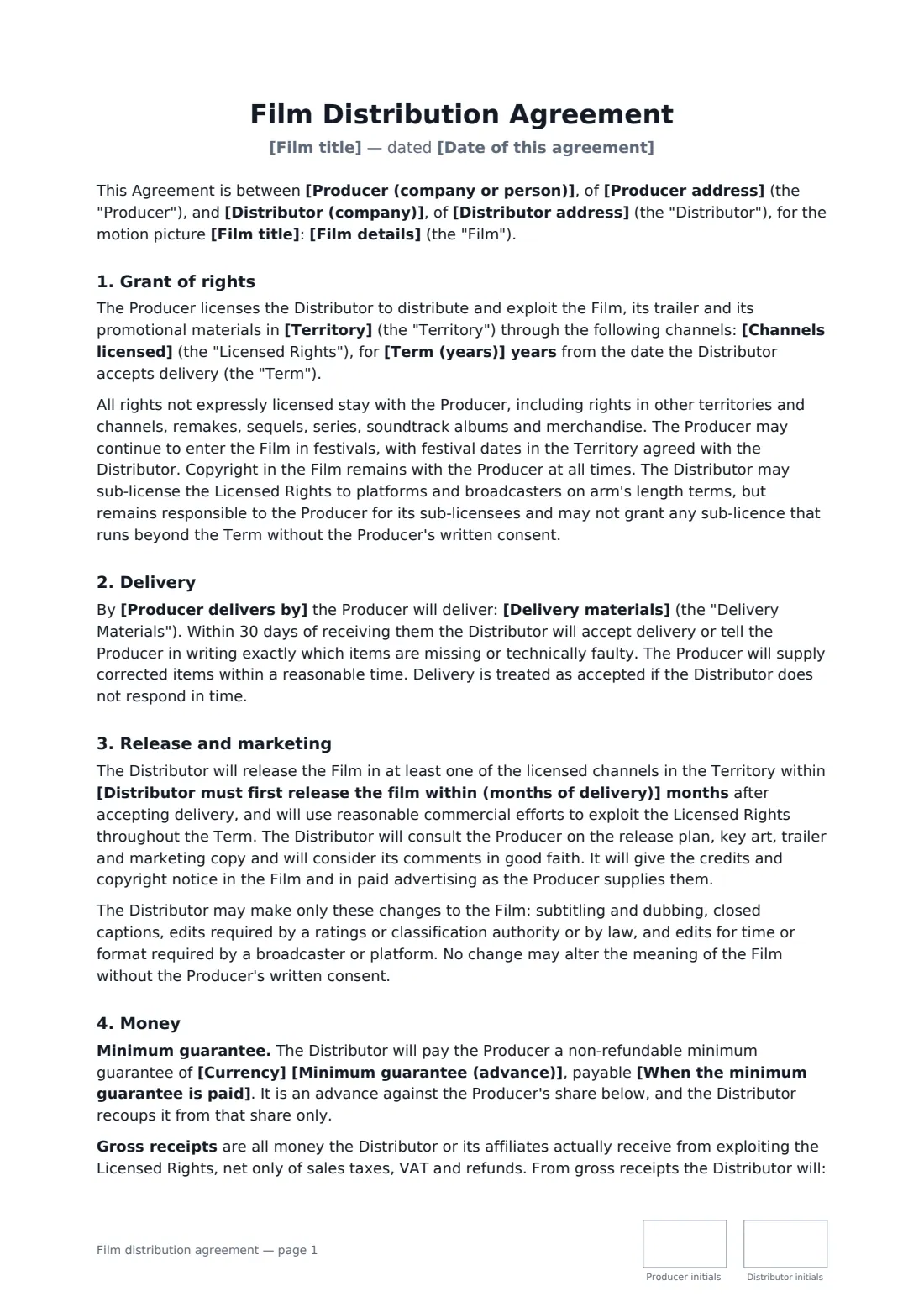
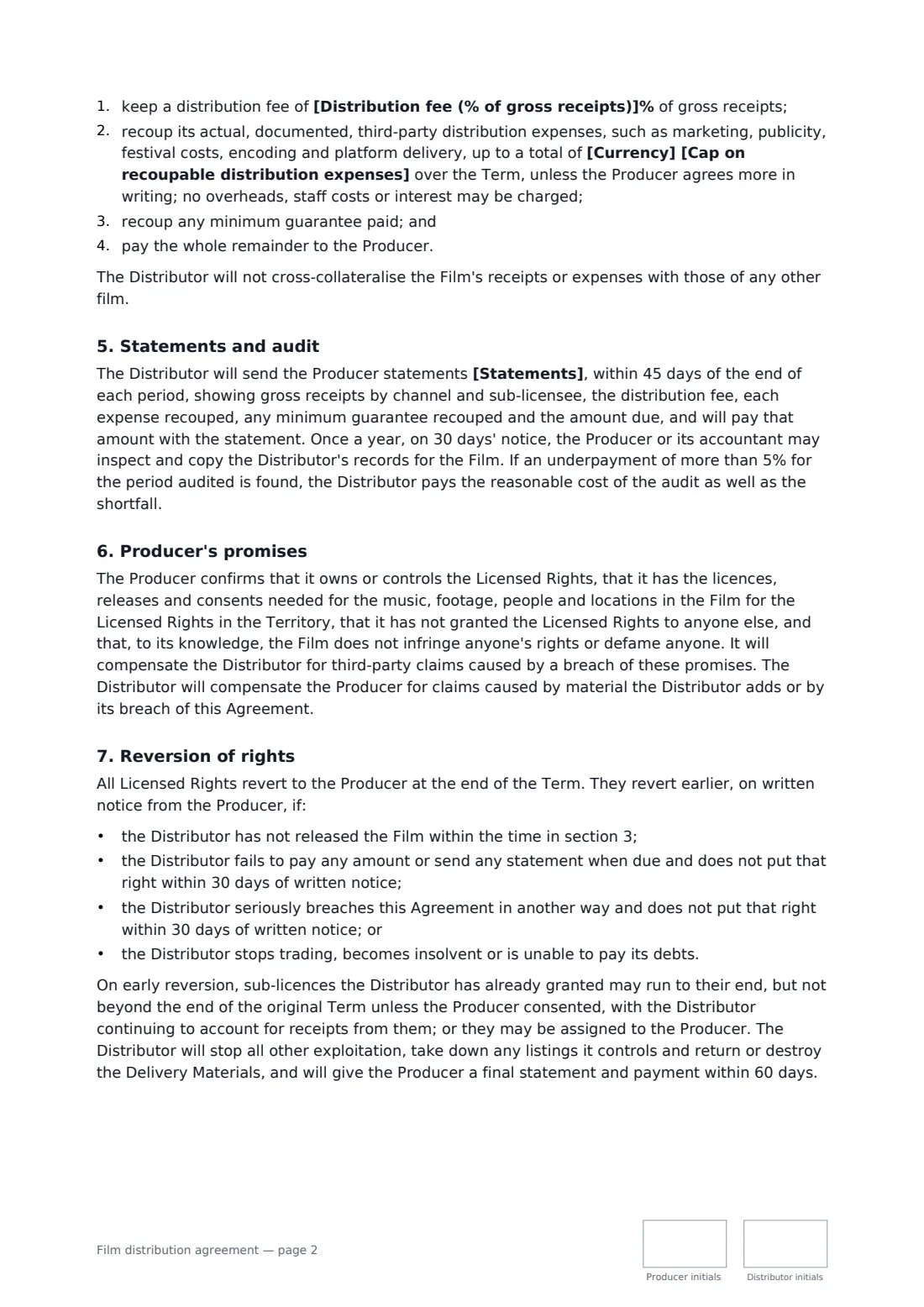
This template licenses a named film for a territory and the channels you list, exclusively or not, for a set term. It sets a delivery date and the delivery materials list with a 30-day acceptance window, who obtains and pays for errors and omissions insurance, a release deadline and consultation on marketing. The money flows in a fixed order: the distributor's percentage fee, then documented third-party expenses up to a hard cap, then any minimum guarantee, with the rest to the producer and no cross-collateralisation. Regular statements, an annual audit right, permitted edits only, and reversion for non-release, non-payment, serious breach or insolvency complete the deal.
- Best for
- Independent features, documentaries and shorts with a distributor or aggregator
- Signed by
- The producer and the distributor
- Money
- Optional minimum guarantee, percentage fee, capped expenses, remainder to the producer
- Length
- About 3 pages, initialled on every page
When to use a film distribution agreement
- A documentary licensed to a distributor for North American streaming and educational sales
- An indie feature with a small minimum guarantee for one country
- A short film collection licensed non-exclusively to an online platform
- A distributor using one fair standard deal for the filmmakers it signs
- A producer licensing only television and airline rights while handling streaming directly
What you fill in
22 blanks, then the name and email of each person who signs: producer, distributor.
1 The parties
- Date of this agreement*
- Producer (company or person)*
- Producer address
- Distributor (company)*
- Distributor address
2 The film
- Film title*
- Film details*
3 Rights
- Territory*
- Channels licensed*
- Exclusive in the territory and channels?* Yes · No
- Term (years)*
- Distributor must first release the film within (months of delivery)*
4 Money
- Currency*
- Minimum guarantee (advance)
- When the minimum guarantee is paid
- Distribution fee (% of gross receipts)*
- Cap on recoupable distribution expenses*
- Statements* quarterly for the first two years and then every six months · quarterly throughout the term · every six months throughout the term
5 Delivery
- Delivery materials*
- Producer delivers by*
- Errors and omissions insurance* The Producer obtains it at its own cost · The Distributor obtains it and recoups the premium as an expense · The Distributor obtains it at its own cost · Not required
- Governing law*
6 Who signs
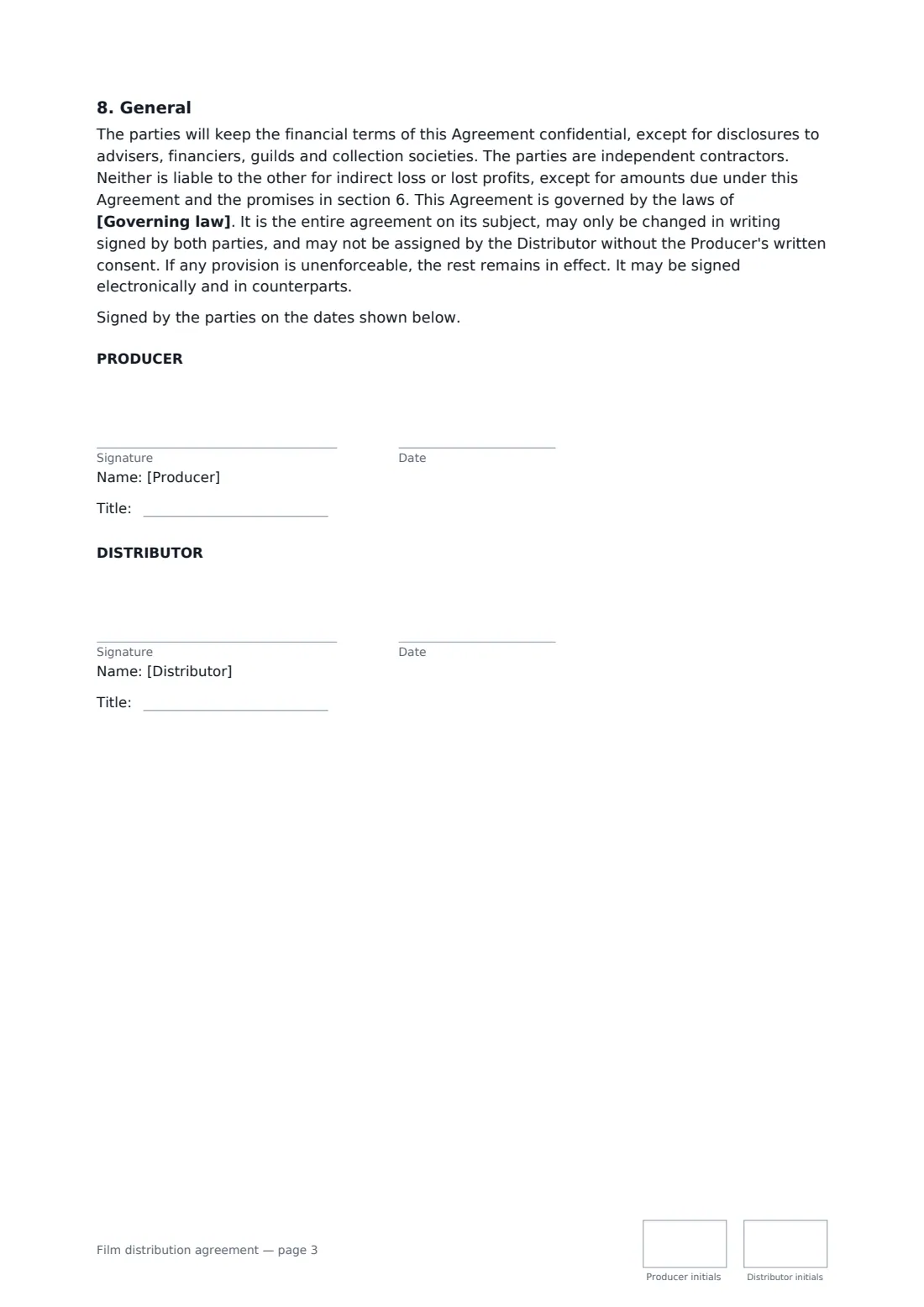
- Producer signature and date, job title, initials on every page · The person signing for the production company or filmmaker that owns the film.
- Distributor signature and date, job title, initials on every page · The person signing for the distribution company.
What the film distribution agreement covers
- Grant of rights
- Delivery
- Release and marketing
- Money
- Statements and audit
- Producer's promises
- Reversion of rights
- General
Using the film distribution agreement, step by step
1 Describe the film and the rights
Enter the title and details, the territory and the channels being licensed. Choose exclusivity and the term, and how soon the distributor must release the film.
2 Set the money
Add any minimum guarantee and when it is paid, the distribution fee percentage, the expense cap and how often statements are due.
3 List the delivery materials
Edit the delivery list to what the distributor actually needs, set the delivery date and choose who provides errors and omissions insurance.
4 Sign
Set the governing law and send for signature. Both parties initial every page and the signed agreement is stored in your vault.
Tips before you send it
- Delivery materials can cost real money, especially captions, music and effects tracks and insurance. Budget for the list before you sign.
- Platforms and broadcasters often demand clearances for every song and clip. Make sure your music licences cover the channels and territory you are licensing.
- Keep the term reasonable and the expense cap firm. Those two terms decide whether you see any money.
- Distribution deals vary hugely by country and channel. Have an entertainment lawyer review a deal with a large minimum guarantee or a long term.
Sign it online in minutes
- Fill in the blanks. Names, dates and amounts go straight into the agreement — the preview shows exactly where.
- Name who signs. Tick “This is me” for your own part. FileIt builds the PDF with every signature, date and initials box on the right line, and you can check or move anything before sending.
- Send it. Each signer gets a secure link and signs from any device — no account needed. The signed PDF, with an audit trail and a Certificate of Completion, is filed in your vault and emailed to everyone.
Film distribution agreement: frequently asked questions
What is a minimum guarantee?
An advance the distributor pays up front against the producer's future share. Under this template it is non-refundable and recouped only from the producer's share.
What stops expenses from swallowing the revenue?
Expenses must be actual, documented, third-party costs, overheads and interest are excluded, and the total is capped at the amount you set unless you agree more in writing. Receipts cannot be pooled with other films.
Can the distributor edit my film?
Only for subtitles, dubbing, captions, ratings or legal requirements, and broadcaster or platform timing. Nothing that changes the meaning without your consent.
How do I get my rights back?
At the end of the term, or earlier on notice if the film is not released in time, statements or payments stop after a 30-day warning, there is another serious breach, or the distributor becomes insolvent.