What is a life story rights release?
When a book, film, series, documentary or podcast is built around a real person's life, producers and publishers want a signed life rights release before they invest. It lets the creator portray the person and their story — including the dramatised parts — without the risk of a claim for defamation, privacy or misuse of their name. For the person whose story it is, the release is where they get paid, consulted and credited, and where they make sure the rights come back if nothing is ever made.
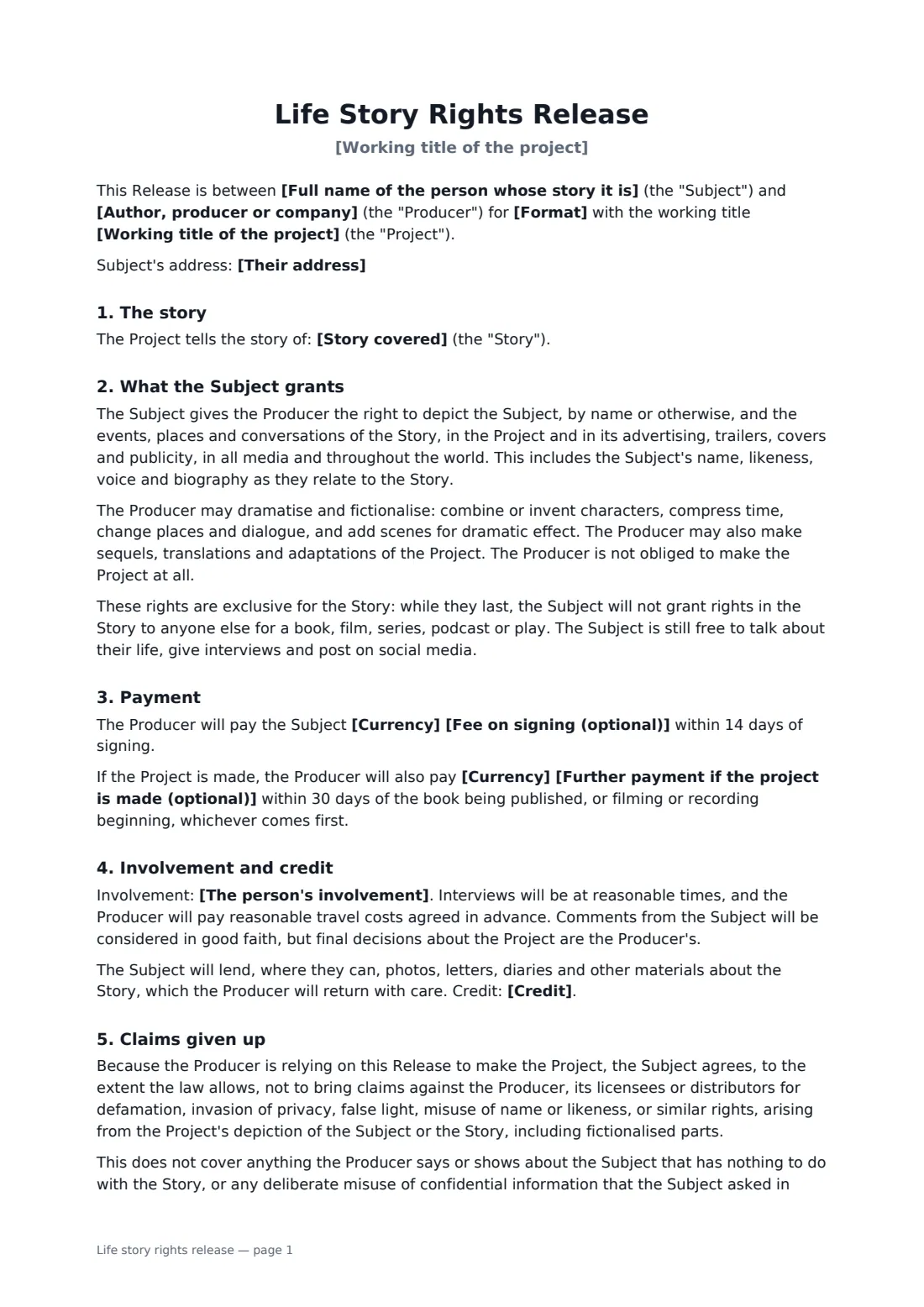
This template names the project and its format and describes the part of the person's life it covers. It grants the right to depict them and to fictionalise for dramatic effect, gives the producer exclusivity over that story while leaving the person free to talk about their own life, and sets a fee on signing and an optional further payment if the project is made. You choose the level of involvement and the credit. The person gives up claims about the depiction to the extent the law allows, with limits for anything unrelated to the story, and all rights revert after the number of years you set.
- Best for
- Biopics, true-story novels and memoirs, documentaries, podcasts, stage plays
- Signed by
- The person whose story it is, and the author or producer
- You set
- Project, format, story covered, fees, involvement, credit, reversion period
- Length
- About 2 pages
When to use a life story rights release
- An independent filmmaker making a feature based on a real rescue
- An author writing a novel inspired by someone's wartime experiences
- A podcast series built around one person's true-crime case
- A documentary following an athlete's comeback
- A playwright dramatising a local hero's life for the stage
What you fill in
13 blanks, then the name and email of each person who signs: person whose story it is, author or producer.
1 The parties
- Author, producer or company*
- Full name of the person whose story it is*
- Their address
2 The project
- Working title of the project*
- Format* a book · a feature film · a television or streaming series · a documentary · a podcast series · a stage play · a book and any film or series based on it
- Story covered*
3 Payment
- Currency*
- Fee on signing (optional)
- Further payment if the project is made (optional)
4 Involvement
- The person's involvement* up to 20 hours of interviews, and a chance to comment on a draft · interviews as reasonably needed, with no review of drafts · none beyond granting these rights
- Credit* "Based on the true story of" followed by the person's name · a mention in the acknowledgements or end credits · no credit, at the person's request
5 Rights coming back
- Rights come back if nothing is made within (years)*
- Governing law*
6 Who signs
- Person whose story it is signature and date
- Author or producer signature and date, job title
What the life story rights release covers
- The story
- What the Subject grants
- Payment
- Involvement and credit
- Claims given up
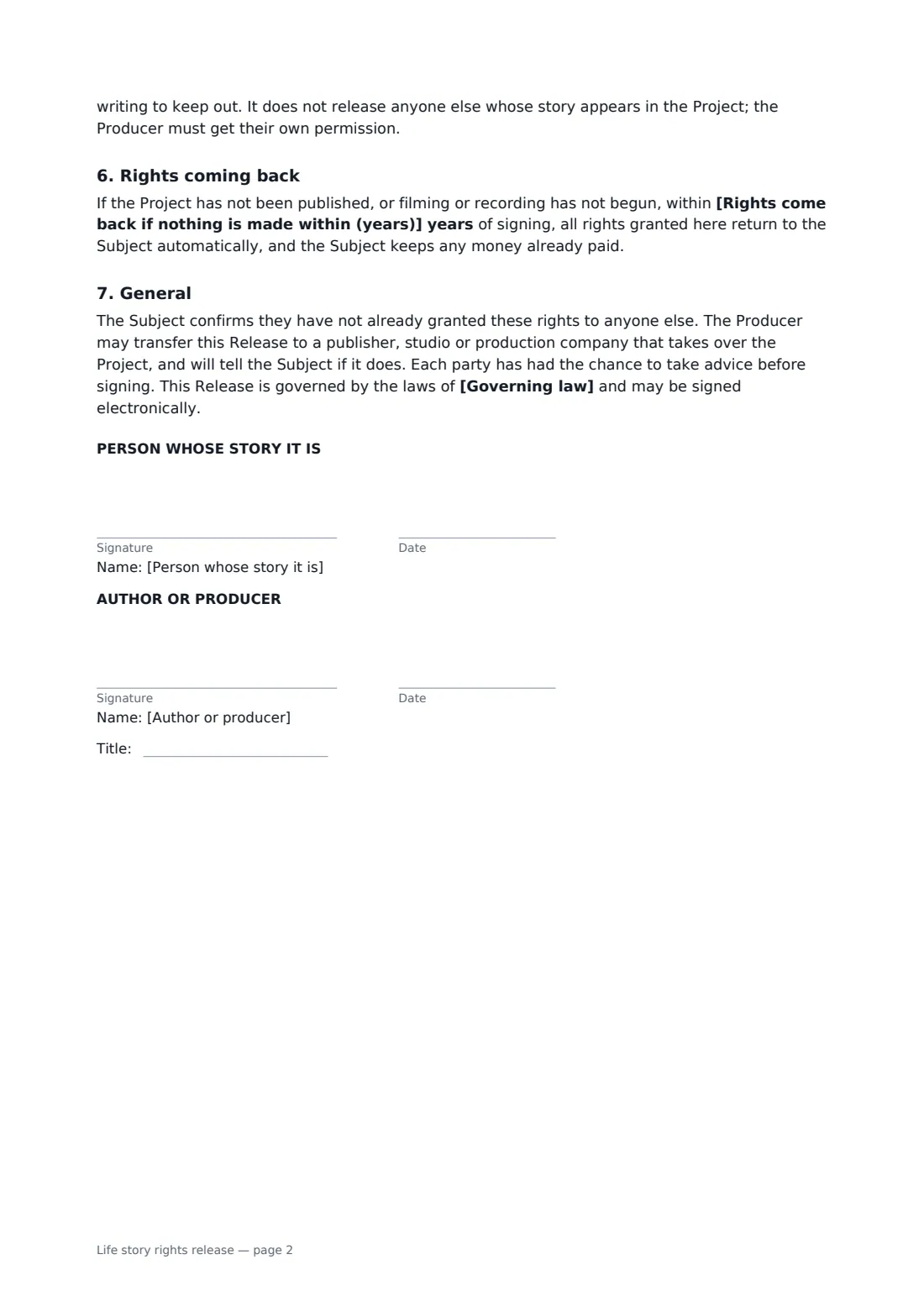
- Rights coming back
- General
Using the life story rights release, step by step
1 Name the project
Your name or company fills in from your account. Add the working title, pick the format and describe the part of the person's life the project covers — the narrower and clearer, the better for both sides.
2 Set the money
Enter a fee on signing, or leave it empty if none is paid now, and an optional further payment due when the book is published or filming begins.
3 Agree involvement and credit
Choose how much the person is involved — interviews and draft comments, interviews only, or nothing more — and how they are credited. Final decisions stay with the producer.
4 Set reversion and send
Choose how many years the producer has to make the project before the rights return, add the governing law and send it for signature.
Tips before you send it
- Everyone else who appears prominently in the story needs their own release. This one covers only the person who signs it.
- Life rights deals for studio films are often more complex, with option periods and back-end payments. Use this for smaller projects, or as a starting point with a lawyer.
- Agree in writing anything the person wants kept out of the project, such as a family member's medical history.
- Keep the reversion period realistic — five years is common for independent projects.
- The person whose story it is should take their own advice before signing.
Sign it online in minutes
- Fill in the blanks. Names, dates and amounts go straight into the agreement — the preview shows exactly where.
- Name who signs. Tick “This is me” for your own part. FileIt builds the PDF with every signature, date box on the right line, and you can check or move anything before sending.
- Send it. Each signer gets a secure link and signs from any device — no account needed. The signed PDF, with an audit trail and a Certificate of Completion, is filed in your vault and emailed to everyone.
Life story rights release: frequently asked questions
Do I need life rights to make a film about a real person?
Not always — public events and public records can often be portrayed without permission — but most producers and insurers want a release, because it removes the risk of defamation and privacy claims and gives access to the person's own memories and materials.
Can the producer change what really happened?
Yes, the release lets them combine or invent characters, compress time and add scenes for dramatic effect. The person can comment on drafts if you choose that option, but the final decisions are the producer's.
What happens if the project is never made?
If it isn't published, or filming or recording hasn't begun, within the period you set, the rights go back to the person automatically and they keep any money already paid.
Does the person give up all their rights?
No. They give up claims about how the project depicts them and the story, to the extent the law allows. The release doesn't cover things unrelated to the story, and they remain free to talk about their own life.
Can a life rights release be signed electronically?
Electronic signatures are generally valid for agreements like this in the US, UK, EU and Canada. FileIt keeps an audit trail and a Certificate of Completion with the signed copy.