What is a family land use agreement?
Families often share land: a son builds a house on his parents' acreage, a daughter puts a mobile home behind the farmhouse, a grandparent offers a corner of the plot for a tiny home. It's a generous way to help, and it can go badly wrong later. A sale, a death, a divorce or a falling-out can leave someone with a house they've paid for standing on land they don't own.
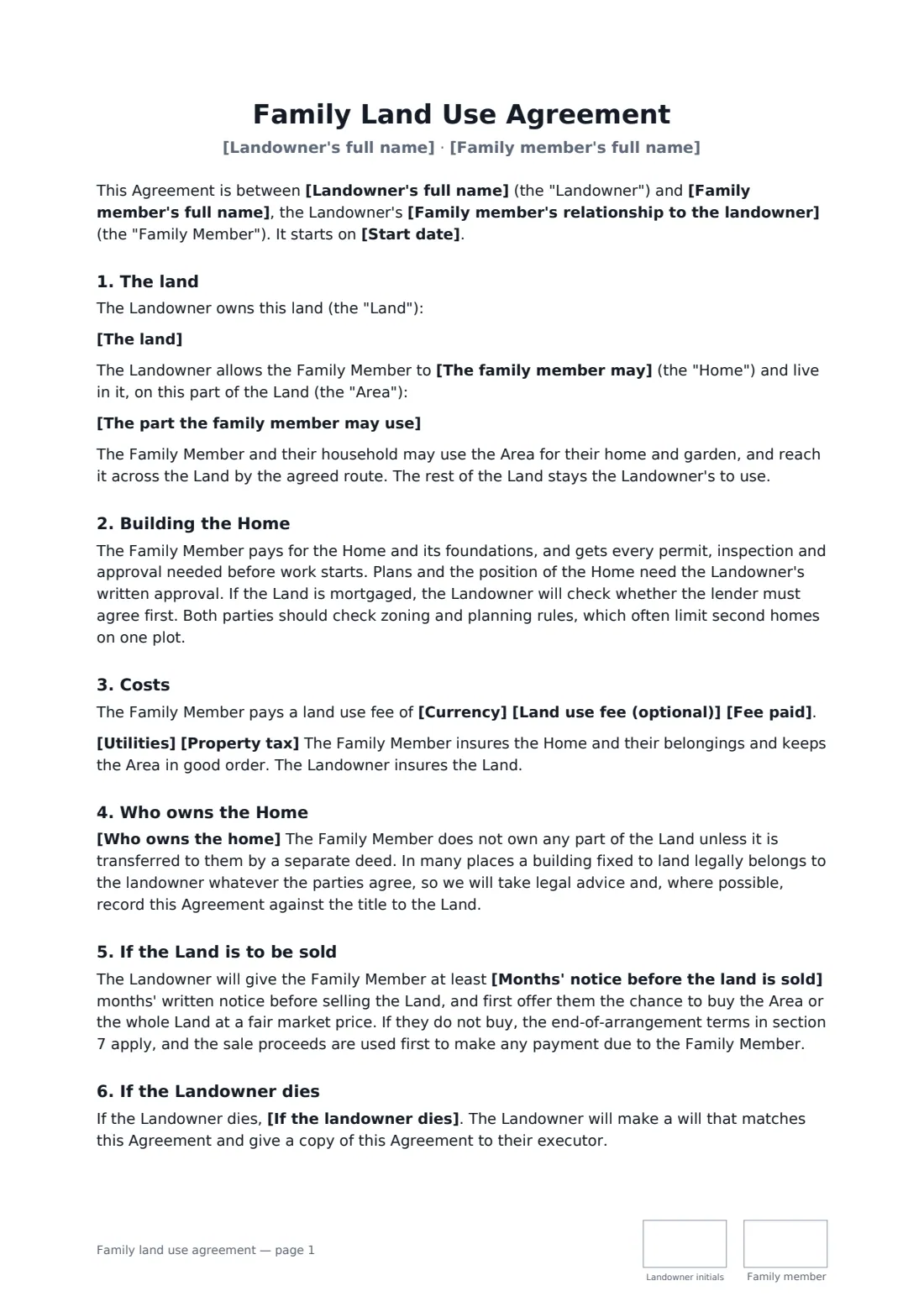
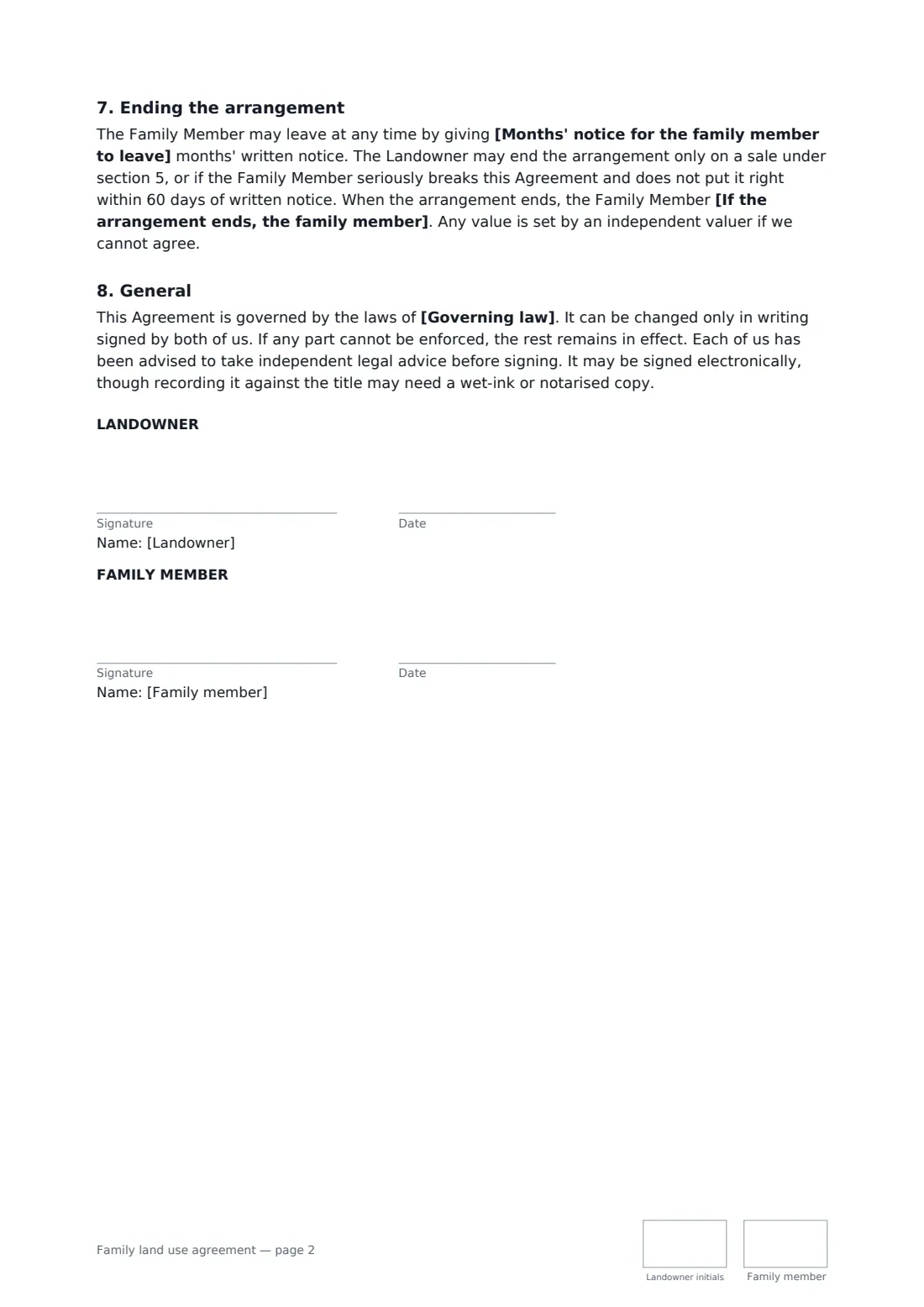
This template describes the land and the exact area used, and whether the family member builds a house or places a manufactured, mobile or tiny home. It covers permits, the landowner's approval of plans, a check with any mortgage lender, an optional land use fee, utilities, property tax and insurance. It records who owns the home and is frank that local law may treat a fixed building as part of the land, so it recommends advice and recording the agreement against the title. It gives notice and a first chance to buy if the land is sold, sets what happens if the landowner dies, and fixes what the family member receives when the arrangement ends. Both sides initial every page.
- Best for
- Parents, grandparents and relatives sharing land with family
- Signed by
- The landowner and the family member
- Covers
- Area, building and permits, costs, ownership of the home, sale, death, ending and payout
- Take advice on
- Title, zoning, lender consent, wills and tax
- Length
- 2 pages, initialled on every page
When to use a family land use agreement
- An adult child building a house on their parents' farm
- Placing a manufactured home on a grandparent's lot
- A tiny home or cabin in a sibling's back field
- Formalising a home built years ago on family land
- Parents planning to leave the plot under the home in their will
What you fill in
18 blanks, then the name and email of each person who signs: landowner, family member.
1 The parties
- Landowner's full name*
- Family member's full name*
- Family member's relationship to the landowner*
2 The land
- The land*
- The part the family member may use*
- The family member may* build a permanent house · place a manufactured or mobile home · place a tiny home or cabin
- Start date*
3 Costs
- Currency*
- Land use fee (optional)
- Fee paid* each month · each year
- Utilities*
- Property tax* The Family Member pays any increase in property tax caused by the Home. · The Family Member pays a fair share of the property tax, agreed each year. · The Landowner pays all property tax.
4 If things change
- Who owns the home* The Home belongs to the Family Member, even though it stands on the Landowner's land. · The Home becomes part of the land and belongs to the Landowner.
- If the arrangement ends, the family member* is paid the fair market value of the Home by the Landowner or a buyer, or may remove it if it can be moved · is repaid what they spent on building the Home, less a fair amount for the years of use · removes the Home and restores the land at their own cost · receives nothing for the Home
- Months' notice before the land is sold*
- If the landowner dies* the Landowner intends to leave the Area under the Home to the Family Member in their will · the Family Member may stay for at least two years while the estate is settled, then the end-of-arrangement terms apply · the end-of-arrangement terms apply
- Months' notice for the family member to leave*
- Governing law*
5 Who signs
- Landowner signature and date, initials on every page
- Family member signature and date, initials on every page
What the family land use agreement covers
- The land
- Building the Home
- Costs
- Who owns the Home
- If the Land is to be sold
- If the Landowner dies
- Ending the arrangement
- General
Using the family land use agreement, step by step
1 Describe the land and the area
Enter both names and the relationship, the land's address and parcel number, and the part the family member may use. Attach a sketch if you can.
2 Choose the home and costs
Pick a permanent house, a manufactured or mobile home, or a tiny home. Add any land use fee and edit who pays for utilities and property tax.
3 Decide the hard questions
Choose who owns the home, what the family member receives if the arrangement ends, the notice before any sale, and what happens if the landowner dies.
4 Get advice, then sign
Enter the governing law, have a local lawyer look it over, and sign online. Ask them whether the agreement should be recorded against the title.
Tips before you send it
- Check zoning or planning rules first. Many areas limit a second dwelling on one plot.
- If the land is mortgaged, the lender may need to agree to a second home.
- Make the landowner's will match the agreement, and give the executor a copy.
- Keep receipts for everything spent on the home. They matter if a payout is ever calculated.
- Separate meters for power and water save a lot of awkward conversations.
Sign it online in minutes
- Fill in the blanks. Names, dates and amounts go straight into the agreement — the preview shows exactly where.
- Name who signs. Tick “This is me” for your own part. FileIt builds the PDF with every signature, date and initials box on the right line, and you can check or move anything before sending.
- Send it. Each signer gets a secure link and signs from any device — no account needed. The signed PDF, with an audit trail and a Certificate of Completion, is filed in your vault and emailed to everyone.
Family land use agreement: frequently asked questions
Who owns a house built on someone else's land?
In many places a building fixed to land belongs to the landowner by law, whatever the family agreed. This agreement records your intention and a payout if the arrangement ends, and it recommends legal advice and recording the agreement against the title.
What happens if the land is sold?
The landowner gives the notice you set and first offers the family member the chance to buy. If they don't, the end-of-arrangement terms apply, and any payment due to the family member comes out of the sale proceeds first.
What if the landowner dies?
You choose: the landowner intends to leave the area under the home to the family member in their will, the family member may stay for at least two years, or the end-of-arrangement terms apply. A will is still needed to make the first option happen.
Is an electronic signature enough?
It's enough for the agreement between you. Recording it against the land's title may need a wet-ink or notarised copy, depending on local rules, and the agreement says so.