What is a dNA test consent?
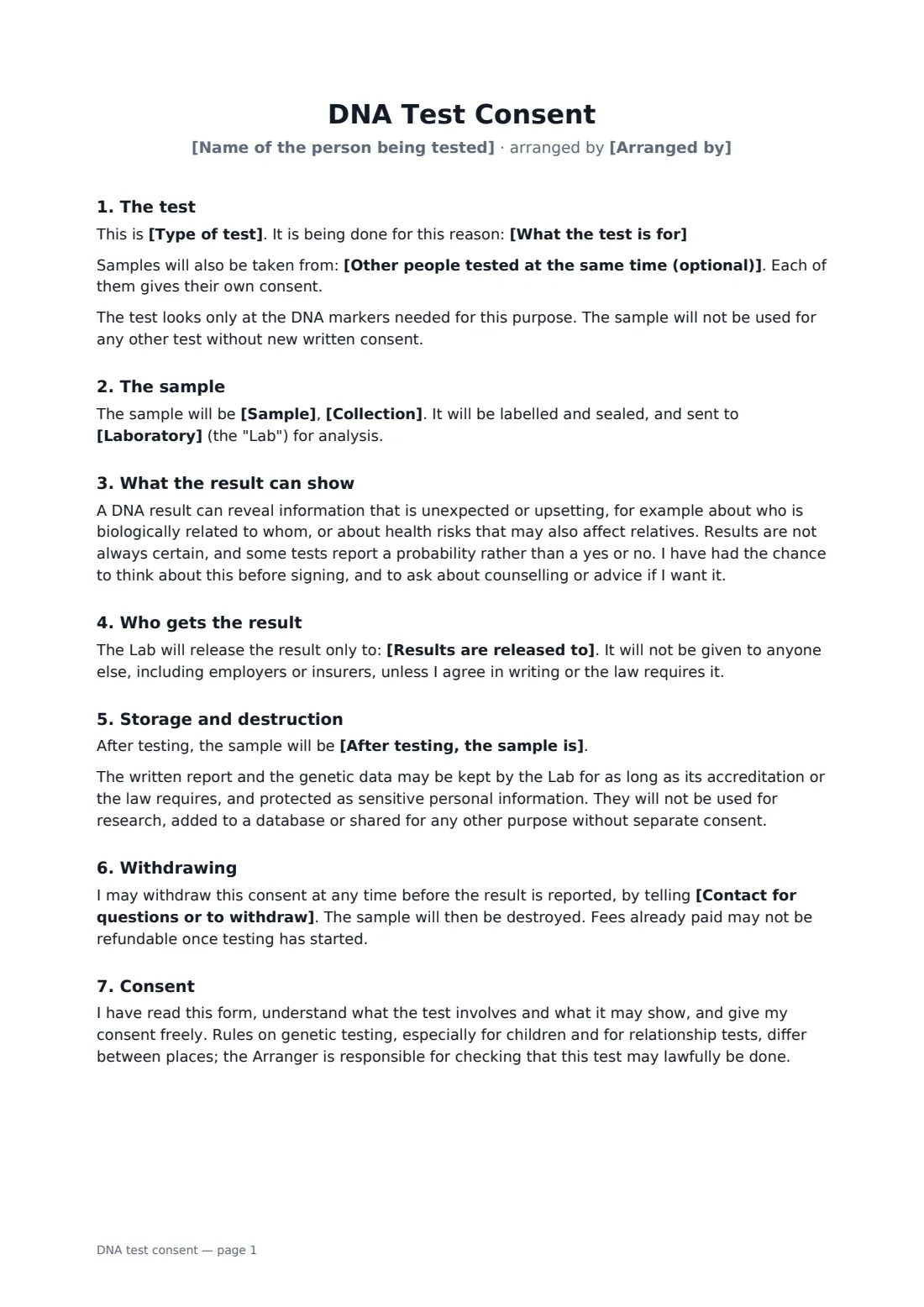
A DNA test can settle a question about family, health or identity, but the result can't be taken back once it's known. That is why testing services, clinics and solicitors ask for written consent first, from each adult tested and from a parent or guardian for a child. The consent should say what the test is for, how the sample is taken, which lab analyses it, who gets the result, and what happens to the sample and the data afterwards.
This template does that for relationship tests such as paternity or siblingship, genetic health and carrier screening, ancestry tests and identification. Choose an independent, chain-of-custody collection for results meant for a court or immigration case, or a home collection for personal information — the form then says plainly that a home result is unlikely to be accepted officially. It warns that results can be unexpected, limits release to the people you name, and sets whether the sample is destroyed straight away, within 90 days or after a stated period. The person can withdraw before the result is reported.
- Best for
- Paternity and relationship tests, carrier screening, ancestry kits, identification
- Signed by
- The adult tested or a parent/guardian, and the person or organization arranging the test
- You set
- Test type and reason, sample, collection, lab, who gets results, storage
- Length
- About 2 pages
When to use a dNA test consent
- A testing service collecting consent from each person in a paternity test
- A solicitor arranging a relationship test for a family court case
- A parent consenting to a cheek swab for their child
- A clinic or counsellor arranging carrier screening for a couple
- A genealogy group sending kits to relatives
What you fill in
15 blanks, then the name and email of each person who signs: person tested or parent, person or organization arranging the test.
1 The parties
- Arranged by*
- Name of the person being tested*
- Their date of birth*
- Who signs* The person being tested (18 or over) · A parent or guardian of a child being tested
- Parent or guardian's name
2 The test
- Type of test* a relationship test, such as paternity or siblingship · a genetic health or carrier screening test · an ancestry or genealogy test · a test for identification
- What the test is for*
- Other people tested at the same time (optional)
- Sample* cheek (buccal) swabs · a saliva sample · a blood sample · a blood spot from a finger prick
- Laboratory*
- Collection* collected by an independent collector who checks identity, with a chain-of-custody record · collected at home, without identity checks (for personal information only)
3 Results and storage
- Results are released to*
- After testing, the sample is* destroyed within 90 days of the report · destroyed as soon as the report is issued · kept for the period stated below, then destroyed
- Storage period and reason
- Contact for questions or to withdraw*
4 Who signs
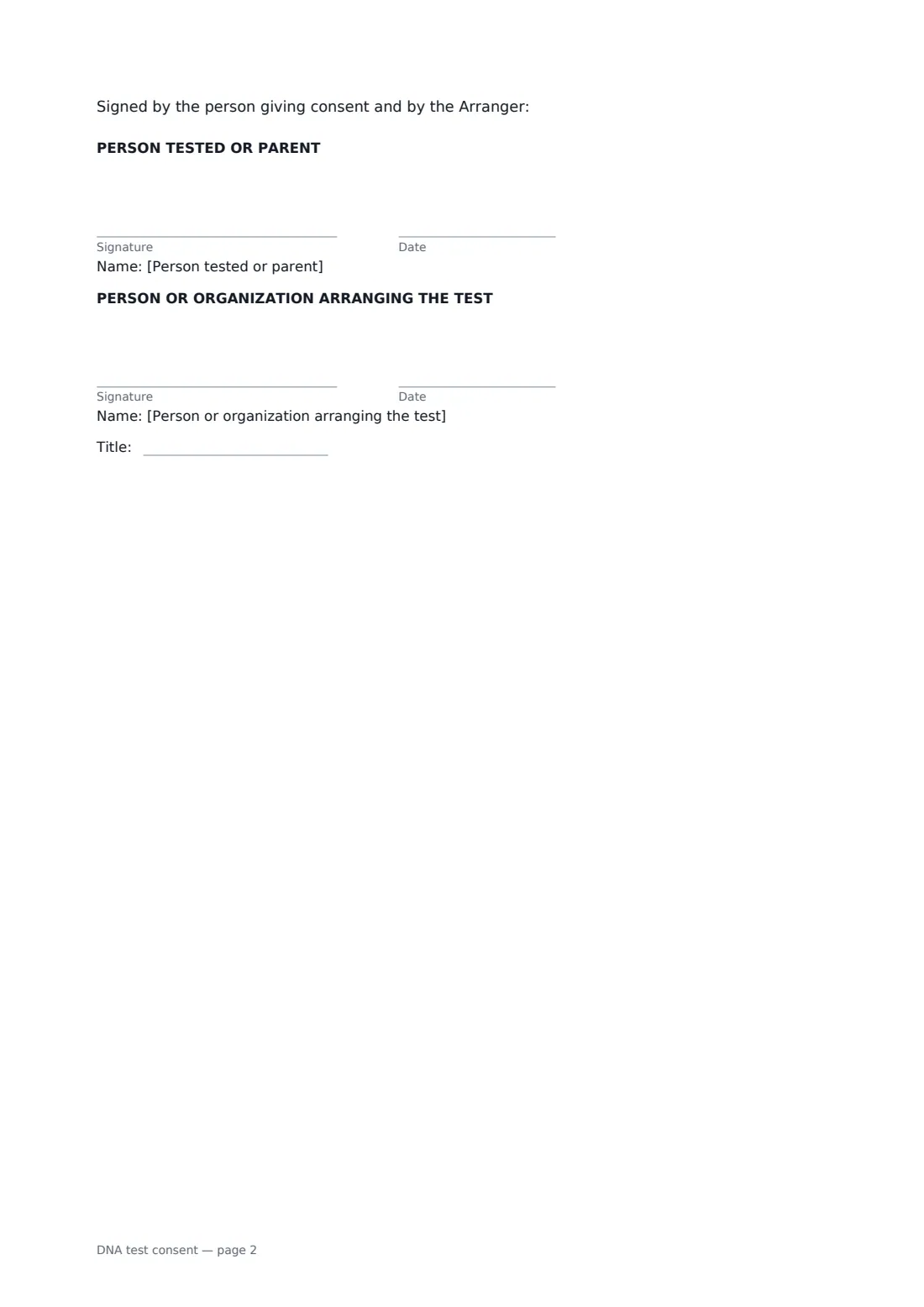
- Person tested or parent signature and date · The adult being tested, or a parent or legal guardian signing for a child.
- Person or organization arranging the test signature and date, job title
What the dNA test consent covers
- The test
- The sample
- What the result can show
- Who gets the result
- Storage and destruction
- Withdrawing
- Consent
Using the dNA test consent, step by step
1 Describe the test
Pick the type of test and write in plain words what it is for. List anyone else being tested at the same time; the form notes that each gives their own consent.
2 Choose sample and collection
Select the sample, name the lab, and choose a witnessed chain-of-custody collection or a home collection. For any result that may go to a court or a government body, use the witnessed option.
3 Decide who gets the result
Name exactly who the lab may release the result to. The form says it won't go to anyone else, including employers or insurers, without written agreement or a legal requirement.
4 Set storage and send
Choose when the sample is destroyed, add a contact for questions or withdrawal, and send it to each person tested, or their parent, to sign on their phone.
Tips before you send it
- Use a separate form for each person tested, so every consent is clearly recorded.
- For a child, check who has legal authority to consent where you are — some places require both parents, or a court order, for a relationship test.
- Some places restrict or ban relationship testing without everyone's consent, and some require testing through accredited labs. Check before you test.
- Offer genetic counselling for health tests; the form says the person may ask about it before signing.
- Keep the signed consent with the lab's chain-of-custody record.
Sign it online in minutes
- Fill in the blanks. Names, dates and amounts go straight into the agreement — the preview shows exactly where.
- Name who signs. Tick “This is me” for your own part. FileIt builds the PDF with every signature, date box on the right line, and you can check or move anything before sending.
- Send it. Each signer gets a secure link and signs from any device — no account needed. The signed PDF, with an audit trail and a Certificate of Completion, is filed in your vault and emailed to everyone.
DNA test consent: frequently asked questions
Can a parent consent to a DNA test for a child?
Yes, choose the parent or guardian option and the form records that the signer confirms they have the legal authority. Whether one parent's consent is enough depends on local law and the reason for the test.
Will a home DNA test stand up in court?
Usually not, because nobody independent confirms who gave the sample. If the result may be used officially, choose the chain-of-custody collection, where an independent collector checks identity.
What happens to the DNA sample afterwards?
You choose: destroyed as soon as the report is issued, within 90 days, or kept for a stated period — for example so it can be retested if the result is challenged — and then destroyed.
Can the person change their mind?
Yes, until the result is reported. The sample is then destroyed. The form notes that fees may not be refundable once testing has started.
Is an electronic signature acceptable for a DNA consent?
Electronic signatures are generally valid for consent forms like this, though some labs and courts have their own requirements. FileIt records who signed and when in an audit trail and Certificate of Completion.