What is a bullying complaint letter?
When your child is being bullied, a quiet word with a teacher is often the first step. If it carries on, a written complaint makes it formal. It gives the school a clear, dated record of what has happened, shows you have asked for action under its anti-bullying and complaints procedures, and sets a date for a reply. If you ever need to take things further, that record is what you will rely on.
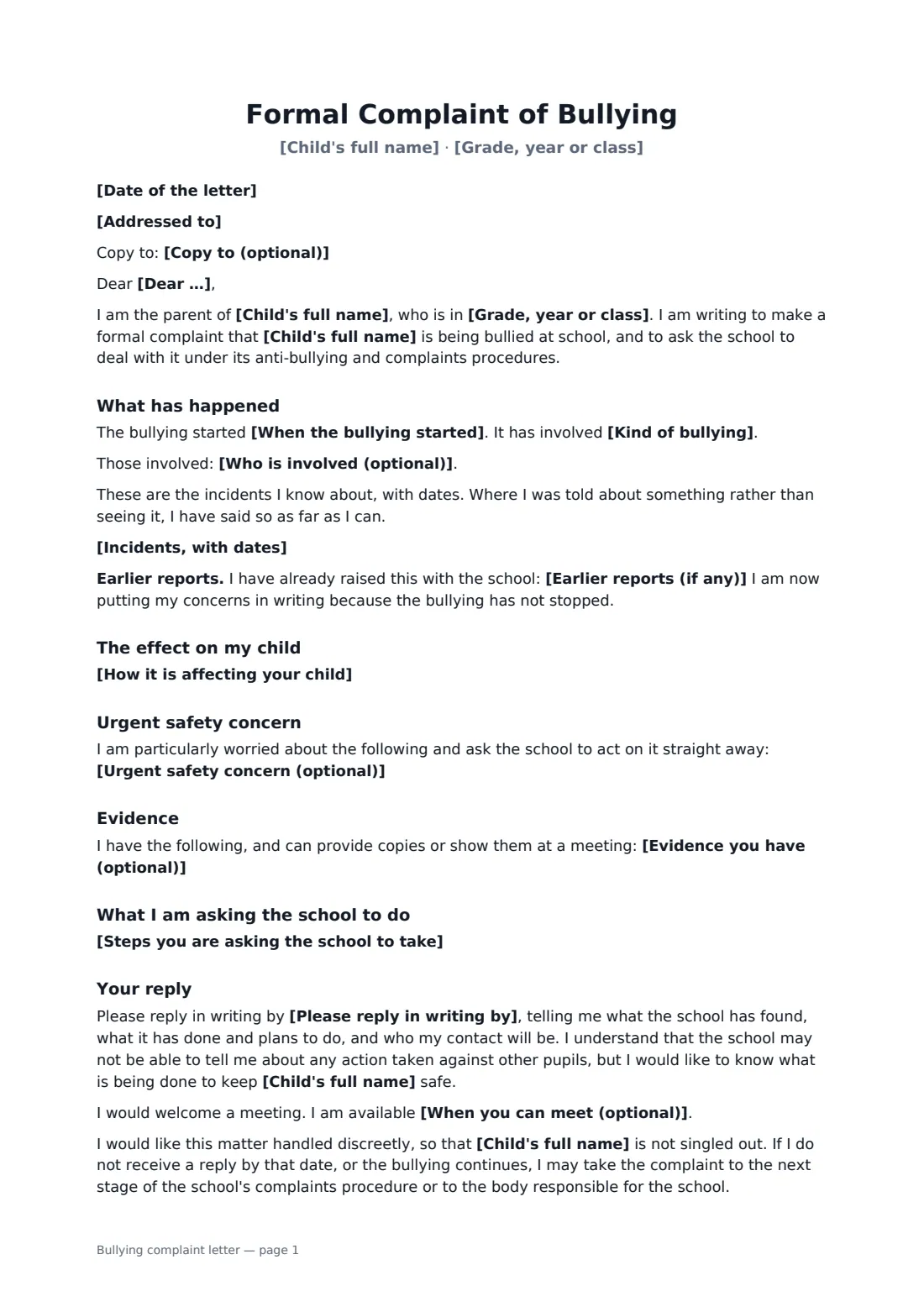
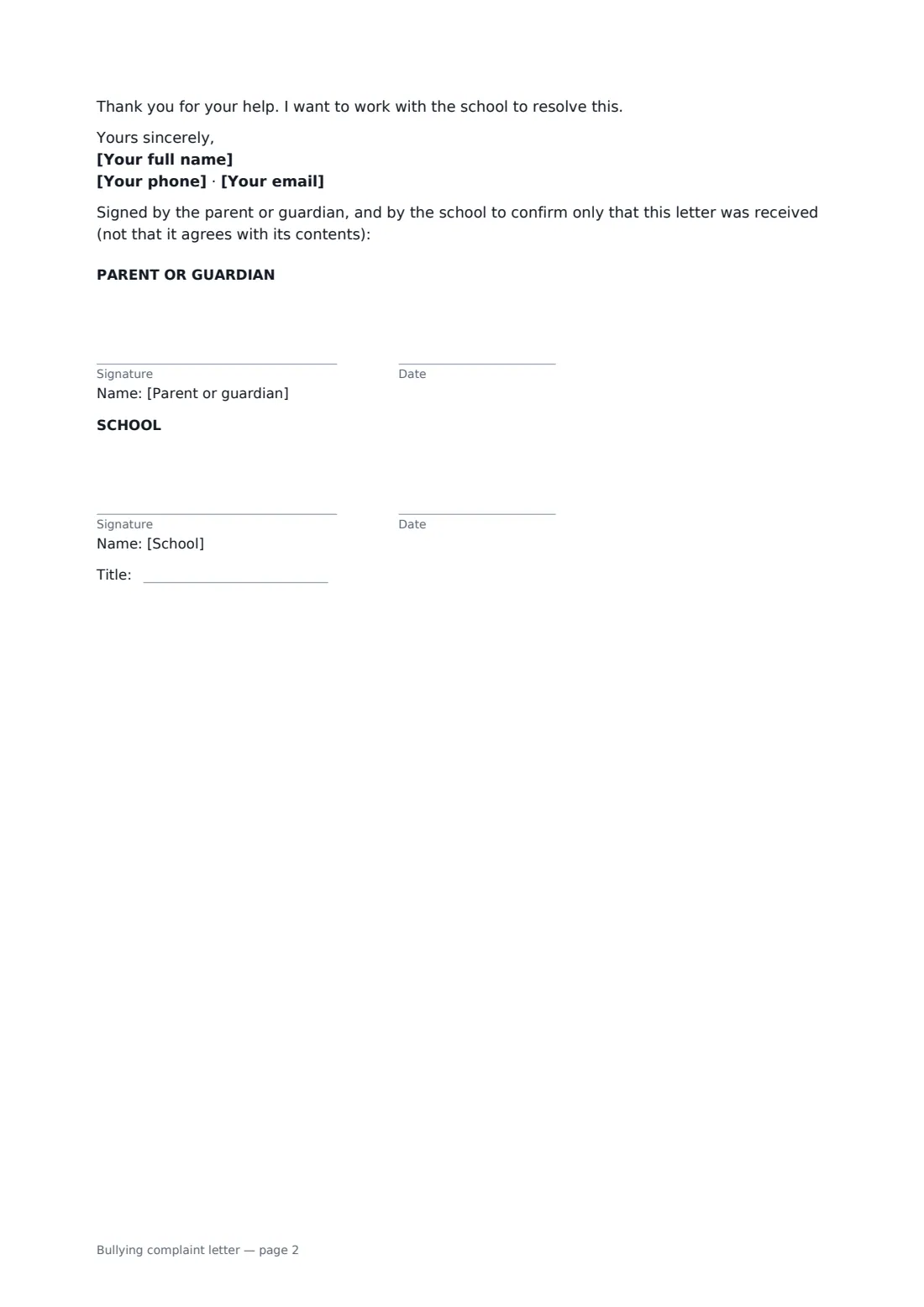
This letter introduces your child and their class, says when the bullying started and what kind it is, and lists each incident with its date, keeping what you saw apart from what you were told. It records whether you have raised it before, explains how it is affecting your child, and lists your evidence, such as screenshots, photos or a doctor's note. You can flag an urgent safety concern. It sets out the steps you're asking for, with editable defaults like investigating, keeping your child safe, naming a trusted adult and agreeing a written plan. You can ask for the school's policies, set a reply date and offer meeting times. The school signs only to confirm it received the letter.
- Best for
- Parents reporting bullying, including online bullying, to a school
- Signed by
- Parent or guardian, and the school to acknowledge receipt
- Covers
- Incidents and dates, impact, evidence, safety concerns, steps requested, reply date
- Length
- About 2 pages
When to use a bullying complaint letter
- Reporting repeated name-calling and exclusion in class
- Complaining about cyberbullying in a class group chat
- Following up after a verbal report that didn't stop the bullying
- Raising physical bullying on school grounds or school transport
- Asking for a safety plan when a child is afraid to go to school
What you fill in
21 blanks, then the name and email of each person who signs: parent or guardian, school.
1 The letter
- Date of the letter*
- Addressed to*
- Dear …*
- Copy to (optional)
2 Your child
- Child's full name*
- Grade, year or class*
3 What has happened
- When the bullying started*
- Kind of bullying*
- Who is involved (optional)
- Incidents, with dates*
- Earlier reports (if any)
4 Effect and evidence
- How it is affecting your child*
- Evidence you have (optional)
- Urgent safety concern (optional)
5 What you are asking for
- Steps you are asking the school to take*
- Ask for a copy of the school's anti-bullying and complaints policies?* Yes · No
- Please reply in writing by*
- When you can meet (optional)
6 Your details
- Your full name*
- Your phone*
- Your email*
7 Who signs
- Parent or guardian signature and date
- School signature and date, job title · The head teacher, principal or member of staff receiving the complaint. They sign only to confirm it was received.
What the bullying complaint letter covers
- What has happened
- The effect on my child
- Urgent safety concern
- Evidence
- What I am asking the school to do
- Your reply
Using the bullying complaint letter, step by step
1 Address it to the right person
Write to the head teacher or principal, or the staff member who handles bullying, and copy in the class teacher or head of year if you like.
2 Set out the facts
Say when it started and what kind of bullying it is, then list each incident with a date, where it happened and who saw it. Note any earlier reports and what was said.
3 Explain the impact and evidence
Describe how your child is affected, such as missed days, sleep or anxiety. List screenshots, photos or notes you can share, and flag anything urgent.
4 Ask for action and send
Edit the steps you're asking for, set a reply date and offer meeting times. Sign online and send it to the school to sign as received. The signed copy is filed in your FileIt vault.
Tips before you send it
- Write incidents down as soon as you hear about them, with dates. Notes made at the time carry more weight.
- Save screenshots of online messages before they are deleted, including the date and the sender's name.
- Keep the tone factual and calm. The letter works best as a request to solve a problem together.
- If a child is in immediate danger, phone the school and, where needed, the police straight away. Don't wait for a letter.
- Schools' complaints procedures and the bodies above them differ by country, state and type of school. Check the school's own policy for the next step.
Sign it online in minutes
- Fill in the blanks. Names, dates and amounts go straight into the agreement — the preview shows exactly where.
- Name who signs. Tick “This is me” for your own part. FileIt builds the PDF with every signature, date box on the right line, and you can check or move anything before sending.
- Send it. Each signer gets a secure link and signs from any device — no account needed. The signed PDF, with an audit trail and a Certificate of Completion, is filed in your vault and emailed to everyone.
Bullying complaint letter: frequently asked questions
Does the school's signature mean it agrees with my complaint?
No. The school signs only to confirm it received the letter on the date shown. That gives you a record that the complaint was made, without asking the school to accept anything in it.
Should I name the other children?
You can if you know who is involved. The school should handle names confidentially. If you're not sure, describe them (for example, "three pupils in the same class") and let the school find out.
Will the school tell me what happened to the other pupils?
Often not, because of their privacy. The letter asks the school to tell you what it is doing to keep your child safe, which it can usually share.
What if the school doesn't reply by the date?
The letter says you may take the complaint to the next stage of the school's complaints procedure or to the body responsible for the school. Check the school's policy for who that is.