What is a special needs care instructions letter?
Parents of a child or adult with special needs carry a huge amount of knowledge in their heads: how their child communicates, which foods are safe, what the medication schedule is, what to do in a seizure, which noises cause distress and what calms them. If a parent is suddenly ill or dies, a new carer has to start from nothing. A care instructions letter, often called a letter of intent, passes that knowledge on.
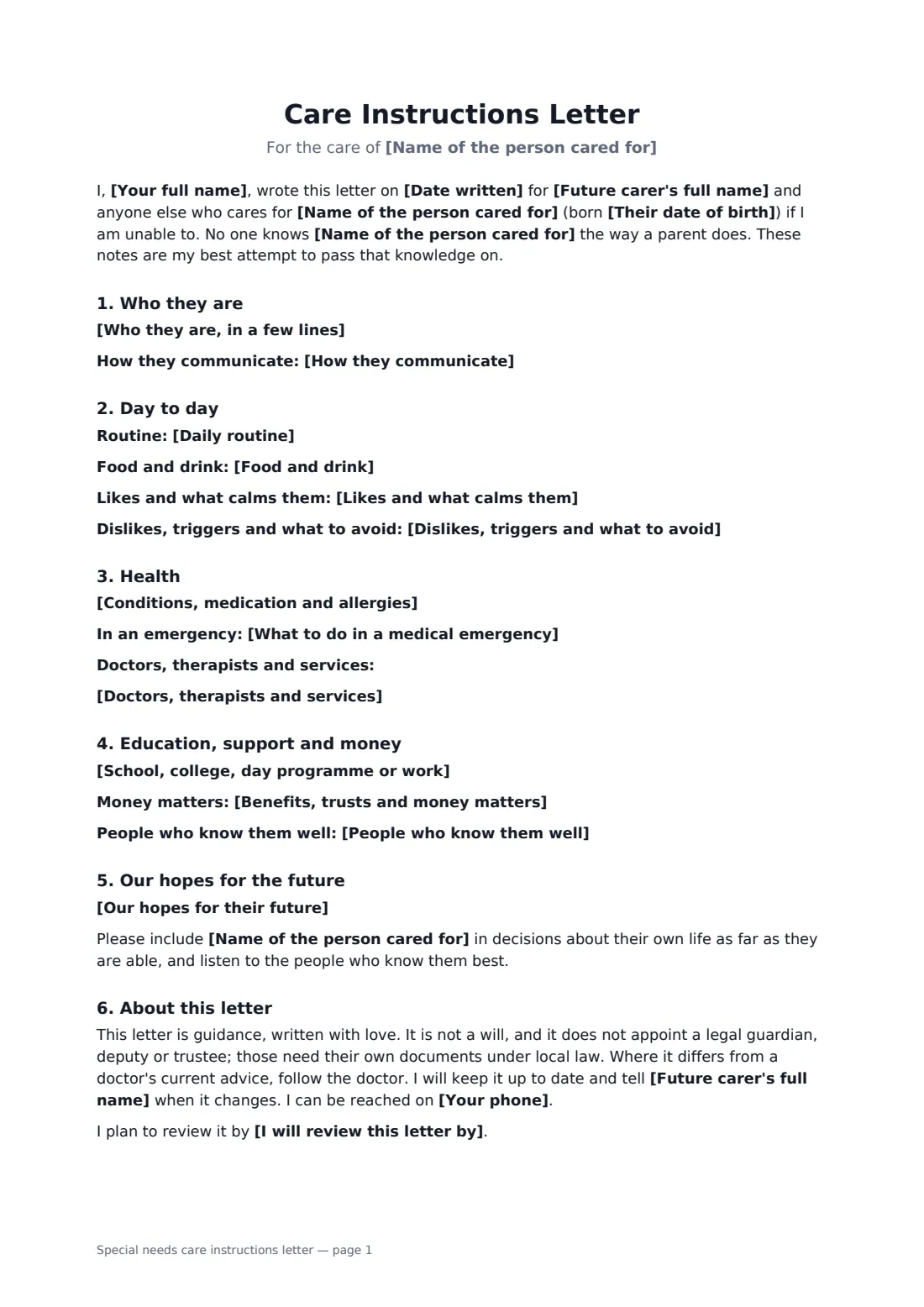
This template is laid out as a letter from the parent to a named future carer. It covers who the person is in a few warm lines, how they communicate, their daily routine and food, likes and dislikes, conditions, medication and allergies, what to do in a medical emergency, doctors and therapists, school or day programme, where money and benefit papers are kept, people who know them well and your hopes for their future. The carer signs to say they have read it and keep a copy. It is guidance, not a will, and it doesn't appoint a guardian.
- Best for
- Parents and guardians of a child or adult with a disability, autism or complex medical needs
- Signed by
- The parent and the future carer
- Covers
- Communication, routine, food, likes and triggers, health and emergencies, clinicians, education, money, contacts, hopes
- Legal status
- Guidance only, not a will or guardianship appointment
- Length
- 2 pages, often more once filled in
When to use a special needs care instructions letter
- Preparing a grandparent or aunt who would take over care
- Briefing a respite carer or new support worker
- Writing down care needs alongside a will and a special needs trust
- Handing over before a parent's planned hospital stay
- Keeping one up-to-date summary for a young adult moving to supported living
What you fill in
20 blanks, then the name and email of each person who signs: parent or guardian, future carer.
1 About this letter
- Your full name*
- Your phone*
- Future carer's full name*
- Date written*
2 About them
- Name of the person cared for*
- Their date of birth*
- Who they are, in a few lines*
- How they communicate*
3 Day to day
- Daily routine*
- Food and drink
- Likes and what calms them*
- Dislikes, triggers and what to avoid*
4 Health
- Conditions, medication and allergies*
- What to do in a medical emergency
- Doctors, therapists and services*
5 Education and support
- School, college, day programme or work
- Benefits, trusts and money matters
- People who know them well*
6 The future
- Our hopes for their future*
- I will review this letter by
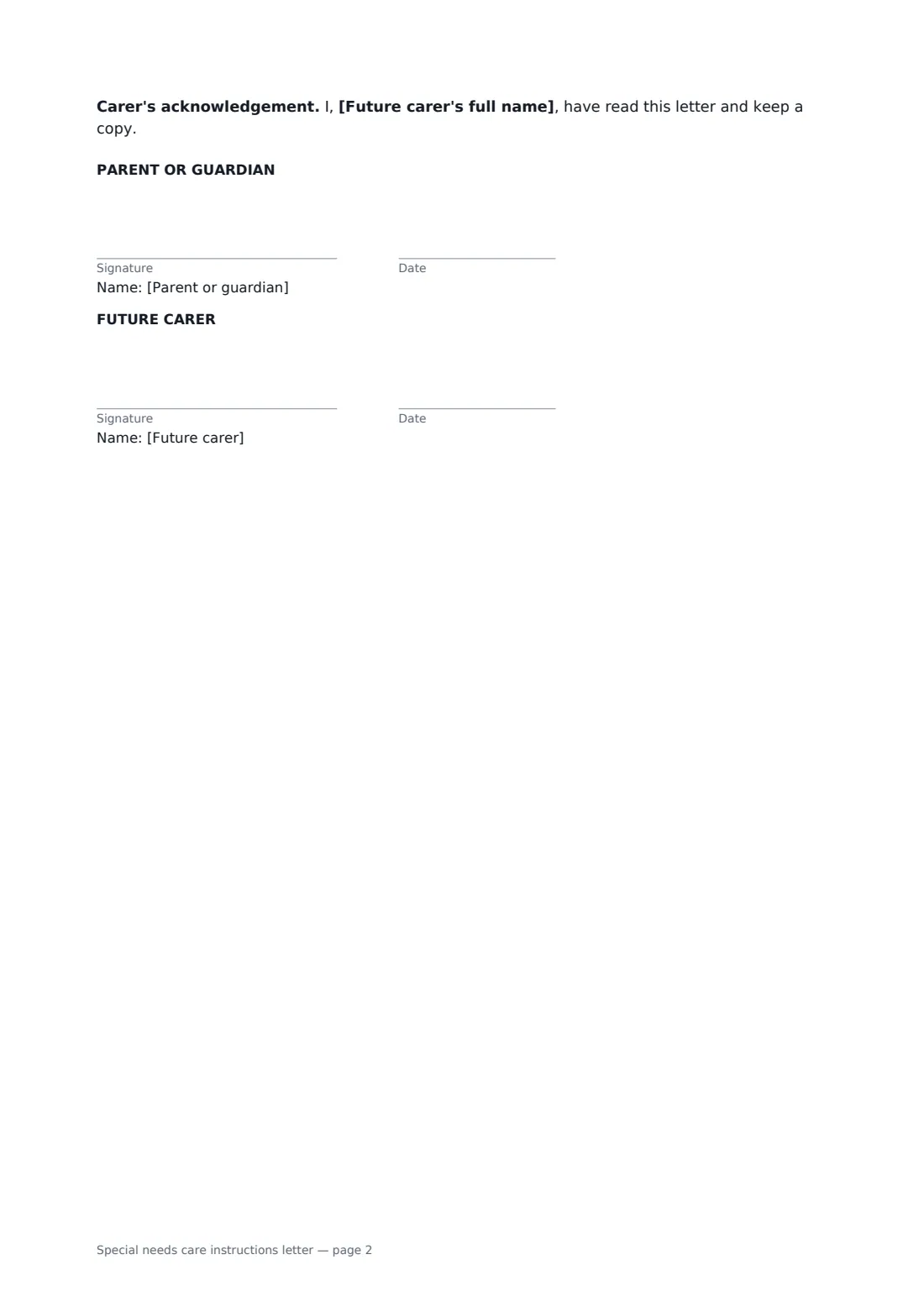
7 Who signs
- Parent or guardian signature and date
- Future carer signature and date · The person who would step in. They sign to say they have read the letter and have a copy.
What the special needs care instructions letter covers
- Who they are
- Day to day
- Health
- Education, support and money
- Our hopes for the future
- About this letter
Using the special needs care instructions letter, step by step
1 Name the people
Enter your details, the future carer's name and the person you care for, with their date of birth.
2 Describe who they are
Start with a few lines that bring them to life, then how they communicate. Add the daily routine, food, what they love and what upsets them.
3 Cover health and support
List conditions, medication, allergies and what to do in an emergency. Add doctors, therapists, school or day programme, key people and where the money papers are kept.
4 Share your hopes and sign
Write what you hope for their future, set a review date and send the letter to the carer to sign. Keep the PDF in your FileIt vault next to their medical records.
Tips before you send it
- Write it as if to someone meeting your child for the first time. The small details, like the favourite cup or the exact bedtime words, matter most.
- Say where documents are kept rather than copying account numbers or ID numbers into the letter.
- Update it after every medication change or annual review. An old medication list can be dangerous.
- A guardian, deputy or trustee is appointed by a will, a court or a trust deed, depending on where you live. Ask a lawyer about those alongside this letter.
- Ask the person themselves what they'd like included, as far as they are able.
Sign it online in minutes
- Fill in the blanks. Names, dates and amounts go straight into the agreement — the preview shows exactly where.
- Name who signs. Tick “This is me” for your own part. FileIt builds the PDF with every signature, date box on the right line, and you can check or move anything before sending.
- Send it. Each signer gets a secure link and signs from any device — no account needed. The signed PDF, with an audit trail and a Certificate of Completion, is filed in your vault and emailed to everyone.
Special needs care instructions letter: frequently asked questions
What is a letter of intent for a child with special needs?
It's a letter from a parent to future carers describing the person's needs, routines, health, preferences and the parent's wishes for their future. This template is that letter, with a signature from the carer to show they've received it.
Does this make the carer my child's legal guardian?
No. The letter says clearly that it doesn't appoint a guardian, deputy or trustee. Those need their own documents under local law, such as a will or a court order.
What if the letter disagrees with a doctor's advice later?
The letter tells the carer to follow the doctor's current advice. It's there to fill gaps, not to override medical decisions.
Can I send it to more than one carer?
Yes. Send a copy to each person who might step in, or add extra signers in the editor before you send.