What is a mold disclosure addendum?
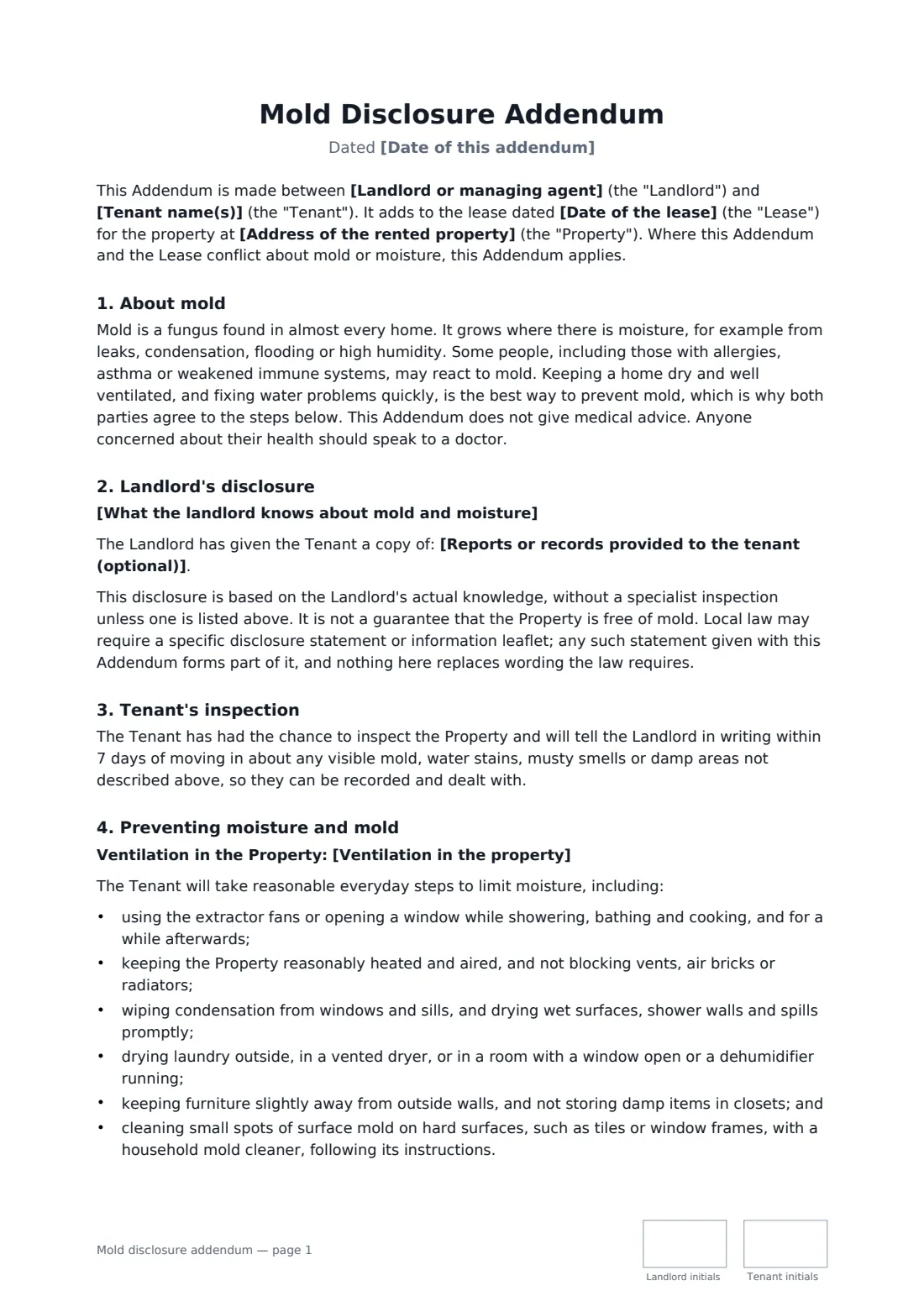
Mold disputes usually come down to two questions: was it there before, and who let it get worse? A mold disclosure addendum answers the first by recording what the landlord knows at signing, including any past leak, flood or remediation. It answers the second by agreeing everyday prevention and prompt reporting.
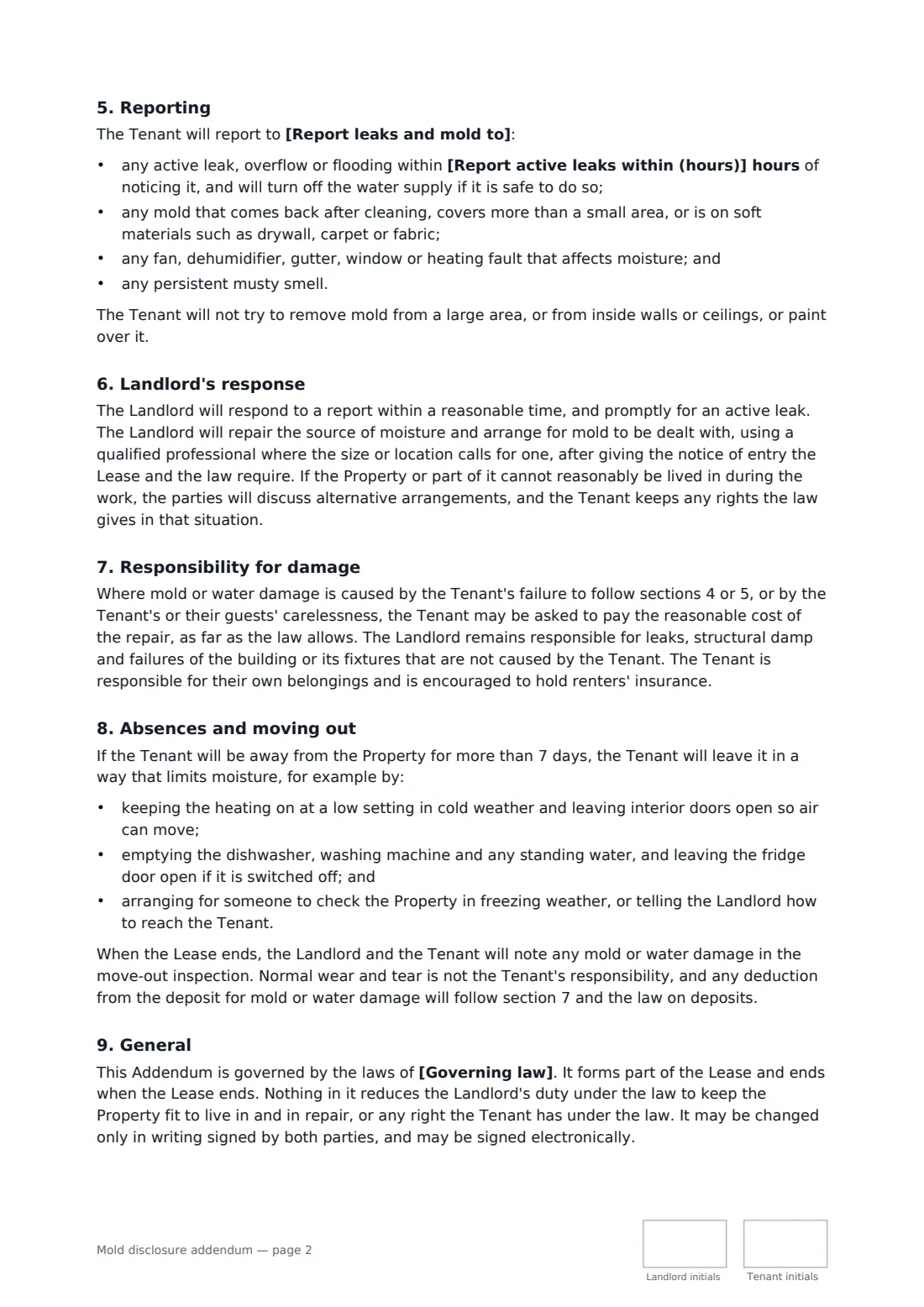
The landlord picks a disclosure statement (nothing known, past issue repaired, or current issue with a repair plan) and can add details and list any reports handed over. The tenant notes anything else within 7 days of moving in, uses the ventilation you list, deals with small surface spots, and reports leaks within the hours you set. The landlord repairs the source and arranges professional remediation where needed. The addendum says it doesn't replace any disclosure wording local law requires.
- Best for
- New leases, older homes, basements, properties with past leaks
- Signed by
- Landlord and tenant, initialled on every page
- Disclosure options
- None known, past issue repaired, or current issue with a repair plan
- Length
- 3 pages
When to use a mold disclosure addendum
- A unit that had a leak or flood repaired before the new tenancy
- A basement or garden flat prone to damp
- An area where landlords must disclose known mold in writing
- A property with a current condensation problem and a repair scheduled
- Bringing older leases up to date at renewal
What you fill in
13 blanks, then the name and email of each person who signs: landlord, tenant.
1 The lease
- Date of this addendum*
- Landlord or managing agent*
- Tenant name(s)*
- Address of the rented property*
- Date of the lease*
2 Disclosure
- What the landlord knows about mold and moisture* The Landlord is not aware of any mold growth, or any leak or flooding that caused water damage, in the Property. · The Landlord is aware of past mold or water damage in the Property, described below, which has been repaired and cleaned. · The Landlord is aware of a current moisture or mold issue in the Property, described below, and the repair plan set out below.
- Details of past or current mold or water damage: where, when, cause and what was done
- Repair plan for a current issue
- Reports or records provided to the tenant (optional)
3 Prevention and reporting
- Ventilation in the property*
- Report leaks and mold to*
- Report active leaks within (hours)*
- Governing law*
4 Who signs
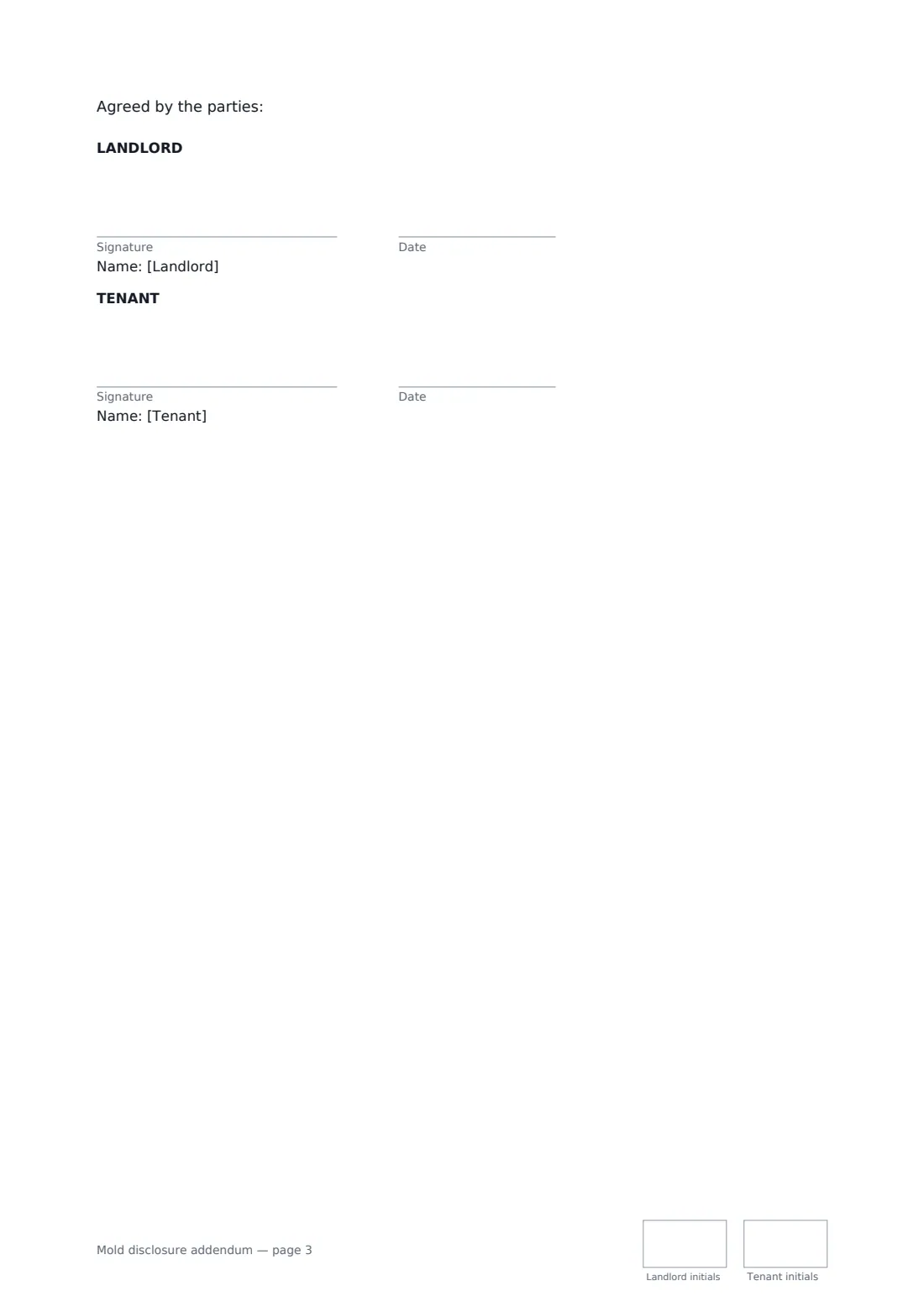
- Landlord signature and date, initials on every page · The landlord or the managing agent who signs leases for the landlord.
- Tenant signature and date, initials on every page · The tenant. If several tenants are on the lease, name them all above and send a copy to each one to sign, or check that the lease lets one tenant agree for all.
What the mold disclosure addendum covers
- About mold
- Landlord's disclosure
- Tenant's inspection
- Preventing moisture and mold
- Reporting
- Landlord's response
- Responsibility for damage
- Absences and moving out
- General
Using the mold disclosure addendum, step by step
1 Link it to the lease
Enter the landlord, tenants, property address and lease date.
2 Make the disclosure
Choose the statement that fits, describe any past or current issue and the repair plan, and list reports you're handing over.
3 Set prevention and reporting
List the property's fans, windows and dehumidifiers, the contact for reports, and how quickly active leaks must be reported.
4 Sign
Add the governing law and send. Both parties initial every page and sign on the last.
Tips before you send it
- Check local law first. Some places require a mold disclosure, a specific form or wording, or an official leaflet, and these must be added.
- Keep remediation invoices, moisture readings and photos in your vault. They support what you disclosed.
- Fix the moisture source, not just the stain. Mold on painted-over walls usually comes back.
- Respond quickly to leak reports. A slow response can turn a small repair into remediation.
Sign it online in minutes
- Fill in the blanks. Names, dates and amounts go straight into the agreement — the preview shows exactly where.
- Name who signs. Tick “This is me” for your own part. FileIt builds the PDF with every signature, date and initials box on the right line, and you can check or move anything before sending.
- Send it. Each signer gets a secure link and signs from any device — no account needed. The signed PDF, with an audit trail and a Certificate of Completion, is filed in your vault and emailed to everyone.
Mold disclosure addendum: frequently asked questions
Does this addendum say the home is mold-free?
No. It records what the landlord actually knows, without a specialist inspection unless one is listed, and says it isn't a guarantee that there is no mold.
What does the tenant have to clean?
Small surface spots on hard surfaces such as tiles or window frames, using a household cleaner. Mold that returns, covers a larger area or is on drywall, carpet or fabric must be reported instead.
Who pays for mold damage?
The landlord stays responsible for leaks, structural damp and building failures. The tenant may be asked to pay the reasonable cost where damage comes from not ventilating or not reporting, as far as the law allows.
Can a lease addendum be signed electronically?
Yes, in most places. Lease addenda are everyday agreements covered by e-signature laws such as the US ESIGN Act and UETA, eIDAS and UK law. FileIt records every signature and initial and adds a Certificate of Completion.