What is a parental consent for a minor's counselling?
Counsellors and therapists who work with children and teenagers face the same question at the start of every referral: what will parents be told? Children talk more freely when they know their sessions are private, while parents understandably want to know how things are going. Settling this in writing at the start avoids awkward conversations later.
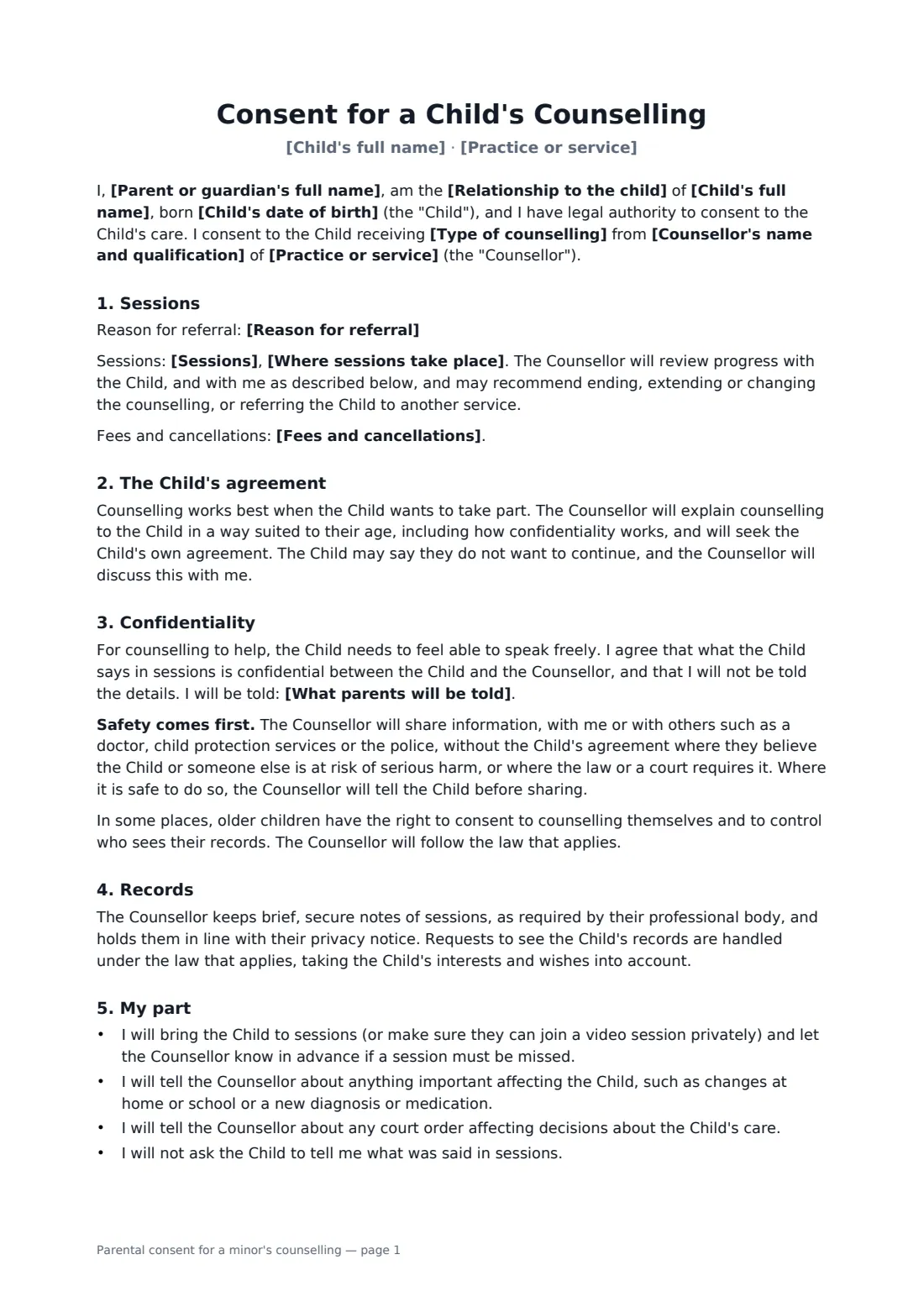
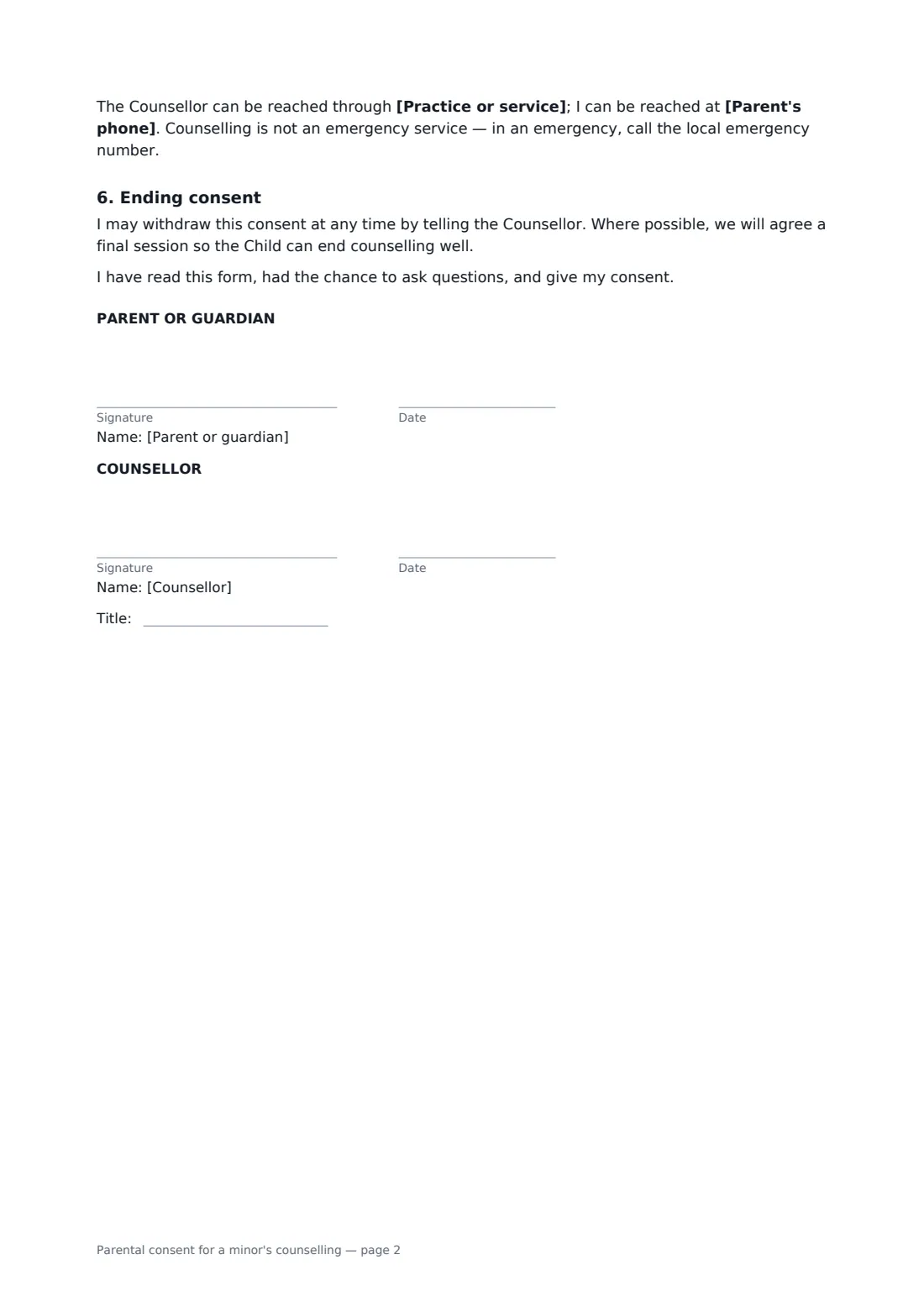
This form records the parent's authority and consent, the counsellor and type of counselling, the reason for referral, session pattern, location and fees. It explains that the counsellor will seek the child's own agreement, lets you choose what parents will be told (general themes, attendance only, or joint reviews), and sets out the safety exceptions to confidentiality. It notes that older children may have rights of their own in some places, covers records, the parent's part, emergencies and ending counselling well.
- Best for
- Child and adolescent counsellors, therapists, play therapists, school counselling services
- Signed by
- The parent or guardian and the counsellor
- Parent updates
- General themes, attendance only, or joint reviews
- Length
- 2 pages
When to use a parental consent for a minor's counselling
- A private therapist starting work with a teenager
- Play therapy for a young child
- A school or college counselling service
- Short-term counselling after a bereavement or family change
- Video counselling for a young person at home
What you fill in
13 blanks, then the name and email of each person who signs: parent or guardian, counsellor.
1 The counsellor
- Practice or service*
- Counsellor's name and qualification*
- Type of counselling*
2 The child
- Child's full name*
- Child's date of birth*
3 Parent or guardian
- Parent or guardian's full name*
- Relationship to the child* parent · legal guardian
- Parent's phone*
4 Sessions
- Reason for referral
- Sessions*
- Where sessions take place*
- Fees and cancellations
5 Confidentiality
- What parents will be told* General progress and themes, agreed with the child first · Attendance only, unless the child agrees to share more · Regular joint review meetings with the child present
6 Who signs
- Parent or guardian signature and date · A parent or legal guardian with authority to consent to the child's care. Where parents share responsibility, check whether both should sign.
- Counsellor signature and date, job title
What the parental consent for a minor's counselling covers
- Sessions
- The Child's agreement
- Confidentiality
- Records
- My part
- Ending consent
Using the parental consent for a minor's counselling, step by step
1 Counsellor and child
Your practice name fills in from your account. Add your name and qualification, the type of counselling, and the child's name and date of birth.
2 Parent details
Enter the parent or guardian's name, relationship and phone. Where parents share parental responsibility, consider sending one form to each.
3 Sessions and updates
Describe the reason for referral, session pattern, where they happen and any fees. Choose what parents will be told — this is the heart of the form, so agree it with the parent first.
4 Send for signature
The parent signs online, you countersign, and the form is filed in your FileIt vault. Then talk through confidentiality with the child in their first session.
Tips before you send it
- Check your professional body's guidance and local law on when a young person can consent for themselves.
- Ask about court orders or disputes over parental responsibility before starting.
- Explain the safety exceptions to the child in words they understand.
- For video sessions, also use a telehealth consent.
Sign it online in minutes
- Fill in the blanks. Names, dates and amounts go straight into the agreement — the preview shows exactly where.
- Name who signs. Tick “This is me” for your own part. FileIt builds the PDF with every signature, date box on the right line, and you can check or move anything before sending.
- Send it. Each signer gets a secure link and signs from any device — no account needed. The signed PDF, with an audit trail and a Certificate of Completion, is filed in your vault and emailed to everyone.
Parental consent for a minor's counselling: frequently asked questions
Will parents be told what their child says?
Not the details. The parent agrees that sessions are confidential and chooses one of three update options. The safety exception still applies.
When can the counsellor break confidentiality?
Where they believe the child or someone else is at risk of serious harm, or the law or a court requires it. Where safe, the counsellor tells the child before sharing.
Do both parents need to sign?
It depends on local law and the family's situation. Often one parent's consent is enough, but where parents disagree or there's a court order, take advice and consider both signing.
Can an older teenager consent without a parent?
In some places, yes. The form notes this and says the counsellor will follow the law that applies.
Can the parent sign electronically?
Yes. Parents don't need a FileIt account. The signed PDF includes an audit trail and a Certificate of Completion.