What is a disciplinary appeal letter?
If you have been given a warning, demoted, suspended or dismissed and you think the decision was wrong, most disciplinary procedures let you appeal, usually within a short time of the decision letter. A clear written appeal helps: it says exactly which decision you are challenging, why, what new evidence there is and what you want instead.
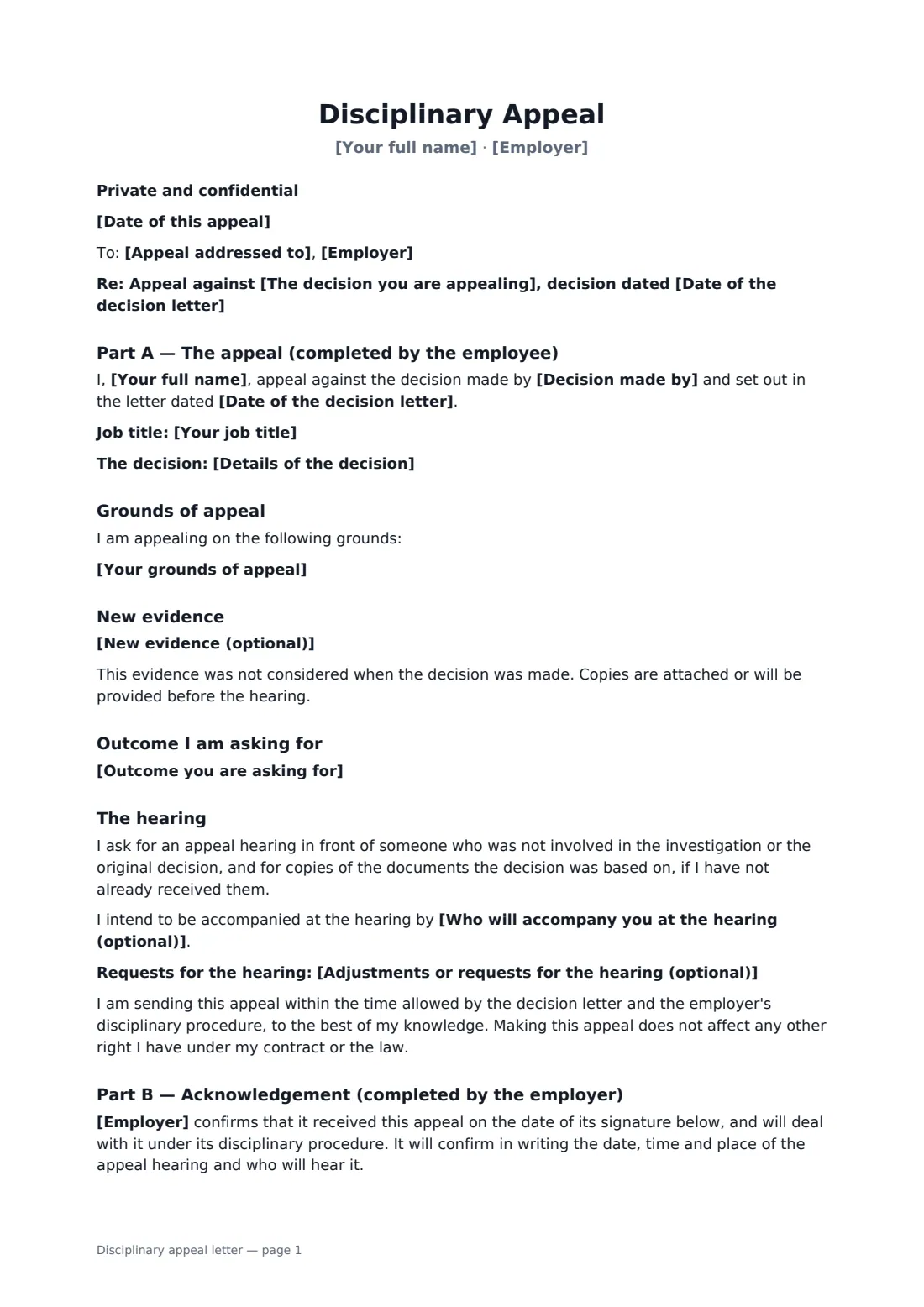
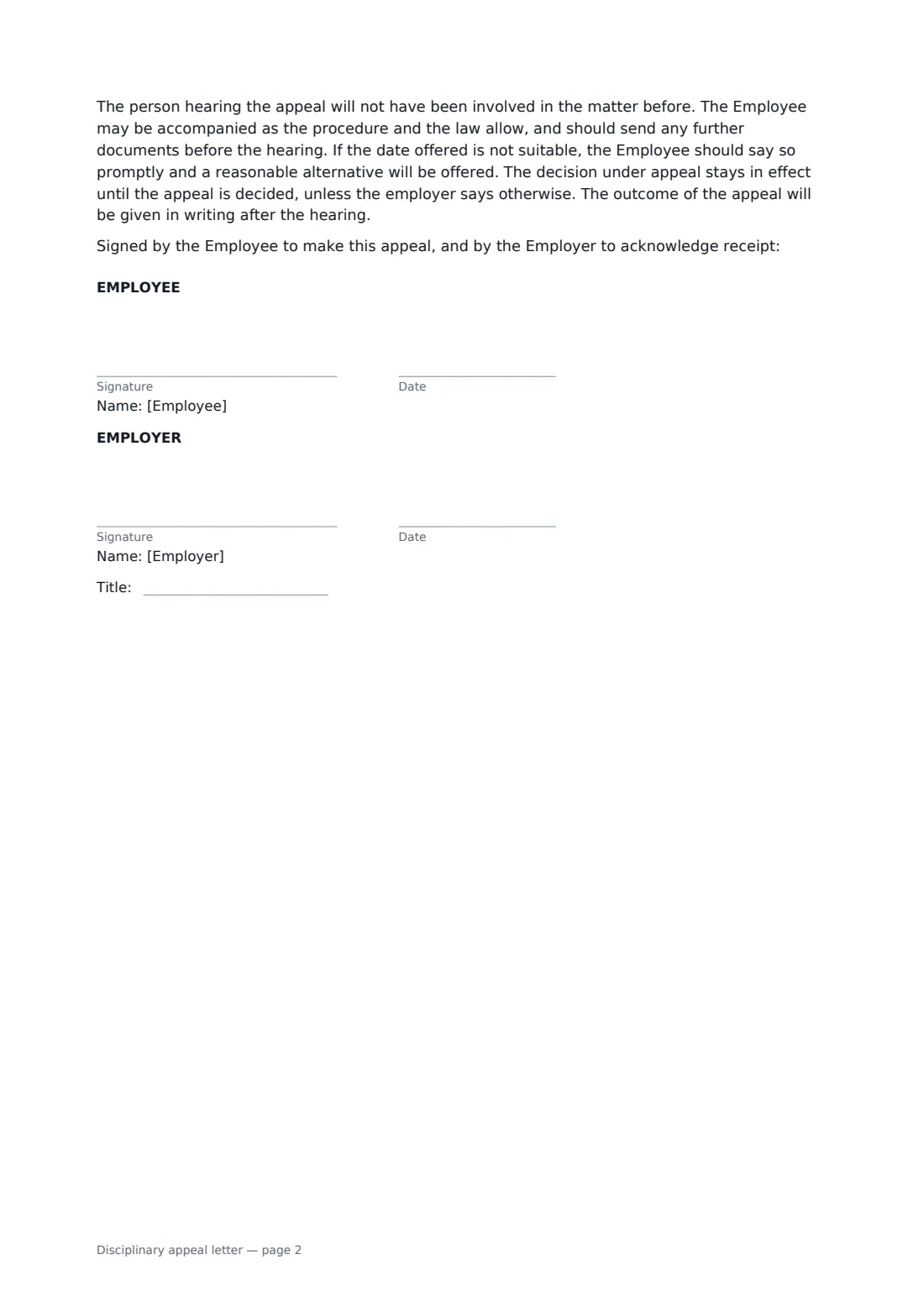
In Part A you name the decision, who made it and when, and give your numbered grounds of appeal, such as an unfair procedure, a finding the evidence doesn't support, new evidence, a sanction that is too severe or inconsistent treatment. You add any new evidence, the outcome you are asking for, who will accompany you and any requests for the hearing. In Part B the employer signs to acknowledge receipt, with its signature date recording when it received the appeal, and undertakes to confirm the hearing date, time and place in writing and to have the appeal heard by someone not involved before.
- Best for
- Appealing warnings, final warnings, demotion, suspension or dismissal
- Signed by
- The employee (appeal) and the employer (acknowledgement)
- Includes
- Grounds of appeal, new evidence, outcome sought, employer's acknowledgement
- Length
- 2 pages
When to use a disciplinary appeal letter
- Appealing a final written warning you believe was unfair
- Challenging a dismissal after new evidence comes to light
- Asking for a warning to be reduced given your long clean record
- Appealing a demotion where the procedure wasn't followed
- Getting written confirmation that your appeal was received in time
What you fill in
14 blanks, then the name and email of each person who signs: employee, employer.
1 The appeal
- Date of this appeal*
- Your full name*
- Your job title
- Employer*
- Appeal addressed to*
2 The decision
- Date of the decision letter*
- Decision made by*
- The decision you are appealing* a verbal warning · a written warning · a final written warning · demotion · suspension without pay · dismissal · another sanction
- Details of the decision*
3 Grounds of appeal
- Your grounds of appeal*
- New evidence (optional)
- Outcome you are asking for*
- Who will accompany you at the hearing (optional)
- Adjustments or requests for the hearing (optional)
4 Who signs
- Employee signature and date · The employee or former employee appealing the decision.
- Employer signature and date, job title · The person named in the decision letter to receive appeals, usually a senior manager or HR. They sign to acknowledge receipt; the hearing details follow in writing.
What the disciplinary appeal letter covers
- Part A — The appeal (completed by the employee)
- Grounds of appeal
- New evidence
- Outcome I am asking for
- The hearing
- Part B — Acknowledgement (completed by the employer)
Using the disciplinary appeal letter, step by step
1 Name the decision
Enter your name, employer and who to send the appeal to, then the decision letter's date, who made it, the sanction and the details.
2 Set out your grounds
Number each ground of appeal and explain it briefly. Add any new evidence and attach copies.
3 Say what you want
Describe the outcome you are asking for, who will accompany you and any requests such as a video hearing or copies of documents.
4 Send it
Sign and send it to the person named for appeals. They sign to acknowledge receipt, and the hearing details follow in writing.
Tips before you send it
- Check the deadline in your decision letter and send the appeal well within it.
- Stick to the strongest grounds. Three clear points are more persuasive than ten vague ones.
- Ask for the documents the decision relied on if you haven't seen them, such as witness statements.
- Whether you can be accompanied, and by whom, depends on your employer's procedure and local law. Check before the hearing.
Sign it online in minutes
- Fill in the blanks. Names, dates and amounts go straight into the agreement — the preview shows exactly where.
- Name who signs. Tick “This is me” for your own part. FileIt builds the PDF with every signature, date box on the right line, and you can check or move anything before sending.
- Send it. Each signer gets a secure link and signs from any device — no account needed. The signed PDF, with an audit trail and a Certificate of Completion, is filed in your vault and emailed to everyone.
Disciplinary appeal letter: frequently asked questions
What are good grounds of appeal?
Common grounds are that the procedure was unfair, the findings aren't supported by the evidence, there is new evidence, the sanction is too severe, or others were treated differently for the same thing.
Does the decision stop while I appeal?
Usually not. The acknowledgement says the decision stays in effect until the appeal is decided, unless the employer says otherwise.
Who hears the appeal?
Someone who wasn't involved in the investigation or the original decision. The employer confirms who it is in writing with the hearing details.
Can I send this if I've already been dismissed?
Yes. Former employees can use it to appeal a dismissal if their employer's procedure allows an appeal.