What is a disciplinary meeting invitation letter?
A disciplinary process is judged as much on how it was run as on what was decided. The invitation letter is where fairness starts: the employee needs to know exactly what is alleged, see the evidence before the meeting, know who they can bring with them, and understand what the outcome could be. A vague or rushed invitation is one of the most common reasons a later decision is challenged.
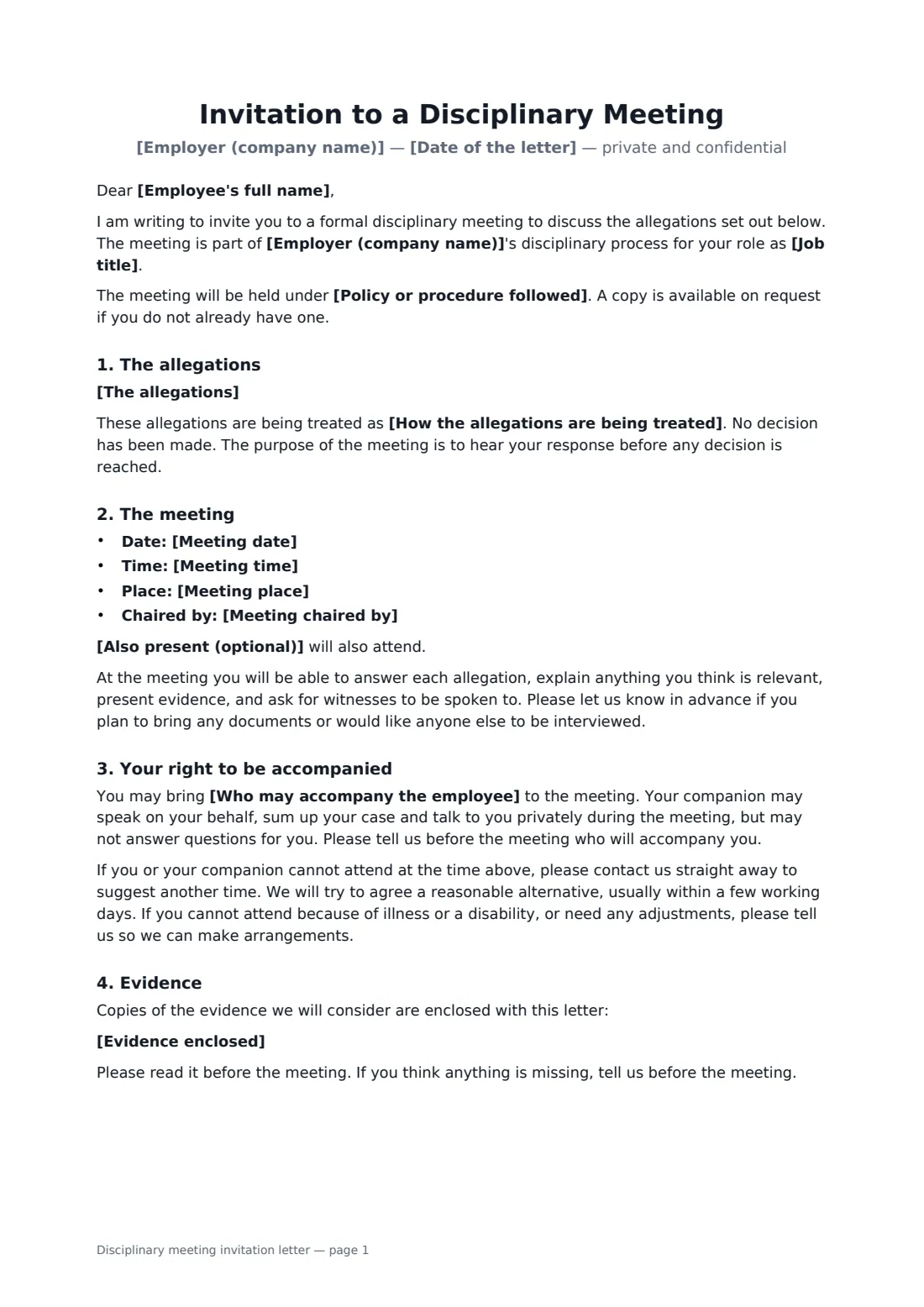
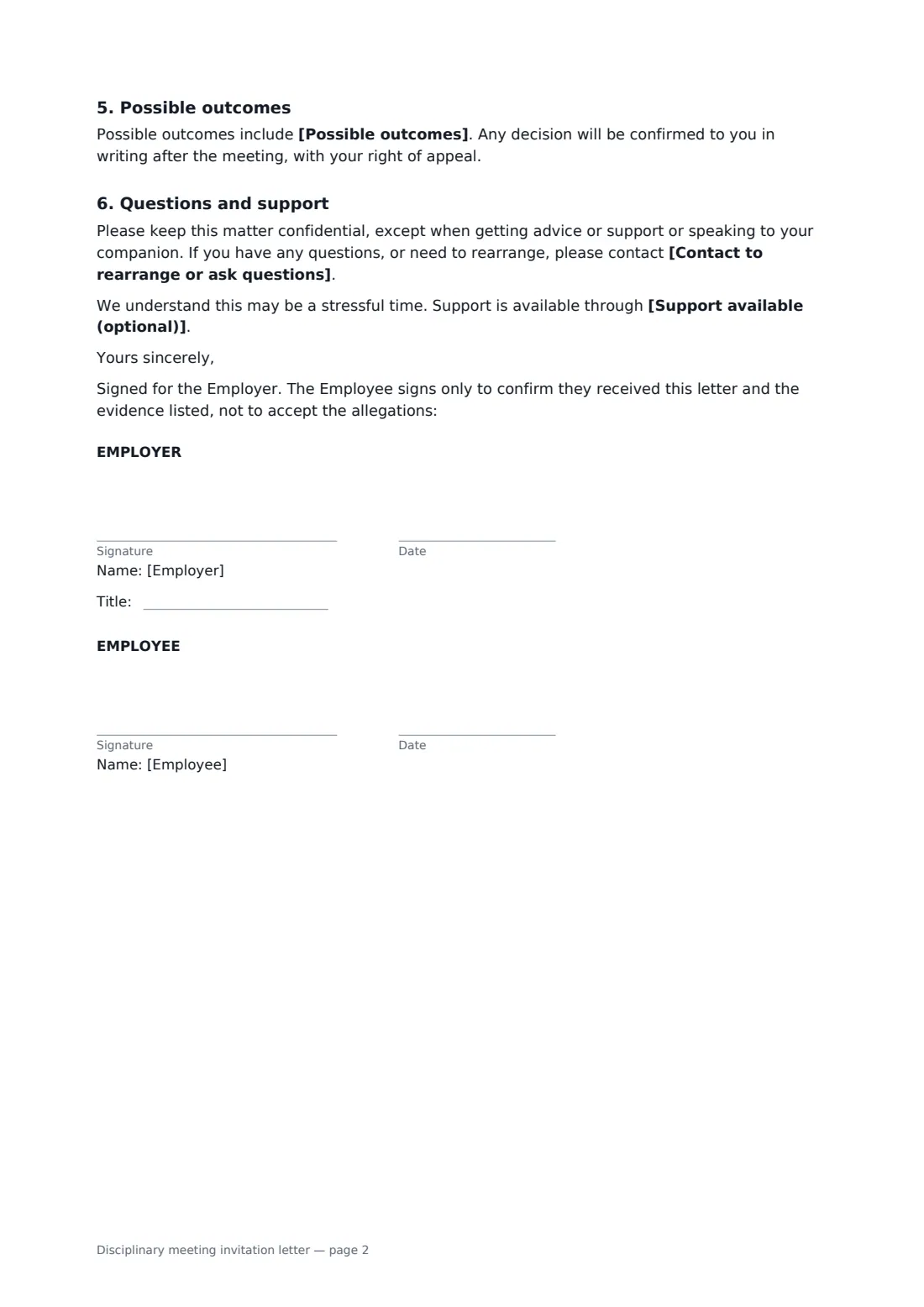
This template lists each allegation specifically and says whether it is being treated as misconduct, potential gross misconduct or poor performance, while making clear no decision has been made. It gives the date, time, place and chair of the meeting and explains what the employee can do there. It sets out the right to be accompanied and what a companion can do, and how to rearrange if needed. It lists the evidence enclosed and states the possible outcomes in your words, with a right of appeal. The employee signs only to confirm receipt.
- Best for
- Formal disciplinary meetings after an investigation
- Signed by
- The employer, and the employee to confirm receipt
- Covers
- Allegations, meeting details, right to be accompanied, evidence, outcomes
- Length
- About 2 pages
When to use a disciplinary meeting invitation letter
- Inviting an employee to a hearing after an investigation into timesheet irregularities
- Calling a meeting about alleged breaches of a safety rule
- A potential gross misconduct hearing where dismissal is a possible outcome
- A formal capability meeting after an improvement plan has not worked
- Rearranging a disciplinary meeting with a fresh letter and new date
What you fill in
17 blanks, then the name and email of each person who signs: employer, employee.
1 The letter
- Date of the letter*
- Employer (company name)*
- Employee's full name*
- Job title*
2 Allegations
- The allegations*
- How the allegations are being treated* misconduct · potential gross misconduct · poor performance
- Policy or procedure followed
3 The meeting
- Meeting date*
- Meeting time*
- Meeting place*
- Meeting chaired by*
- Also present (optional)
- Who may accompany the employee* a work colleague or a trade union representative · a work colleague, a trade union representative or another person of your choice
4 Evidence
- Evidence enclosed*
5 Outcomes
- Possible outcomes*
- Contact to rearrange or ask questions*
- Support available (optional)
6 Who signs
- Employer signature and date, job title · The manager or HR person arranging the meeting.
- Employee signature and date · Signs only to confirm receipt.
What the disciplinary meeting invitation letter covers
- The allegations
- The meeting
- Your right to be accompanied
- Evidence
- Possible outcomes
- Questions and support
Using the disciplinary meeting invitation letter, step by step
1 Set out the allegations
List each allegation with its date and specifics, choose how it is being treated, and name the policy or procedure you are following.
2 Arrange the meeting
Enter the date, time and place, who will chair it and anyone else attending. Choose who the employee may bring as a companion.
3 Share the evidence
List every document you will rely on, such as the investigation report, records and witness statements. Send copies to the employee at the same time as the letter, so they have them well before the meeting.
4 State the outcomes and send
Describe the possible outcomes, including dismissal if it is possible. Add a contact and any support available, then send. The employee signs to confirm receipt, and the letter is filed with the case.
Tips before you send it
- Give the employee reasonable time to prepare. A few working days between the letter and the meeting is common, and more for complex cases.
- Use a different person to chair the meeting from the one who investigated, where your organisation is big enough.
- If dismissal is possible, say so in the letter. Employees should not be surprised by the outcome options.
- Don't introduce new allegations at the meeting. If something new comes up, adjourn and send a fresh invitation.
Sign it online in minutes
- Fill in the blanks. Names, dates and amounts go straight into the agreement — the preview shows exactly where.
- Name who signs. Tick “This is me” for your own part. FileIt builds the PDF with every signature, date box on the right line, and you can check or move anything before sending.
- Send it. Each signer gets a secure link and signs from any device — no account needed. The signed PDF, with an audit trail and a Certificate of Completion, is filed in your vault and emailed to everyone.
Disciplinary meeting invitation letter: frequently asked questions
How much notice should I give before a disciplinary meeting?
Enough for the employee to read the evidence and arrange a companion. Many policies use a few working days. Check your own procedure and any local guidance or codes of practice.
Who can the employee bring with them?
You choose between a colleague or trade union representative, or adding another person of their choice. In some places the law gives a right to bring a colleague or union representative, and your procedure may allow more.
Does signing mean the employee admits the allegations?
No. The signature block says they sign only to confirm they received the letter and the evidence, not to accept the allegations.
How do I get the evidence to the employee?
The template produces the letter and lists the evidence. Send the documents themselves at the same time, for example by secure email or in person, and keep a note of when and how they were delivered. The employee's signature confirms they received the evidence listed.