What is a workplace witness statement?
Most workplace investigations, whether into a grievance, a harassment complaint, an accident or alleged misconduct, depend on what people saw and heard. Memories fade quickly and stories shift in the retelling, so a signed statement taken soon after the event is often the most reliable evidence an investigator has.
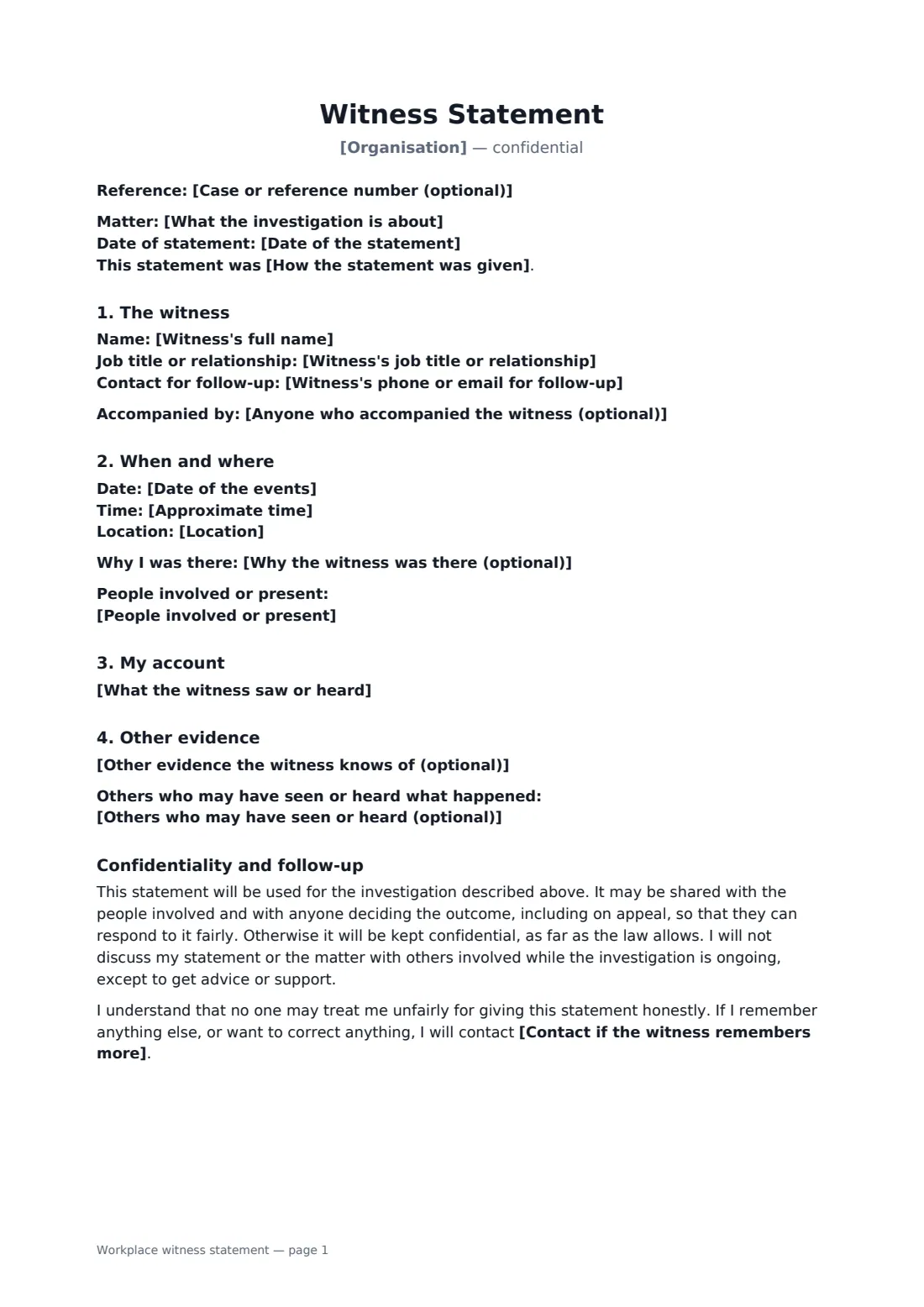
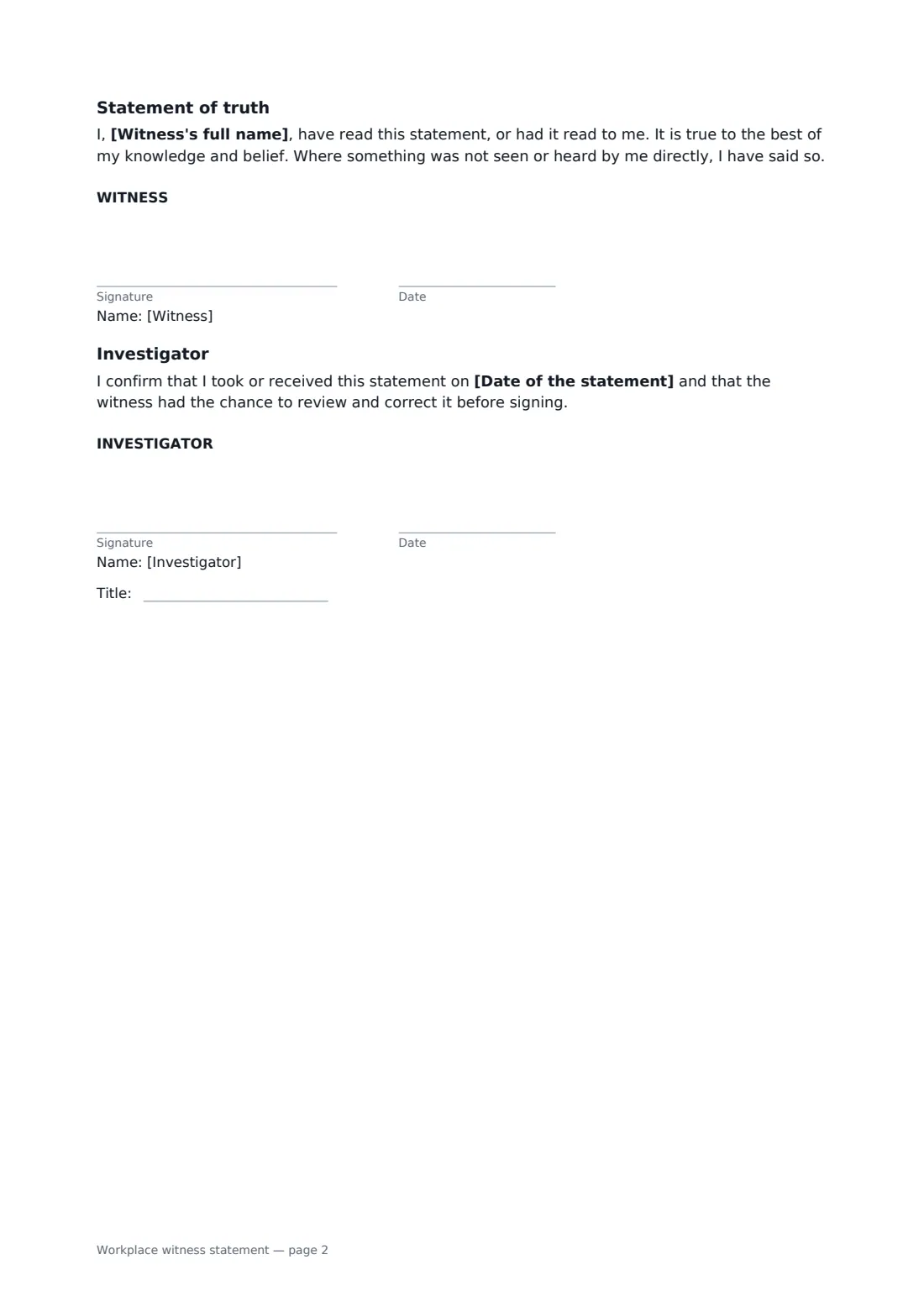
This template gives the witness a simple structure: who they are and how to reach them, when and where it happened, who was there, and then their account in their own words, in the order things happened. Optional sections record why they were present, other evidence they know of, such as messages or CCTV, and anyone else who may have seen something. A short confidentiality section explains who may see the statement and that the witness shouldn't be treated unfairly for giving it. The witness signs a statement of truth, and the investigator signs to confirm the witness had a chance to review and correct it.
- Best for
- Grievance, disciplinary, harassment and incident investigations
- Signed by
- The witness, then the investigator
- Records
- Date, time, place, people involved, account, evidence, follow-up contact
- Length
- 1–2 pages, depending on the account
When to use a workplace witness statement
- Taking statements from colleagues after a bullying or harassment complaint
- Recording what a co-worker saw before a workplace accident
- Gathering accounts of an argument or alleged threat on a shift
- Witness statements for a disciplinary investigation into misconduct
- A customer or visitor's account of an incident on your premises
What you fill in
18 blanks, then the name and email of each person who signs: witness, investigator.
1 The investigation
- Organisation*
- Case or reference number (optional)
- What the investigation is about*
- Date of the statement*
- How the statement was given* written by the witness · given in an interview and written down by the investigator, then checked by the witness
2 The witness
- Witness's full name*
- Witness's job title or relationship*
- Witness's phone or email for follow-up*
- Anyone who accompanied the witness (optional)
3 The events
- Date of the events*
- Approximate time*
- Location*
- People involved or present*
4 The account
- What the witness saw or heard*
- Why the witness was there (optional)
- Other evidence the witness knows of (optional)
- Others who may have seen or heard (optional)
5 Follow-up
- Contact if the witness remembers more*
6 Who signs
- Witness signature and date · The person giving the statement.
- Investigator signature and date, job title · The person who took the statement or is running the investigation.
What the workplace witness statement covers
- The witness
- When and where
- My account
- Other evidence
- Confidentiality and follow-up
- Statement of truth
- Investigator
Using the workplace witness statement, step by step
1 Set up the investigation
Enter your organisation, a case reference if you use one, and a neutral one-line description of the matter. Choose whether the witness wrote the statement or you wrote it down from an interview.
2 Record the basics
Add the witness's name, role and contact details, then the date, approximate time and location of the events, and the people involved or present.
3 Take the account
Write the account in the witness's own words, in the order things happened. Add optional details about why they were there, other evidence and other possible witnesses.
4 Review and sign
Name who the witness should contact if they remember more, and send it to them to review. The witness signs the statement of truth, you countersign, and the statement is kept with the case in your vault.
Tips before you send it
- Take statements as soon as you can after the event, and from each witness separately.
- Ask open questions: "What happened next?" rather than "Did they shout at you?"
- Keep the witness's own words, even if they are informal. Don't tidy up an account into what you think they meant.
- Tell the witness up front who may see their statement. Promising complete anonymity is rarely possible in a fair process.
Sign it online in minutes
- Fill in the blanks. Names, dates and amounts go straight into the agreement — the preview shows exactly where.
- Name who signs. Tick “This is me” for your own part. FileIt builds the PDF with every signature, date box on the right line, and you can check or move anything before sending.
- Send it. Each signer gets a secure link and signs from any device — no account needed. The signed PDF, with an audit trail and a Certificate of Completion, is filed in your vault and emailed to everyone.
Workplace witness statement: frequently asked questions
Is this the same as a witness statement for court?
No. It is for internal workplace investigations. Courts and tribunals usually have their own formats and wording for statements, so use those if a case goes that far.
Will the person complained about see my statement?
Often, yes. A fair process usually means the people involved can see and respond to the evidence. The statement explains this, and says it is otherwise kept confidential as far as the law allows.
What if the witness wants to change something later?
They contact the person named in the follow-up section. A further statement or correction can be taken and signed in the same way, and the original stays on file.
Can witness statements be e-signed?
Yes, for internal investigations e-signatures are widely used. FileIt's audit trail shows when the witness opened and signed the statement, which helps if the account is later questioned.