What is a construction delay notice?
Most building contracts expect a contractor to give written notice of a delay promptly, and many say that a late or missing notice can cost the contractor its right to more time or money. Even where the contract is silent, a clear notice sent early keeps the owner informed and makes later conversations about the schedule much easier.
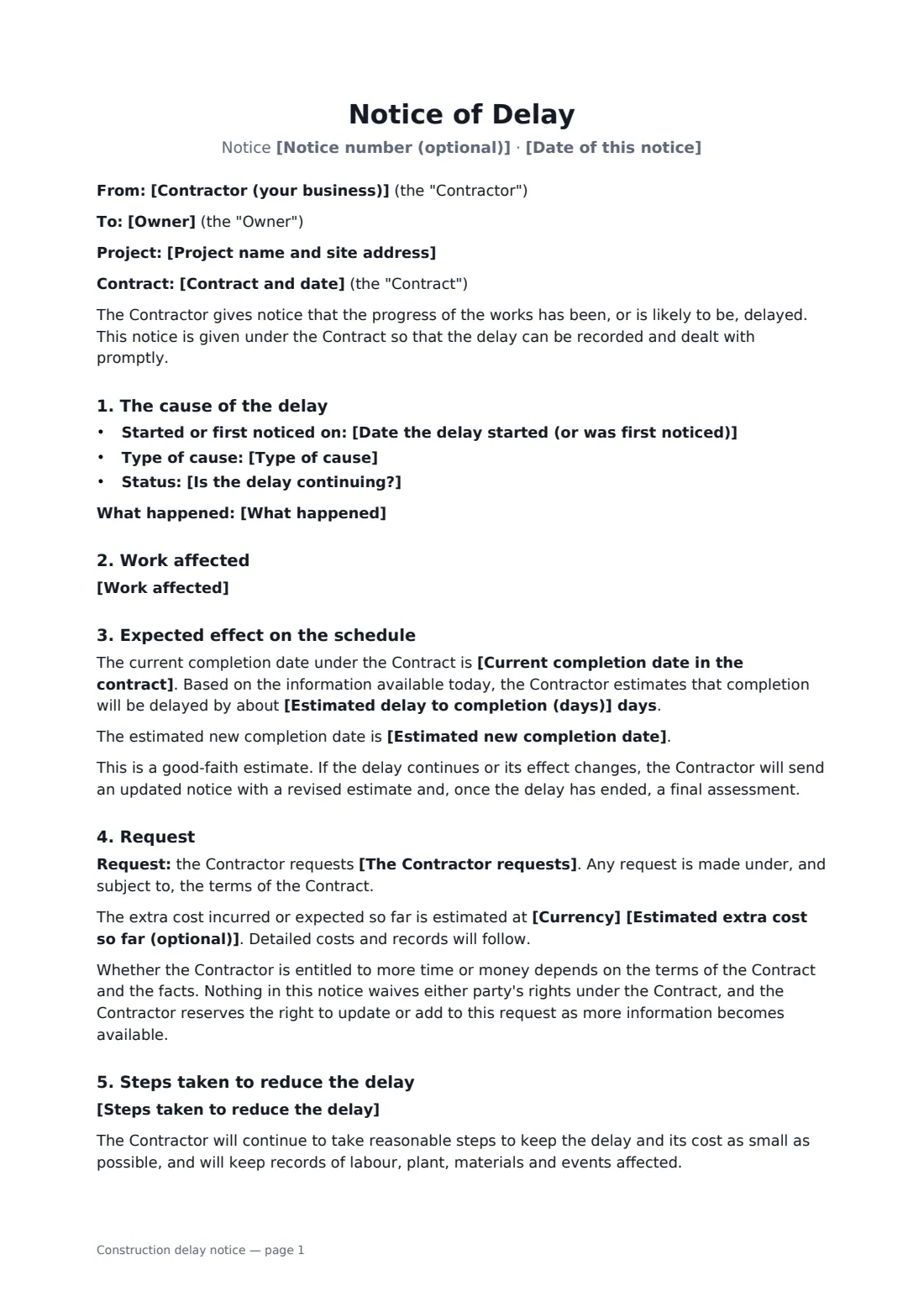
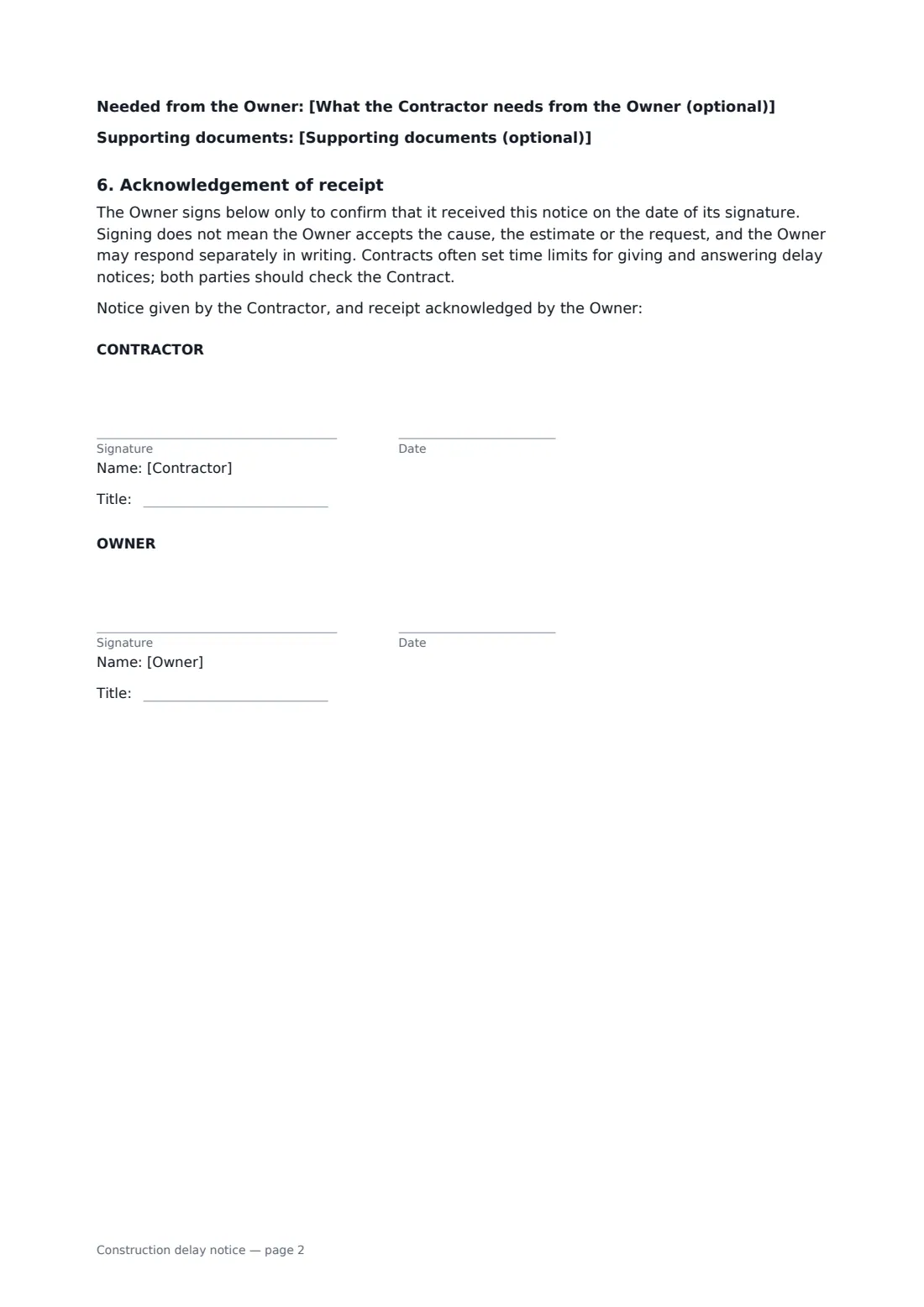
This template records the project, the contract it's given under, when the delay started and its type of cause, from weather and owner changes to late approvals, unforeseen site conditions, material shortages and permit delays. It describes what happened and the work affected, whether the delay is continuing, the current completion date, an estimate of days lost and a new completion date. It states what the contractor is asking for, from an extension of time to extra cost or simply reserving its rights, an optional cost estimate, the steps taken to reduce the delay, anything needed from the owner, and supporting documents. The owner signs to confirm receipt only, not agreement.
- Best for
- Builders, contractors and subcontractors on residential and commercial projects
- Signed by
- The contractor (notice) and the owner (receipt only)
- Request
- Extension of time, extra cost, both, or notice only
- Length
- About 2 pages
When to use a construction delay notice
- Weeks of heavy rain stopping groundworks on a new house
- An owner's change to the kitchen layout pushing back the fit-out
- Unexpected rock or an unrecorded drain found during excavation
- A supplier's late delivery of windows or structural steel
- Waiting on a building inspection or permit approval
What you fill in
21 blanks, then the name and email of each person who signs: contractor, owner.
1 The project
- Date of this notice*
- Notice number (optional)
- Contractor (your business)*
- Owner*
- Project name and site address*
- Contract and date*
2 The delay
- Date the delay started (or was first noticed)*
- Type of cause* adverse weather · a change or extra work requested by the Owner · late information, approvals or decisions · unforeseen site conditions · late delivery or shortage of materials · a permit, inspection or authority delay · work by others not under the Contractor's control · an event outside either party's control
- What happened*
- Work affected*
- Is the delay continuing?* continuing — a further update will follow · ended on the date below
- Date the delay ended
3 Effect on the schedule
- Current completion date in the contract*
- Estimated delay to completion (days)*
- Estimated new completion date
4 Request
- The Contractor requests* an extension of time only · an extension of time and the extra cost caused by the delay · the extra cost only · nothing at present — this notice is for information and to preserve the Contractor's rights
- Currency
- Estimated extra cost so far (optional)
- Steps taken to reduce the delay*
- What the Contractor needs from the Owner (optional)
- Supporting documents (optional)
5 Who signs
- Contractor signature and date, job title · The builder or contractor giving notice of the delay.
- Owner signature and date, job title · The owner, client or their representative. Signing confirms receipt only, not agreement.
What the construction delay notice covers
- The cause of the delay
- Work affected
- Expected effect on the schedule
- Request
- Steps taken to reduce the delay
- Acknowledgement of receipt
Using the construction delay notice, step by step
1 Identify the project and contract
Give the project, site address and the contract the notice is given under, with an optional notice number for your records.
2 Describe the delay
Enter the start date, choose the type of cause, and describe what happened and the work affected. Say whether the delay is still going on.
3 Estimate the impact and make the request
Enter the current completion date, the days you expect to lose and a new date if you have one, then choose what you're asking for and add a cost estimate if known.
4 Show mitigation and send
Describe what you've done to reduce the delay and what you need from the owner, list supporting documents, and send it for the owner's acknowledgement.
Tips before you send it
- Read your contract's notice clause first. It may set a deadline, a recipient and a method for delay notices.
- Send the notice early, even if you can't yet estimate the full effect. You can send updated notices as it develops.
- Keep daily records, photos and weather data from the start of the delay. They support any request later.
- Number your notices so the owner and you can refer to them clearly.
Sign it online in minutes
- Fill in the blanks. Names, dates and amounts go straight into the agreement — the preview shows exactly where.
- Name who signs. Tick “This is me” for your own part. FileIt builds the PDF with every signature, date box on the right line, and you can check or move anything before sending.
- Send it. Each signer gets a secure link and signs from any device — no account needed. The signed PDF, with an audit trail and a Certificate of Completion, is filed in your vault and emailed to everyone.
Construction delay notice: frequently asked questions
Does the owner's signature mean they accept the delay?
No. The owner signs only to confirm they received the notice on that date. They can accept, question or reject the request separately in writing.
Does this notice guarantee an extension of time?
No. Whether the contractor is entitled to more time or money depends on the contract and the facts. The notice records the delay and the request and reserves the contractor's rights.
What if the delay is still going on?
Choose "continuing" and give your best estimate. The notice says the contractor will send updated notices and a final assessment once the delay has ended.
Is an electronically signed notice valid?
Electronic notices and signatures are generally valid, but some contracts require a particular delivery method, such as post or a named email address. Check the notice clause and follow it.