What is a basement waterproofing contract?
Waterproofing disputes usually come down to expectations. The homeowner thought the job would cure every damp patch; the contractor quoted for water at the floor joint on two walls. A basement waterproofing contract records the problem, the system chosen to deal with it and the limits of what it fixes, before the floor is broken out.
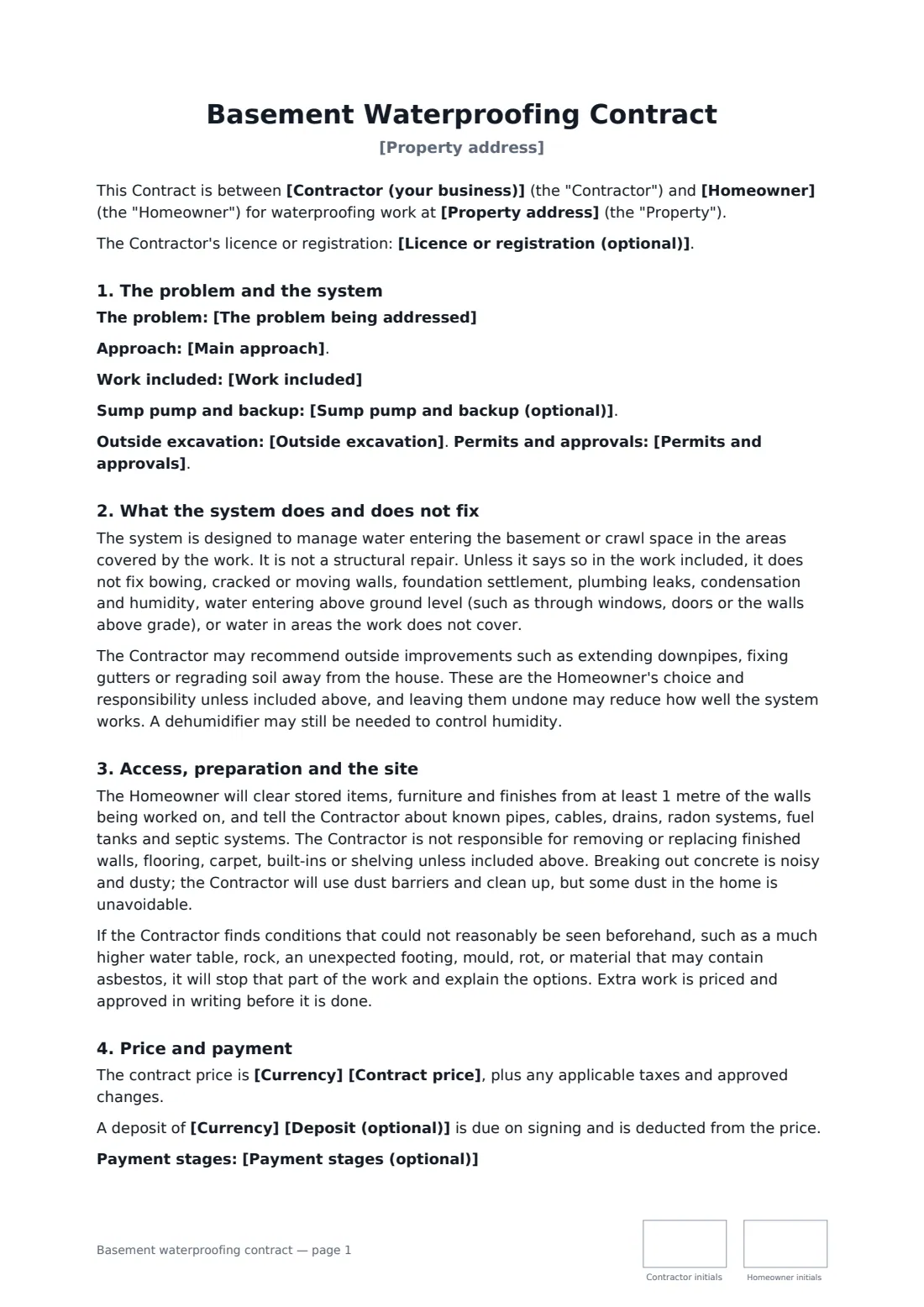
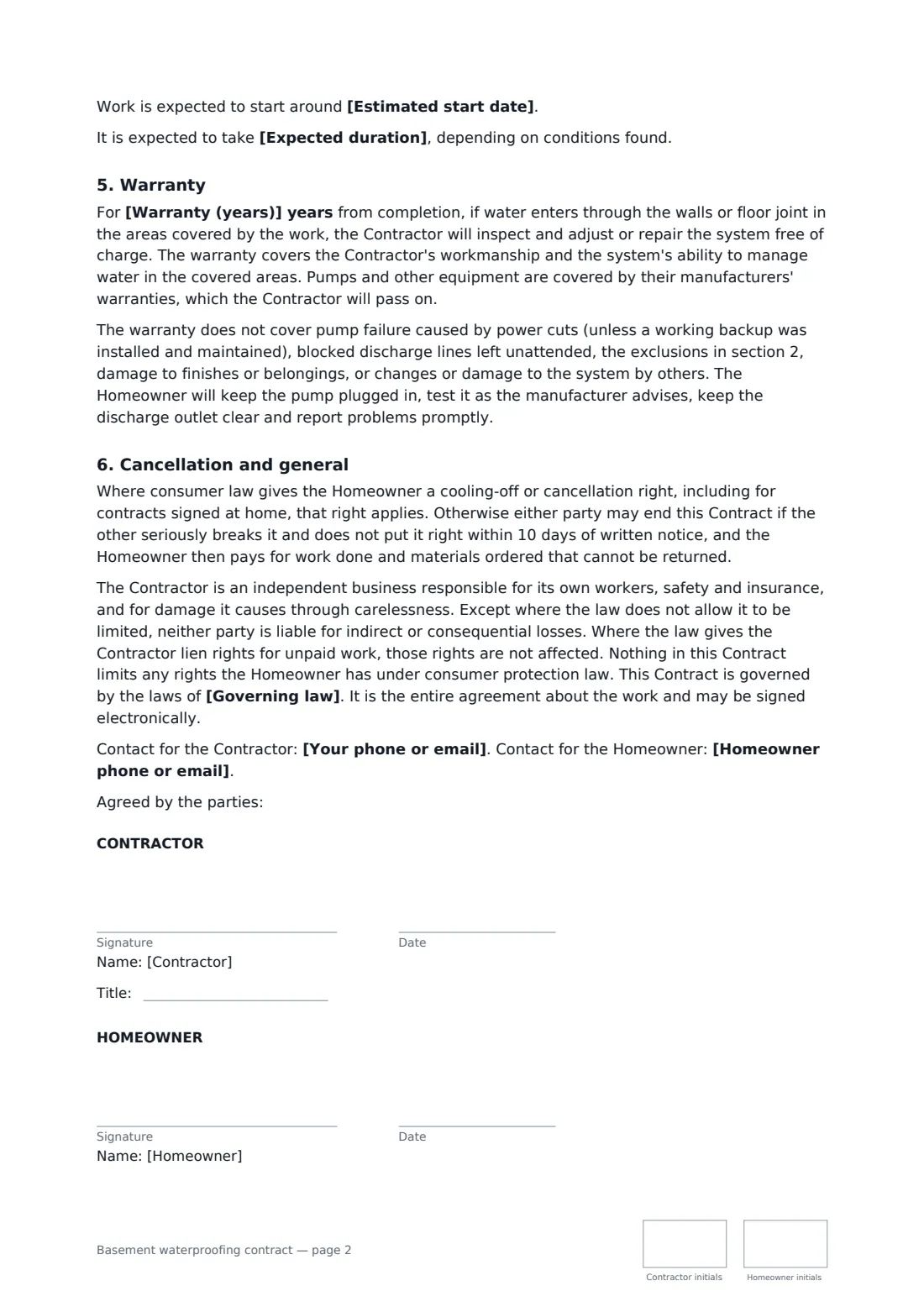
This template covers interior perimeter drainage with a sump pump, exterior excavation and membranes, crack injection, crawl space encapsulation, or a combination. It records the problem in the homeowner's words, the work included, the pump and backup, outside excavation and permits. A plain section explains what the system does not fix, such as structural movement, humidity and water above ground level, and that gutters and grading are the homeowner's choice. It sets clearing and access duties, a stop-and-explain rule for unexpected conditions, excavation and backfill terms when digging outside, the price, deposit and optional stages, and a warranty in years that the homeowner keeps up by maintaining the pump. You choose whether the warranty passes to a buyer, with or without a fee.
- Best for
- Waterproofing contractors, foundation specialists and builders
- Signed by
- The contractor and the homeowner
- Covers
- System, sump pump, excavation, exclusions, payments, warranty transfer
- Length
- About 2 to 3 pages, initialled on every page
When to use a basement waterproofing contract
- An interior drain tile and sump pump system for a basement that floods in heavy rain
- Excavating one wall to apply an exterior membrane and footing drain
- Injecting and sealing foundation wall cracks
- Encapsulating a damp crawl space with a vapour barrier
- Giving a buyer a transferable warranty when the house is sold
What you fill in
22 blanks, then the name and email of each person who signs: contractor, homeowner.
1 The parties
- Contractor (your business)*
- Your phone or email*
- Licence or registration (optional)
- Homeowner*
- Homeowner phone or email*
2 The problem and the system
- Property address*
- The problem being addressed*
- Main approach* an interior perimeter drainage system with a sump pump · exterior excavation, membrane and footing drain · foundation crack injection and sealing · crawl space vapour barrier and encapsulation · a combination of the methods described below
- Work included*
- Sump pump and backup (optional)
- Outside excavation* none — all work is inside · along part of the foundation, described in the scope · around the whole foundation
- Permits and approvals* none are needed for this work · obtained by the Contractor, included in the price · obtained by the Contractor and charged at cost · obtained by the Homeowner
3 Price and schedule
- Currency*
- Contract price*
- Deposit (optional)
- Payment stages (optional)
- Estimated start date*
- Expected duration
4 Warranty and terms
- Warranty (years)*
- Can the warranty pass to a buyer?* Yes, on written notice to the Contractor · Yes, on written notice and a transfer fee · No
- Transfer fee (if any)
- Governing law*
5 Who signs
- Contractor signature and date, job title, initials on every page · The waterproofing business doing the work.
- Homeowner signature and date, initials on every page · The owner of the home, or someone authorised by the owner.
What the basement waterproofing contract covers
- The problem and the system
- What the system does and does not fix
- Access, preparation and the site
- Price and payment
- Warranty
- Cancellation and general
Using the basement waterproofing contract, step by step
1 Describe the problem
Write where and when water gets in. It anchors what the warranty covers.
2 Choose the system
Pick the main approach, list the work included, the pump and any backup, and whether you dig outside. Choose who obtains permits.
3 Price and schedule
Enter the price, an optional deposit and payment stages, the start date and the expected duration.
4 Set the warranty
Enter the warranty in years and whether it can pass to a buyer, with a transfer fee if you charge one, then send it to sign.
Tips before you send it
- Describe the problem precisely, wall by wall. A vague description makes the warranty hard to apply later.
- Show the homeowner how to test the pump and alarm on the last day. The warranty depends on them keeping it running.
- Recommend downpipe extensions and regrading in writing, even if they're not in your scope. The contract says leaving them undone may reduce how well the system works.
- Check whether breaking out the floor affects a radon system, and whether local rules require a permit for the pump discharge.
Sign it online in minutes
- Fill in the blanks. Names, dates and amounts go straight into the agreement — the preview shows exactly where.
- Name who signs. Tick “This is me” for your own part. FileIt builds the PDF with every signature, date and initials box on the right line, and you can check or move anything before sending.
- Send it. Each signer gets a secure link and signs from any device — no account needed. The signed PDF, with an audit trail and a Certificate of Completion, is filed in your vault and emailed to everyone.
Basement waterproofing contract: frequently asked questions
Does a waterproofing system fix foundation cracks and bowing walls?
Not unless that work is listed. The contract states the system manages water in the covered areas and is not a structural repair, and it excludes humidity, plumbing leaks and water above ground level.
What does the warranty cover?
For the years you set, if water enters through the walls or floor joint in the covered areas, the contractor inspects and repairs the system free of charge. Pumps carry their manufacturers' warranties.
Can the warranty transfer to a buyer?
You choose: it can pass to a buyer on written notice, on notice and a transfer fee, or not at all.
What if the pump fails in a power cut?
That's excluded unless a working backup pump was installed and maintained. The homeowner agrees to keep the pump plugged in, test it and keep the discharge clear.
Can I sign it electronically?
Yes. E-signatures are generally valid for home improvement contracts in the US, UK, EU and Canada, though some places add notice rules for contracts signed at home. FileIt keeps an audit trail with the signed PDF.