What is the dementia life history profile form template?
When someone living with dementia moves into a care home, starts home care or goes into hospital, the people looking after them often know their diagnosis and medication but little about who they are. Knowing that someone was a nurse, takes their tea with one sugar, hates being rushed in the morning and settles to big band music can make a real difference to their day.
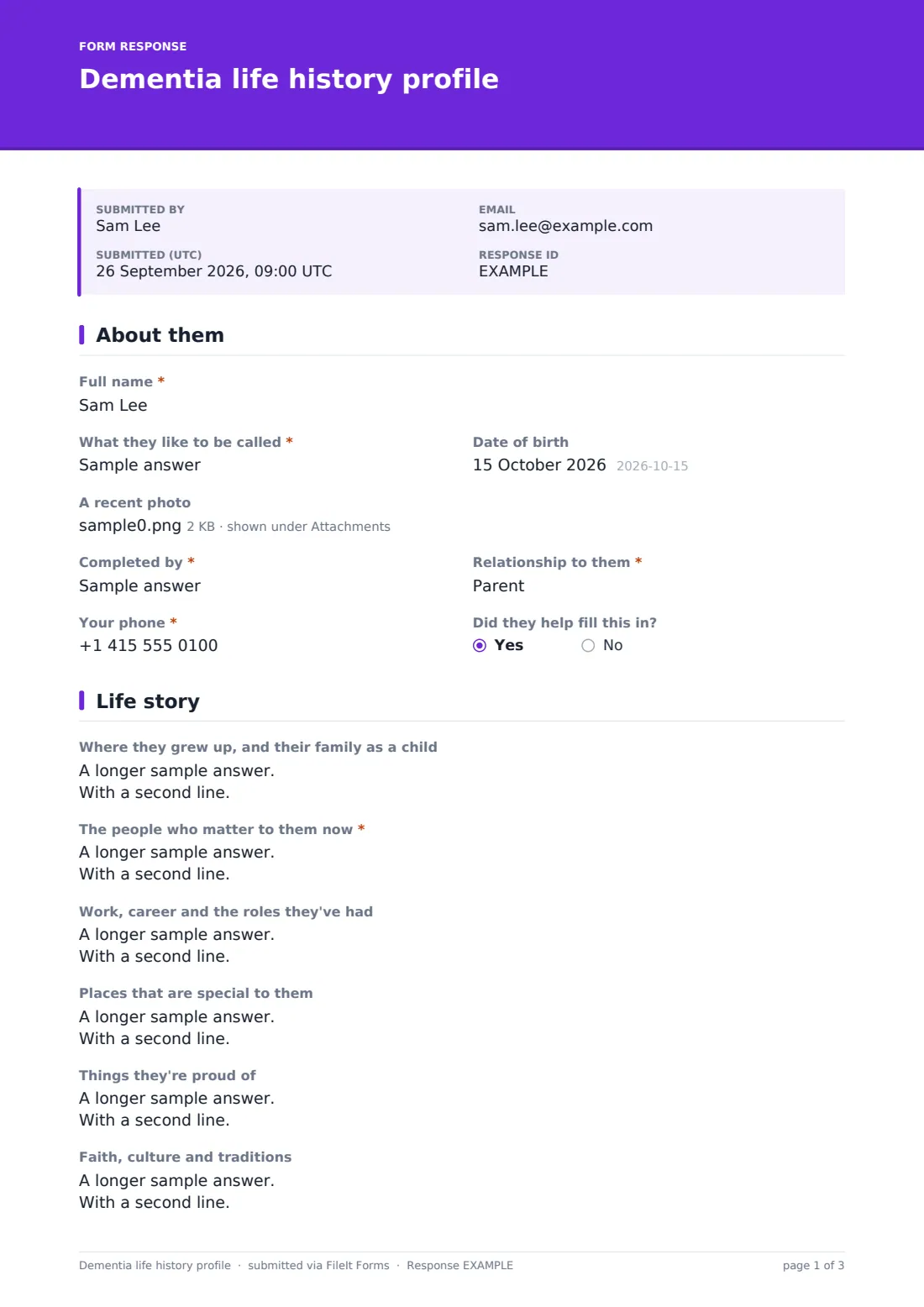
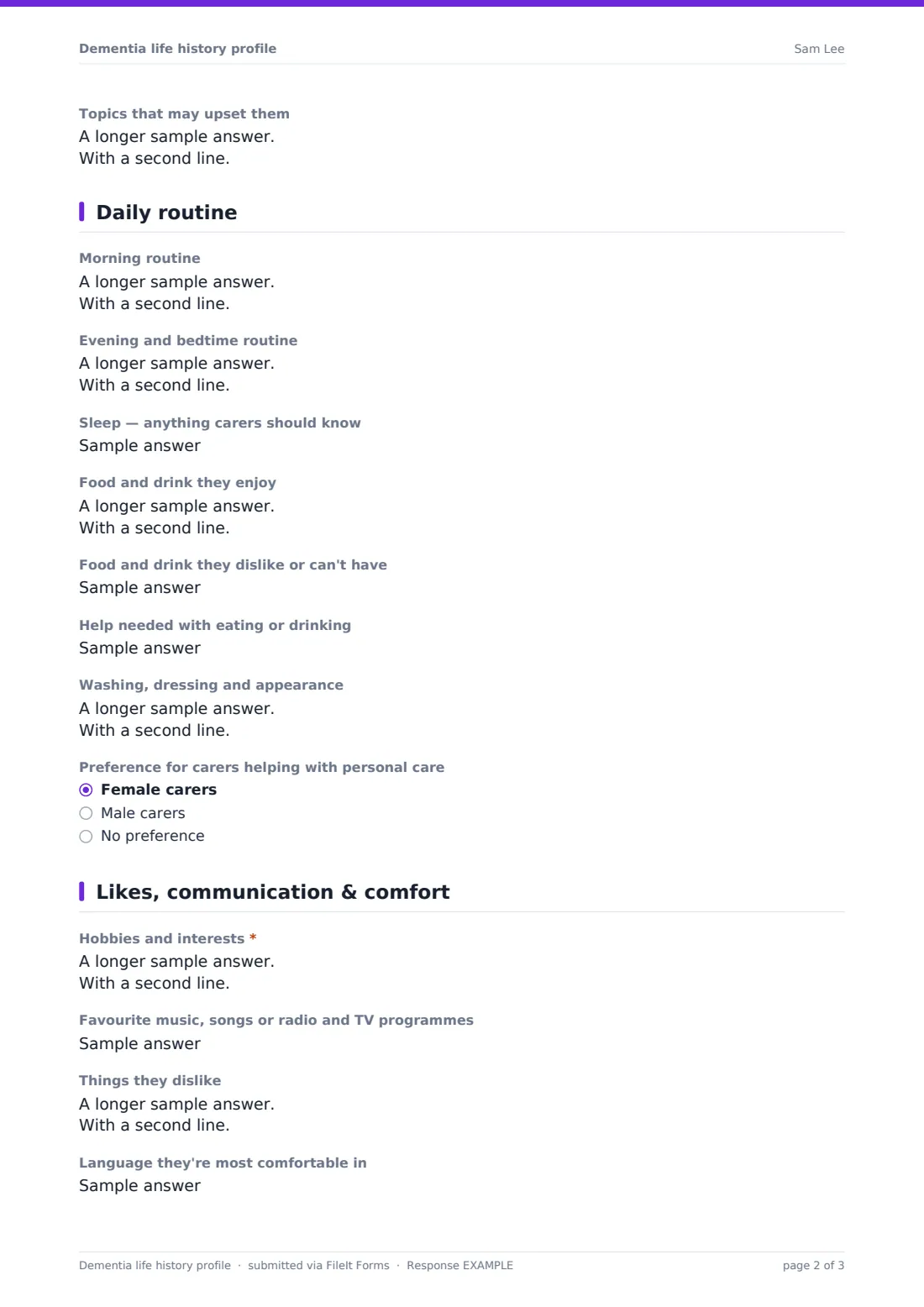
This template gives families a structured way to share that. It starts with the person's name, what they like to be called, an optional photo and who filled it in. A life story page covers where they grew up, the people who matter to them now, their work, special places, things they're proud of, faith and culture, and topics that may upset them. A routine page covers mornings, bedtime, sleep, food and drink, help with eating and personal care preferences.
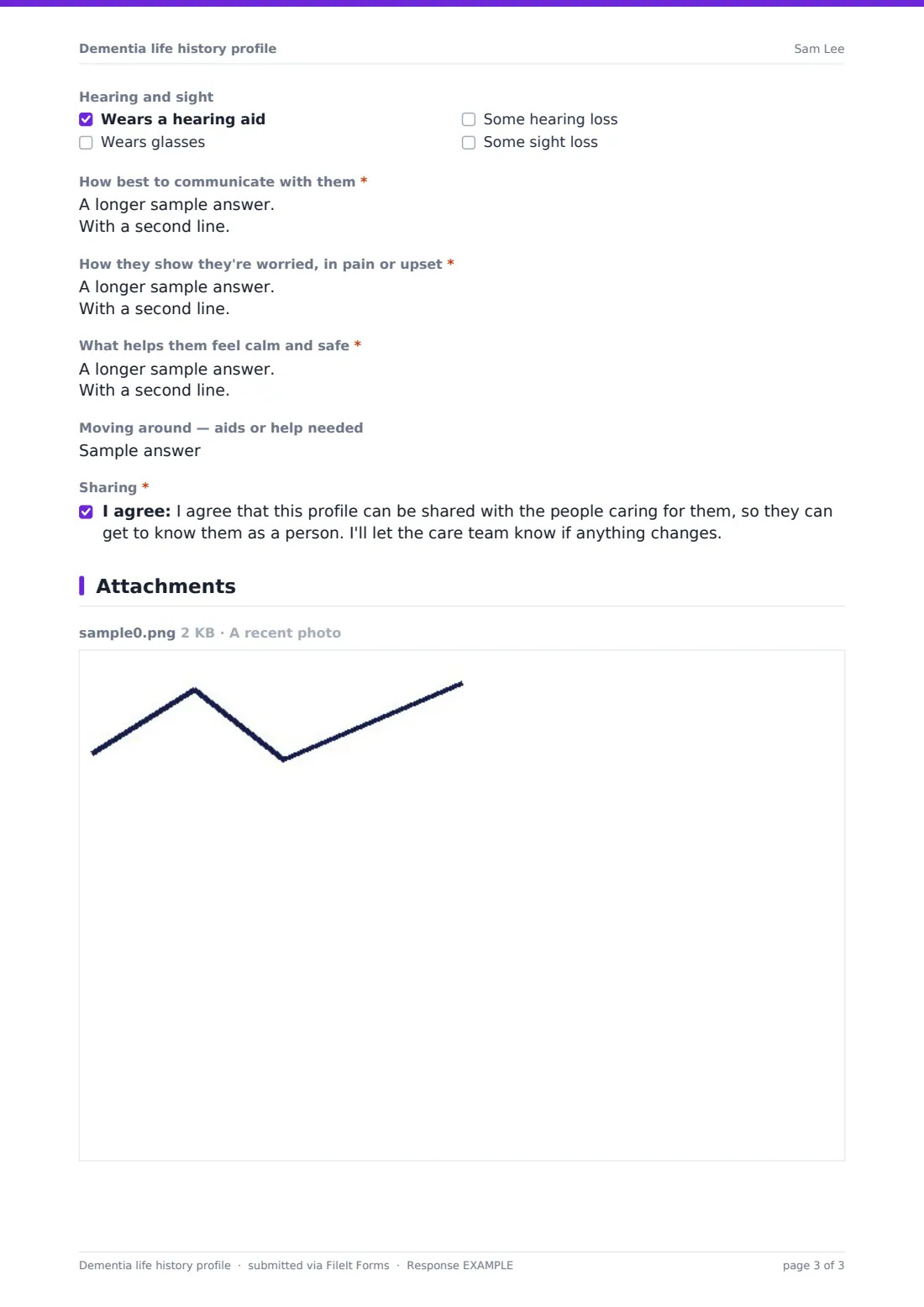
The final page covers hobbies, favourite music and programmes, dislikes, language, hearing and sight, how best to communicate, how they show worry or pain, what calms them and mobility. The family agrees it can be shared with carers, and it's saved as a PDF in FileIt.
- Best for
- Care homes, home care agencies, hospital wards, day centres and memory services
- Filled in by
- A family member or friend, ideally with the person themselves
- Time to complete
- 15–30 minutes, depending on how much is written
- Includes
- Photo, life story, routines, food and personal care preferences, interests, communication tips, signs of distress, what calms them and sharing consent
Who uses a dementia life history profile form?
- A care home welcoming a new resident living with dementia
- Home care agencies introducing a new carer to a client
- Families preparing for a hospital stay
- Day centres planning activities around a person's interests
- Respite care stays where staff need to know someone quickly
- Keeping a family record of a relative's life story
Questions on this dementia life history profile form
33 questions over 4 pages · includes file upload, multiple pages, consent checkbox.
1 About them
- Full name*
- What they like to be called*
- Date of birth
- A recent photo
- Completed by*
- Relationship to them*
- Your phone*
- Did they help fill this in?
2 Life story
- Where they grew up, and their family as a child
- The people who matter to them now*
- Work, career and the roles they've had
- Places that are special to them
- Things they're proud of
- Faith, culture and traditions
- Topics that may upset them
3 Daily routine
- Morning routine
- Evening and bedtime routine
- Sleep — anything carers should know
- Food and drink they enjoy
- Food and drink they dislike or can't have
- Help needed with eating or drinking
- Washing, dressing and appearance
- Preference for carers helping with personal care Female carers · Male carers · No preference
4 Likes, communication & comfort
- Hobbies and interests*
- Favourite music, songs or radio and TV programmes
- Things they dislike
- Language they're most comfortable in
- Hearing and sight Wears a hearing aid · Wears glasses · Some hearing loss · Some sight loss
- How best to communicate with them*
- How they show they're worried, in pain or upset*
- What helps them feel calm and safe*
- Moving around — aids or help needed
- Sharing*
The dementia life history profile form, page by page
1 About them
Give the person's full name, what they like to be called, their date of birth and a recent photo. Then record who completed the profile, their relationship and phone number, and whether the person helped fill it in.
2 Life story
Long answers cover where they grew up and their childhood family, the people who matter to them now — with names, including pets — their work and roles, special places, things they're proud of, and faith, culture and traditions such as festivals, prayer times or food rules. A final box records topics that may upset them, such as a bereavement or a home they've left.
3 Daily routine
Describe their morning routine, evening and bedtime routine and anything about sleep. Food and drink questions cover what they enjoy, what they dislike or can't have, and any help needed with eating or drinking. Personal care covers bath or shower, products, hair, clothes and jewellery, and whether they prefer female or male carers for personal care.
4 Likes, communication & comfort
Share hobbies and interests, favourite music and programmes, and things they dislike. Then record the language they're most comfortable in, hearing and sight aids, and how best to communicate with them. Required boxes cover how they show they're worried, in pain or upset and what helps them feel calm and safe, followed by mobility and agreement to share the profile with carers.
Make the template yours
- Add your care home's name and key worker to the cover text
- Add a question about end-of-life wishes if your service records them here
- Send personal links to families before admission so profiles are ready on day one
- File each resident's profile in their own vault folder
- Add more photo uploads for family pictures or important places
- Shorten the life story page for short respite stays
Tips for a better dementia life history profile form
- Fill it in with the person where you can — their own words matter
- Small details, like how they take their tea, are often the most useful
- Name the people in their life so carers can talk about them
- Update the profile as needs and preferences change
- Keep a printed copy somewhere carers will actually see it
- Share what calms them with every new member of staff
Every response becomes a PDF in your vault
Each profile is saved as a PDF in the vault folder you choose, with the photo attached. The account owner can be emailed when a family submits, and the person completing it can receive a copy.
Print the PDF for the person's room or care file, and ask families to submit an updated version when things change.
- Start from this template. It opens in the FileIt Forms designer — change any question, add pages, set the rules for when questions appear.
- Share it. Turn on a public link, or send it to people by email, each with their own link. They don’t need a FileIt account.
- Get the answers as PDFs. Each response is saved as a PDF in the vault folder you choose, with uploaded files attached — and listed in a Responses table you can export to CSV.
Dementia life history profile form: frequently asked questions
Is this dementia life history profile template free?
Yes. It's part of the Forms app, included with every FileIt account, the free plan too.
Who should fill it in?
A family member or close friend, ideally together with the person living with dementia, so their own voice is included.
Do all questions have to be answered?
No. Only a few core questions are required — what they like to be called, the people who matter, their interests, communication, signs of distress and what calms them. Write as much or as little as you like elsewhere.
Is this the same as other 'about me' documents?
It covers the same kind of person-centred information. If your service uses a particular format, you can edit the questions to match it.
Can we add more photos?
As built, there's one photo upload. You can raise the number of files in the designer or add another upload question.
Who can see the profile?
It's filed in your FileIt vault. Share it with the carers who need it and keep it in a folder only your team can open.