What is a pet foster agreement?
Fostering keeps rescue animals out of kennels and gives owners a safe place for a pet during a hospital stay, a move or a deployment. It works best when the foster carer knows exactly what they've signed up for, and when the rescue or owner knows the pet will be looked after on their terms. A short written agreement does both.
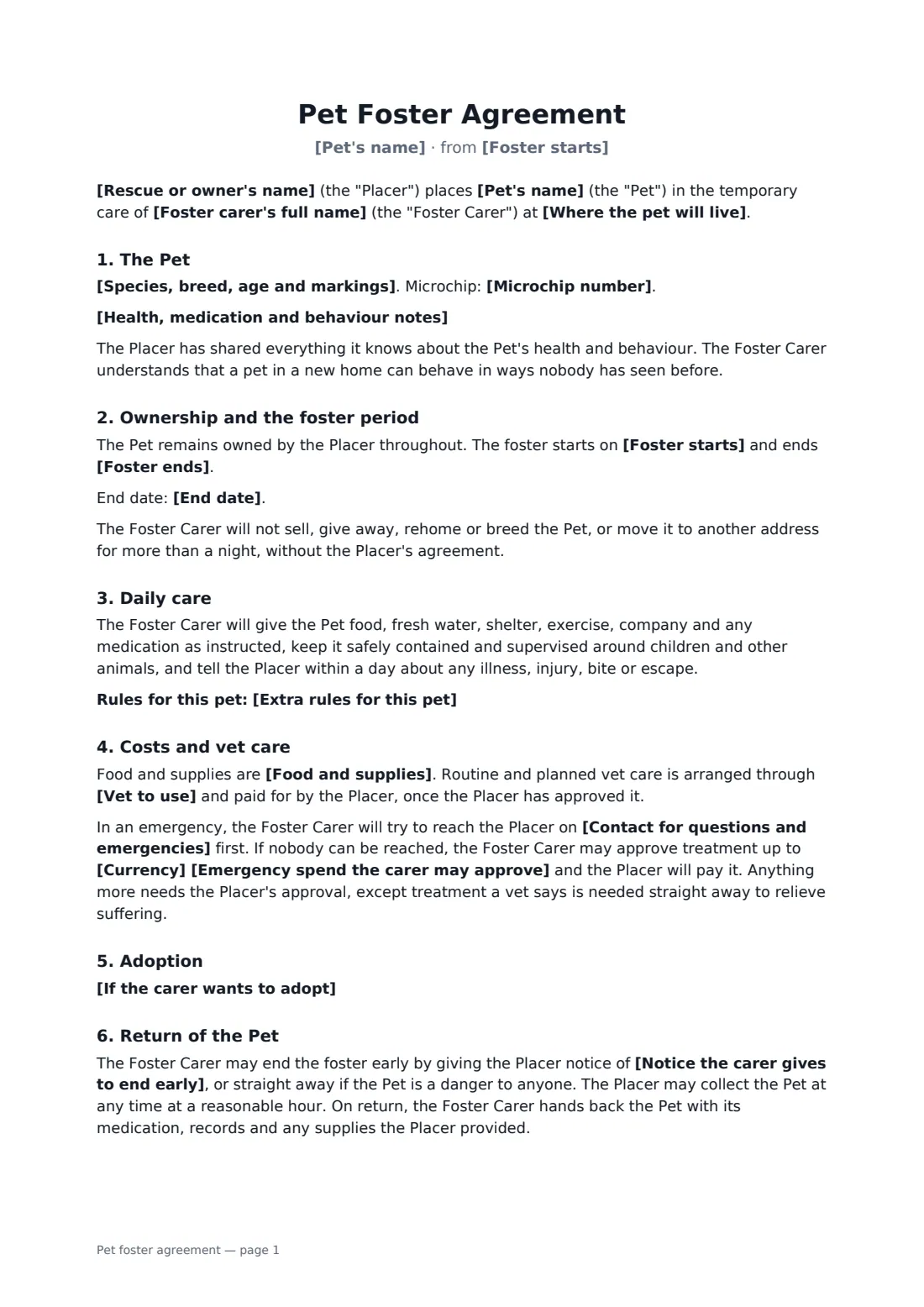
This template records the pet and its microchip, health, medication and behaviour notes, and the fact that ownership stays with the rescue or owner. It covers when the foster starts and ends (on adoption, a set date, or when the owner can take the pet back), daily care, extra rules for this pet, who supplies food, which vet to use and who approves treatment, an emergency spending limit if nobody can be reached, whether the carer may adopt, notice to end early, and returning the pet with its records. It is written for small rescues and individual owners alike.
- Best for
- Rescues, shelters and owners placing a pet in temporary care
- Signed by
- The rescue or owner and the foster carer
- Ownership
- Stays with the rescue or owner throughout
- Length
- About 2 pages
When to use a pet foster agreement
- A small rescue placing a dog with a volunteer foster home until adoption
- An owner going into hospital who needs a friend to foster their cat for a few months
- Foster-to-adopt, where the carer may keep the pet if it works out
- Fostering a litter of kittens or a mother and pups until they are old enough to rehome
- Placing a pet with family during a house move abroad
What you fill in
18 blanks, then the name and email of each person who signs: rescue or owner, foster carer.
1 The people
- Rescue or owner's name*
- Contact for questions and emergencies*
- Foster carer's full name*
- Where the pet will live*
2 The pet
- Pet's name*
- Species, breed, age and markings*
- Microchip number
- Health, medication and behaviour notes
3 The foster period
- Foster starts*
- Foster ends* when the pet is adopted or moved to another placement · on the end date below · when the owner is able to take the pet back
- End date
4 Costs and vet care
- Food and supplies* provided by the rescue or owner · bought by the foster carer, who is reimbursed on receipts · bought by the foster carer at their own cost
- Vet to use*
- Currency*
- Emergency spend the carer may approve*
5 Adoption and return
- If the carer wants to adopt* The foster carer may apply to adopt and will be considered first, through the usual adoption process. · The foster carer may apply to adopt in the same way as anyone else. · Adoption is not offered. The pet will return to the owner.
- Notice the carer gives to end early*
- Extra rules for this pet
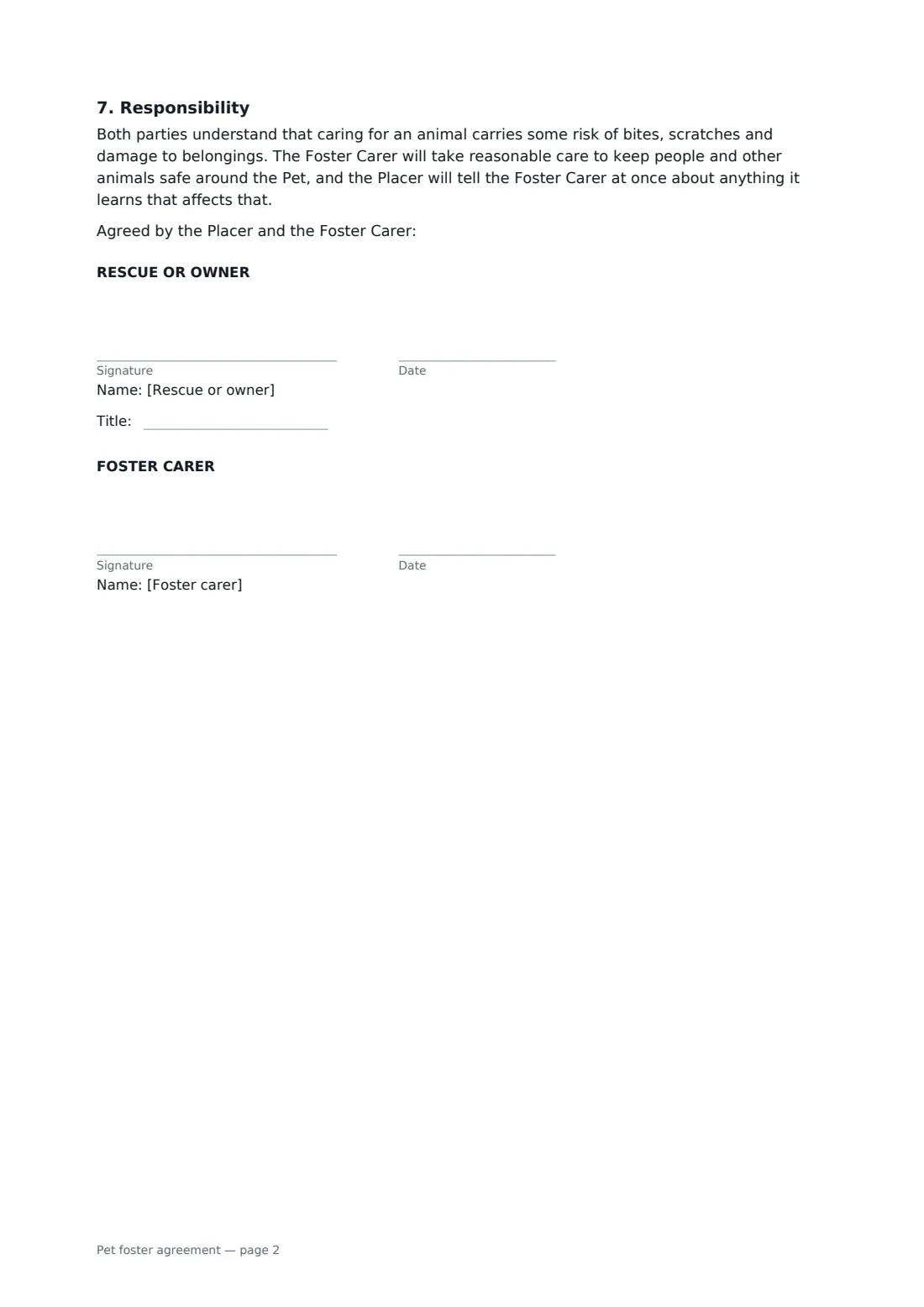
6 Who signs
- Rescue or owner signature and date, job title · The rescue, shelter or owner placing the pet. A rescue's coordinator can add their job title.
- Foster carer signature and date · The person who will care for the pet in their home.
What the pet foster agreement covers
- The Pet
- Ownership and the foster period
- Daily care
- Costs and vet care
- Adoption
- Return of the Pet
- Responsibility
Using the pet foster agreement, step by step
1 Describe the pet
Enter the pet's name, species, breed, age and markings, the microchip number, and everything the carer needs to know about health, medication and behaviour, including what hasn't been tested yet, such as living with cats.
2 Set the foster period
Choose whether the foster ends on adoption, on a set date or when the owner can take the pet back, and the notice the carer gives to end early. Add any rules for this pet, such as no off-lead walks.
3 Agree costs and vet care
Choose who supplies food, name the vet, and set the amount the carer can approve in an emergency if you can't be reached. Planned vet care always needs your approval first.
4 Decide on adoption and sign
Choose whether the carer may adopt first, like anyone else, or not at all. Tick "This is me" for the rescue or owner and add the foster carer. They sign from their email with no FileIt account, and the signed copy is filed in your vault.
Tips before you send it
- Set an emergency limit you can actually afford, and keep your phone on.
- Hand over a written feeding and medication schedule with the pet, along with the agreement.
- Introduce a foster pet to resident animals slowly, and say so in the rules for this pet.
- Keep the microchip registered to the rescue or owner during the foster, as the agreement says.
- Ask the foster carer for a weekly photo and update. It helps with adoption listings too.
Sign it online in minutes
- Fill in the blanks. Names, dates and amounts go straight into the agreement — the preview shows exactly where.
- Name who signs. Tick “This is me” for your own part. FileIt builds the PDF with every signature, date box on the right line, and you can check or move anything before sending.
- Send it. Each signer gets a secure link and signs from any device — no account needed. The signed PDF, with an audit trail and a Certificate of Completion, is filed in your vault and emailed to everyone.
Pet foster agreement: frequently asked questions
Who owns the pet during the foster?
The rescue or the owner. The agreement says so, and the foster carer may not sell, give away, rehome or breed the pet.
What if the pet needs emergency treatment?
The carer tries to reach you first. If nobody answers, they may approve treatment up to the limit you set, and you pay it. A vet can always give treatment needed straight away to relieve suffering.
Can the foster carer adopt the pet?
You choose: they can be considered first, apply like anyone else, or adoption is not offered because the pet goes back to its owner.
How is this different from a pet sitting agreement?
A pet sitter usually looks after a pet for a short, fixed time, often for pay and often in the owner's home. A foster carer gives the pet a home of their own for an open or longer period, usually as a volunteer, while the rescue or owner keeps ownership and pays the vet.
Is this template free?
Yes. It is free with the eSignature app in FileIt.