What is a hypnotherapy consent?
New clients often arrive with ideas about hypnosis from television, worried they'll lose control or say something they regret. A consent form that explains the experience plainly, and sets out what hypnotherapy can and can't do, helps them relax and gives you a solid record.
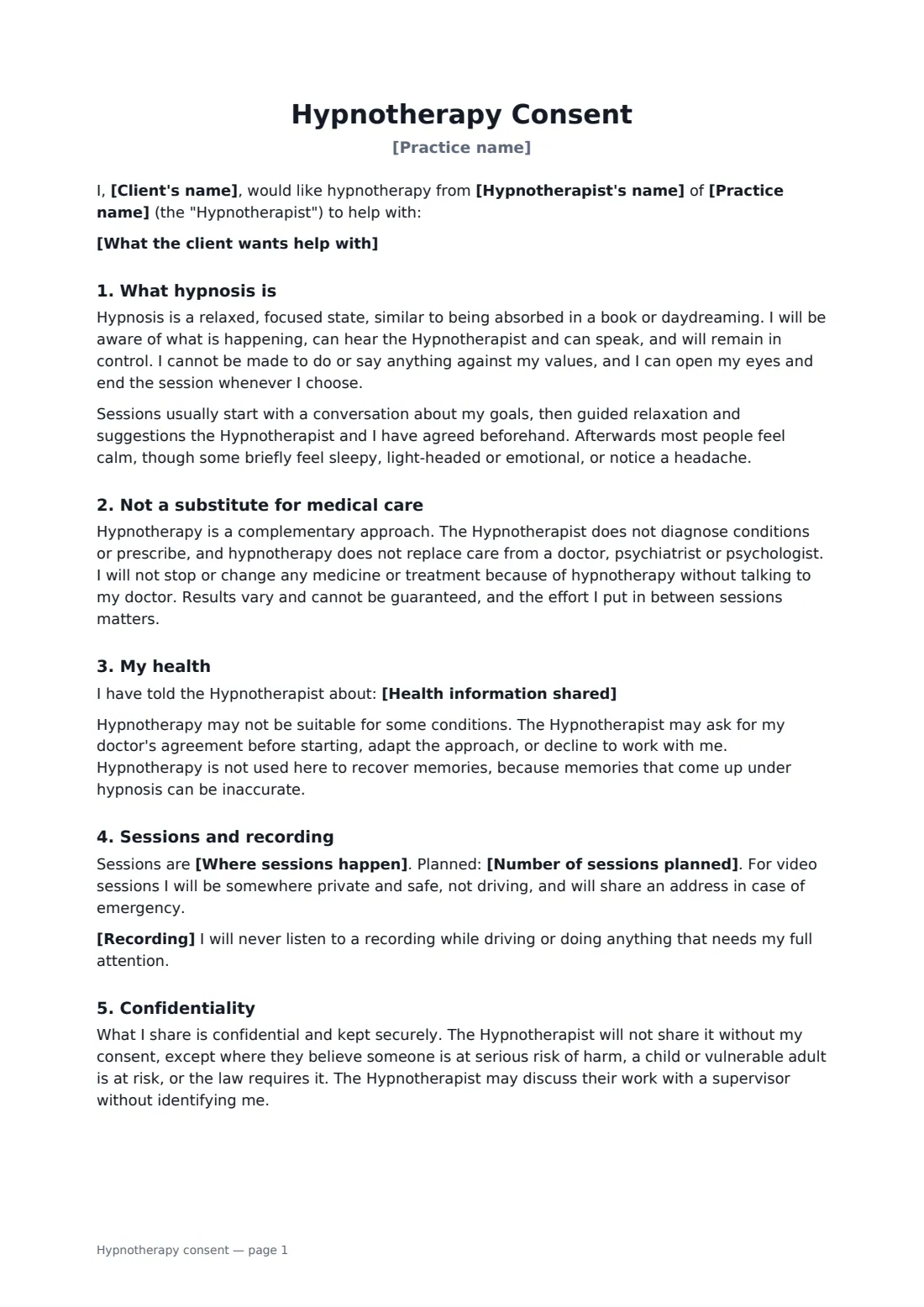
This form records what the client wants help with, explains what hypnosis feels like and what happens in a session, and notes possible after-effects. It says hypnotherapy is complementary, not a replacement for doctors or psychiatrists, and that no result is guaranteed. The client discloses conditions where hypnotherapy may not be suitable, and the form says memory recovery isn't offered. It covers in-person or video sessions, the number planned, your recording option and a warning against listening while driving. It also covers confidentiality and its limits, supervision, fees, cancellations and the client's right to stop.
- Best for
- Clinical hypnotherapists and wellbeing practitioners
- Signed by
- The client and the hypnotherapist
- Recording
- None, a practice audio for home, or session recording by agreement
- Length
- 2 pages
When to use a hypnotherapy consent
- Stop-smoking single sessions
- Anxiety around exams, flying or public speaking
- Sleep and relaxation programmes
- Online hypnotherapy by video
- Clients given a home practice recording
What you fill in
12 blanks, then the name and email of each person who signs: client, hypnotherapist.
1 The hypnotherapist
- Practice name*
- Hypnotherapist's name*
2 The client
- Client's name*
- What the client wants help with*
3 Health
- Health information shared
4 Sessions
- Where sessions happen* in person · by video call · in person or by video call
- Number of sessions planned*
- Recording* Sessions are not recorded. · The Hypnotherapist may give the Client an audio recording to practise with at home. · Sessions may be recorded, with the Client's agreement each time, for the Client and the Hypnotherapist only.
5 Fees
- Currency*
- Fee*
- Fee is* per session · for the whole programme
- Cancellation policy*
6 Who signs
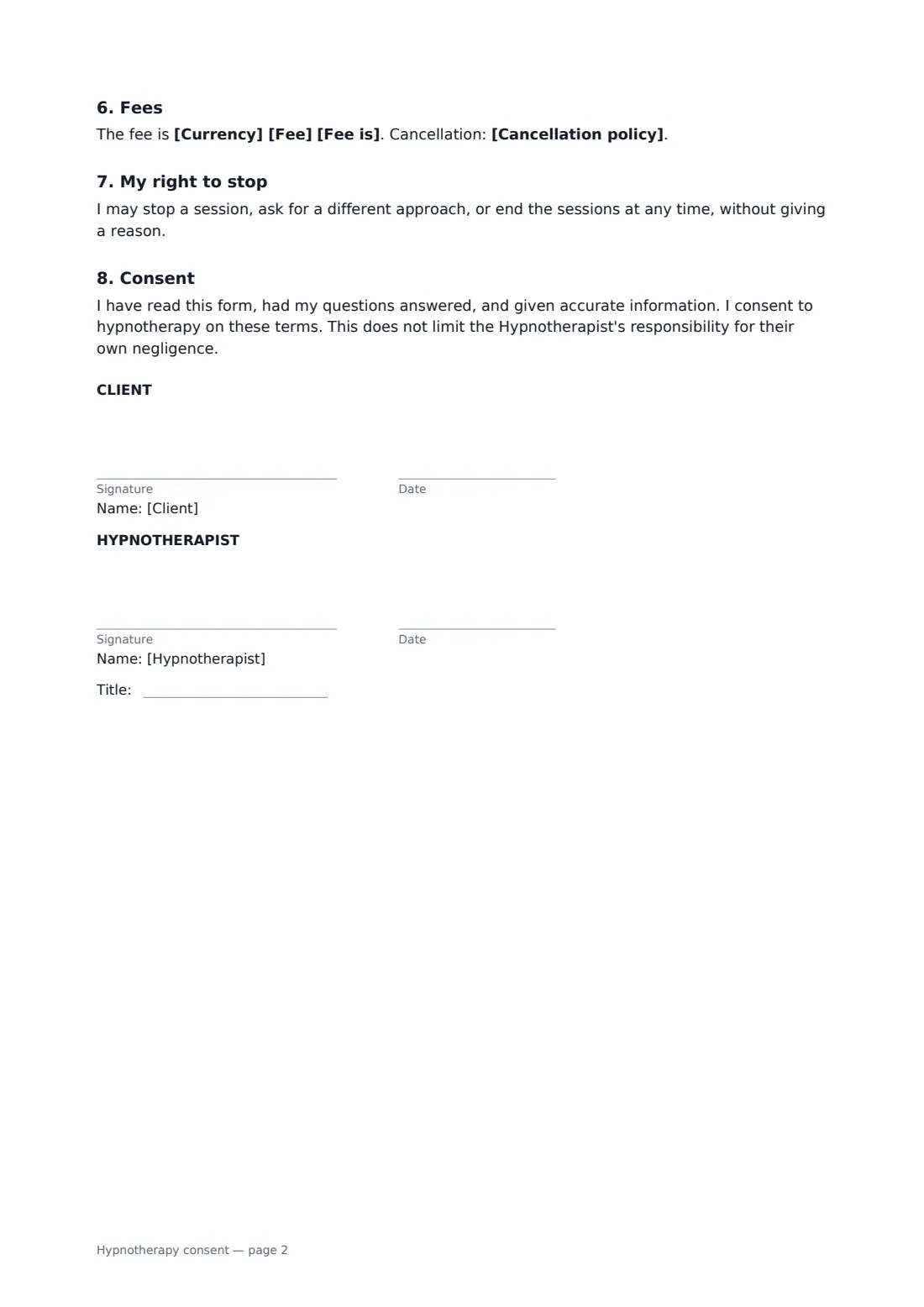
- Client signature and date · An adult client. For a minor, a parent or guardian should sign.
- Hypnotherapist signature and date, job title
What the hypnotherapy consent covers
- What hypnosis is
- Not a substitute for medical care
- My health
- Sessions and recording
- Confidentiality
- Fees
- My right to stop
- Consent
Using the hypnotherapy consent, step by step
1 You and the client
Your practice name fills in from your account. Add your name, the client's name and what they want help with.
2 Health
Record anything relevant the client shares, especially epilepsy, psychosis, bipolar disorder, severe depression or recent trauma, or leave it empty if there's nothing.
3 Sessions and recording
Choose in person or video, describe the sessions planned, and pick your recording option.
4 Fees and signing
Set your fee and cancellation policy and send it. The client signs before the first session, you countersign, and FileIt keeps the signed copy.
Tips before you send it
- Talk through the 'what hypnosis is' section in person, and answer questions about control first.
- Ask for the client's doctor's agreement where a condition calls for it.
- For video sessions, take an address in case of emergency.
- Check your professional association's code on recording and record keeping.
Sign it online in minutes
- Fill in the blanks. Names, dates and amounts go straight into the agreement — the preview shows exactly where.
- Name who signs. Tick “This is me” for your own part. FileIt builds the PDF with every signature, date box on the right line, and you can check or move anything before sending.
- Send it. Each signer gets a secure link and signs from any device — no account needed. The signed PDF, with an audit trail and a Certificate of Completion, is filed in your vault and emailed to everyone.
Hypnotherapy consent: frequently asked questions
Does the form say hypnotherapy can cure things?
No. It says hypnotherapy is complementary, doesn't diagnose or prescribe, doesn't replace medical or psychiatric care, and that results vary and can't be guaranteed.
Is memory recovery covered?
The form says memory recovery isn't offered, because memories that come up under hypnosis can be inaccurate.
Can sessions be recorded?
Only if you choose an option that allows it: a practice audio for the client to use at home, or session recordings agreed with the client each time.
Can the client stop during a session?
Yes. The form says the client stays in control and can open their eyes and end the session whenever they choose.