What is a game publishing agreement?
A publisher can give an indie studio funding, QA, platform relationships and a marketing budget it could never manage alone. In return it takes a large share of revenue until its investment is recouped, and often a say over the game's future. The details matter enormously: what counts as net revenue, what the publisher can recoup, who owns the IP, and what happens if the game is never released or the publisher stops paying.
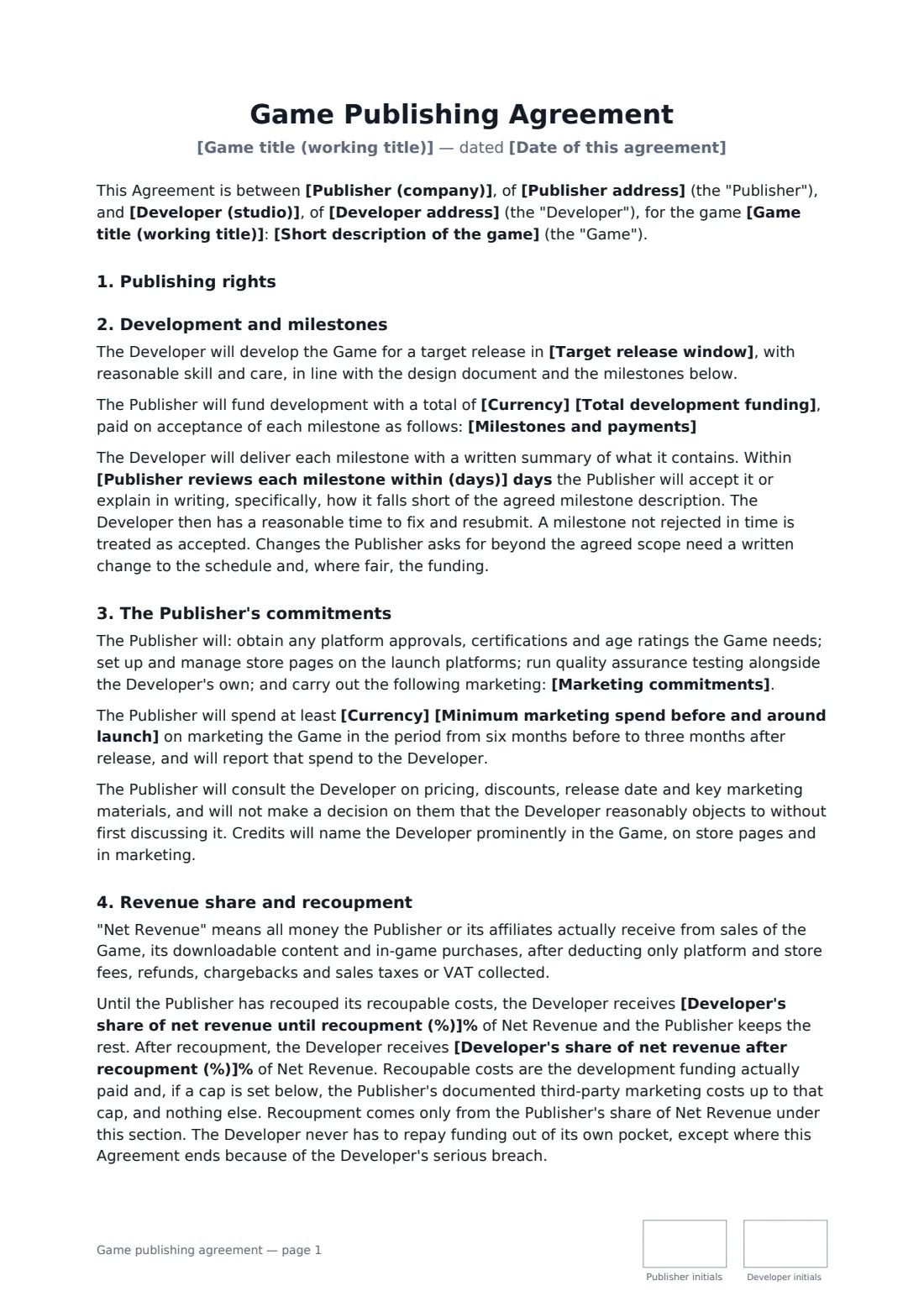
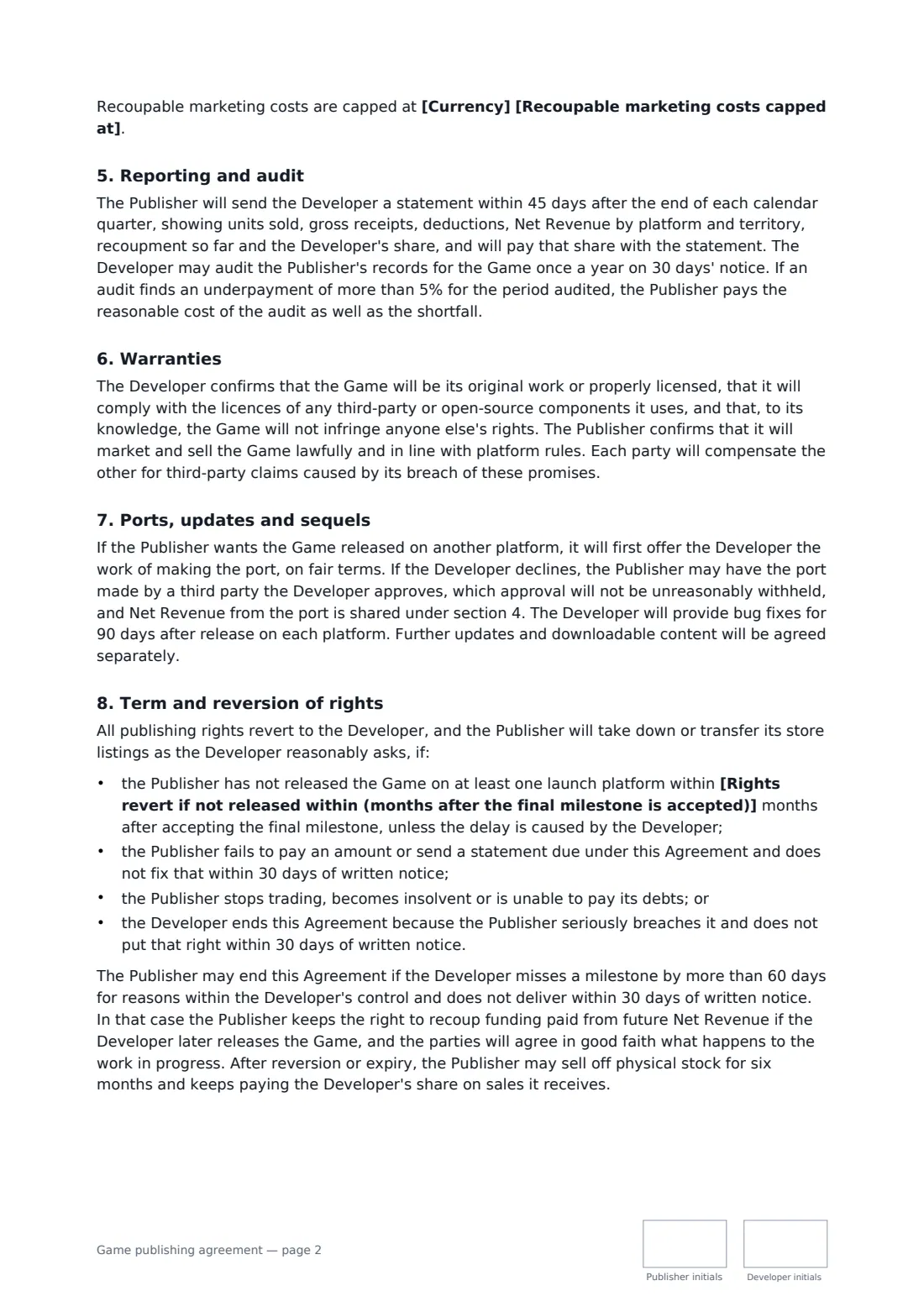
This template grants the publisher exclusive publishing rights on named platforms and territory, either with the studio keeping ownership or with ownership transferring after the final milestone. It sets optional development funding paid on accepted milestones with a review period and deemed acceptance, the publisher's certification and marketing commitments with an optional minimum spend, and a narrow net revenue definition. The developer's share steps up after recoupment, recoupment comes only from revenue, and marketing costs are recoupable only up to a cap you set. Quarterly statements, an audit right, ports offered first to the developer, a first chance at sequels and clear reversion triggers complete it.
- Best for
- Indie studios signing with a publisher for PC and console releases
- Signed by
- The publisher and the developer
- Money
- Milestone funding, two-tier revenue share before and after recoupment
- Length
- About 3 pages, initialled on every page
When to use a game publishing agreement
- A three-person studio signing a funded deal for a console and PC release
- A finished game signed for marketing and porting only, with no development funding
- A publisher standardising its indie deal terms for a new label
- A studio renegotiating an informal handshake deal before launch
- A developer that wants guaranteed reversion if the publisher sits on the game
What you fill in
23 blanks, then the name and email of each person who signs: publisher, developer.
1 The parties
- Date of this agreement*
- Publisher (company)*
- Publisher address
- Developer (studio)*
- Developer address
2 The game
- Game title (working title)*
- Short description of the game*
- Launch platforms*
- Territory*
- Target release window*
3 Funding
- Currency*
- Total development funding
- Milestones and payments
- Publisher reviews each milestone within (days)*
4 Marketing
- Minimum marketing spend before and around launch
- Marketing commitments*
- Recoupable marketing costs capped at
5 Revenue share
- Developer's share of net revenue until recoupment (%)*
- Developer's share of net revenue after recoupment (%)*
6 Rights
- Who owns the game?* The Developer keeps ownership and licenses the Publisher · Ownership transfers to the Publisher
- Publishing term after release (years)*
- Rights revert if not released within (months after the final milestone is accepted)*
- Governing law*
7 Who signs
- Publisher signature and date, job title, initials on every page · The person signing for the publishing company.
- Developer signature and date, job title, initials on every page · The person signing for the game studio.
What the game publishing agreement covers
- Publishing rights
- Development and milestones
- The Publisher's commitments
- Revenue share and recoupment
- Reporting and audit
- Warranties
- Ports, updates and sequels
- Term and reversion of rights
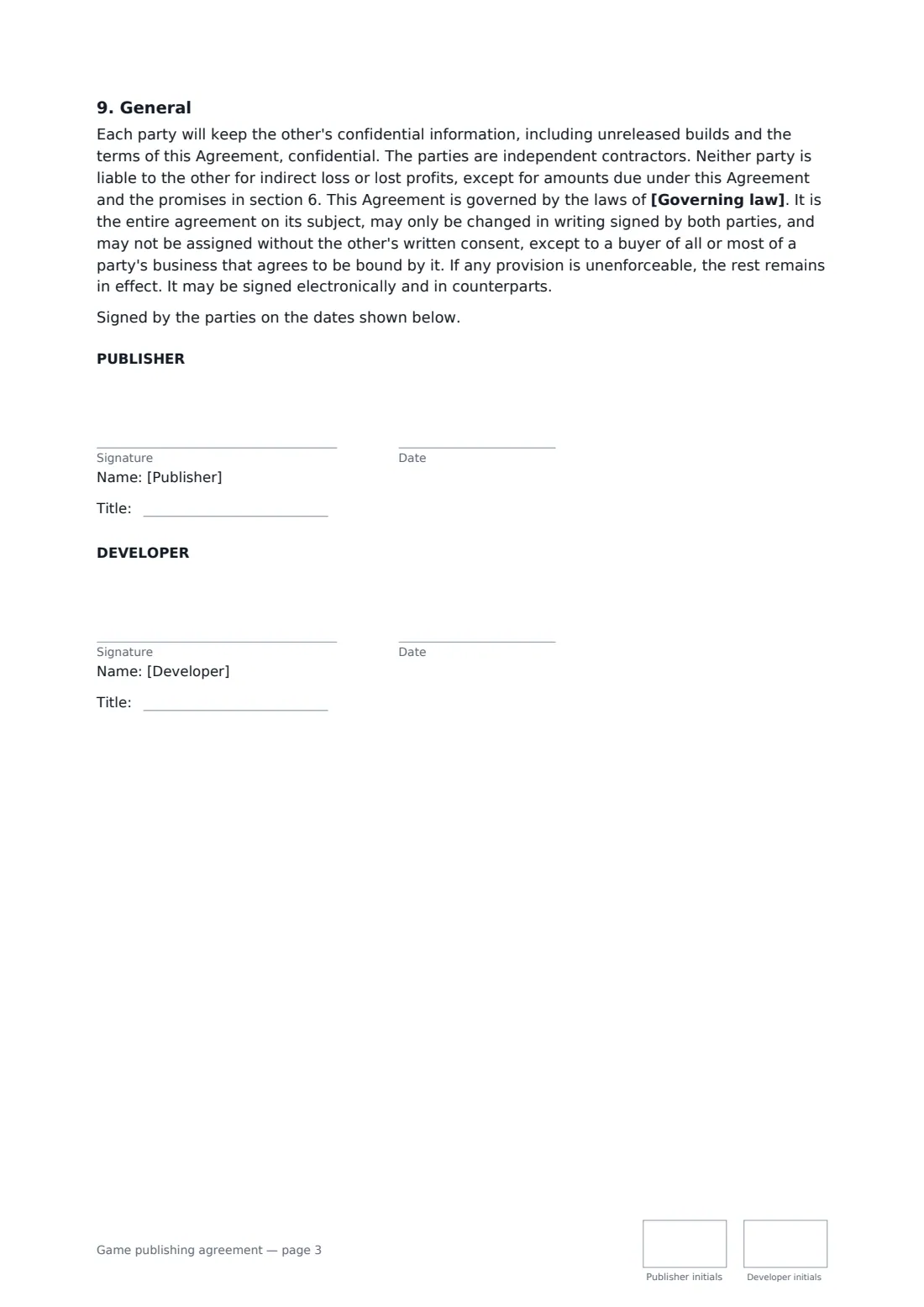
- General
Using the game publishing agreement, step by step
1 Describe the game and the platforms
Enter the title, a short description referring to your design document, the launch platforms, territory and target release window.
2 Set funding and milestones
If the publisher funds development, enter the total and list each milestone with its date, contents and payment. Choose how many days the publisher has to review each one.
3 Agree marketing and the revenue share
List the publisher's marketing commitments and any minimum spend and recoupable marketing cap. Enter the developer's share before and after recoupment.
4 Decide rights and reversion
Choose whether the developer keeps the IP, set the publishing term and the release deadline after the final milestone is accepted, then send for signature.
Tips before you send it
- Net revenue definitions are where deals are won and lost. Keep deductions to platform fees, refunds, chargebacks and sales tax, as this template does.
- Write milestone descriptions that someone else could check. Vague milestones lead to disputes about acceptance and payment.
- Platform holders have their own developer and publisher agreements. Check who needs to hold which accounts before you sign.
- Have a lawyer familiar with games review any deal that transfers your IP or ties up sequels.
Sign it online in minutes
- Fill in the blanks. Names, dates and amounts go straight into the agreement — the preview shows exactly where.
- Name who signs. Tick “This is me” for your own part. FileIt builds the PDF with every signature, date and initials box on the right line, and you can check or move anything before sending.
- Send it. Each signer gets a secure link and signs from any device — no account needed. The signed PDF, with an audit trail and a Certificate of Completion, is filed in your vault and emailed to everyone.
Game publishing agreement: frequently asked questions
What does recoupment mean in a game deal?
The publisher earns back its development funding, and capped marketing costs if you agree, from revenue before the split moves in the developer's favour. Under this template it is recouped only from the publisher's share of revenue, never from the developer's own pocket except after the developer's serious breach.
Does the publisher own my game?
Only if you choose that option. By default the developer keeps the IP and licenses publishing rights for the term. If ownership transfers, the developer keeps its own engine and tools.
How do I get my rights back?
If you keep the IP, publishing rights end with the term. In either model they revert earlier if the game is not released in time, the publisher fails to pay or report after notice, becomes insolvent, or seriously breaches the deal and does not fix it. If ownership transferred, the publisher must assign the IP back when that happens within two years of the assignment.
Who makes the console ports?
The developer gets the first offer to make any port on fair terms. If it declines, the publisher can use a third party the developer approves.