What is a funeral wishes statement?
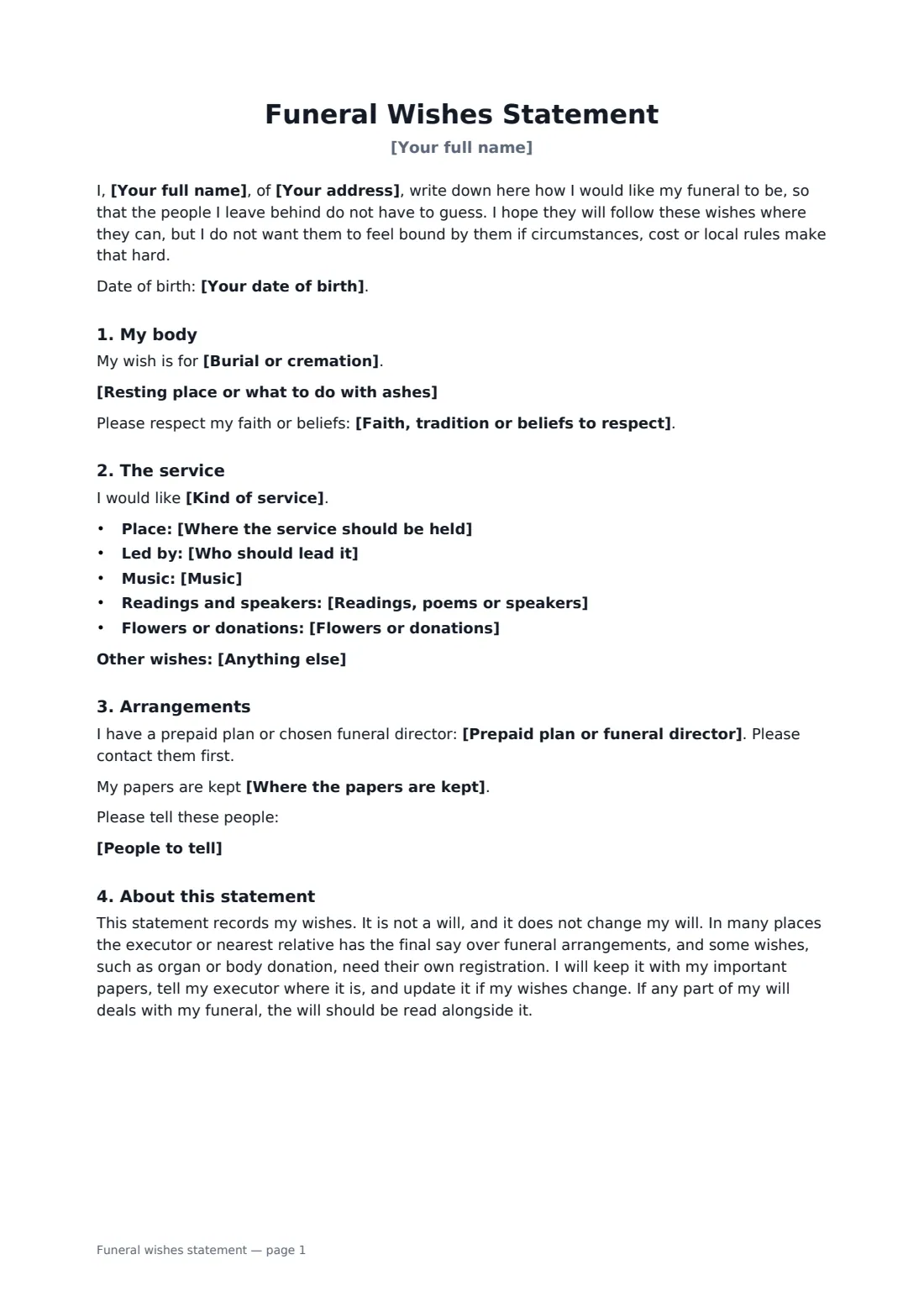
When someone dies without saying what they wanted, their family has to make dozens of decisions in a few days, often while grieving and sometimes while disagreeing. A funeral wishes statement answers the big questions in your own words: burial or cremation, where you'd like to rest, the kind of service and who should lead it, the music and readings, and whether you'd prefer flowers or donations.
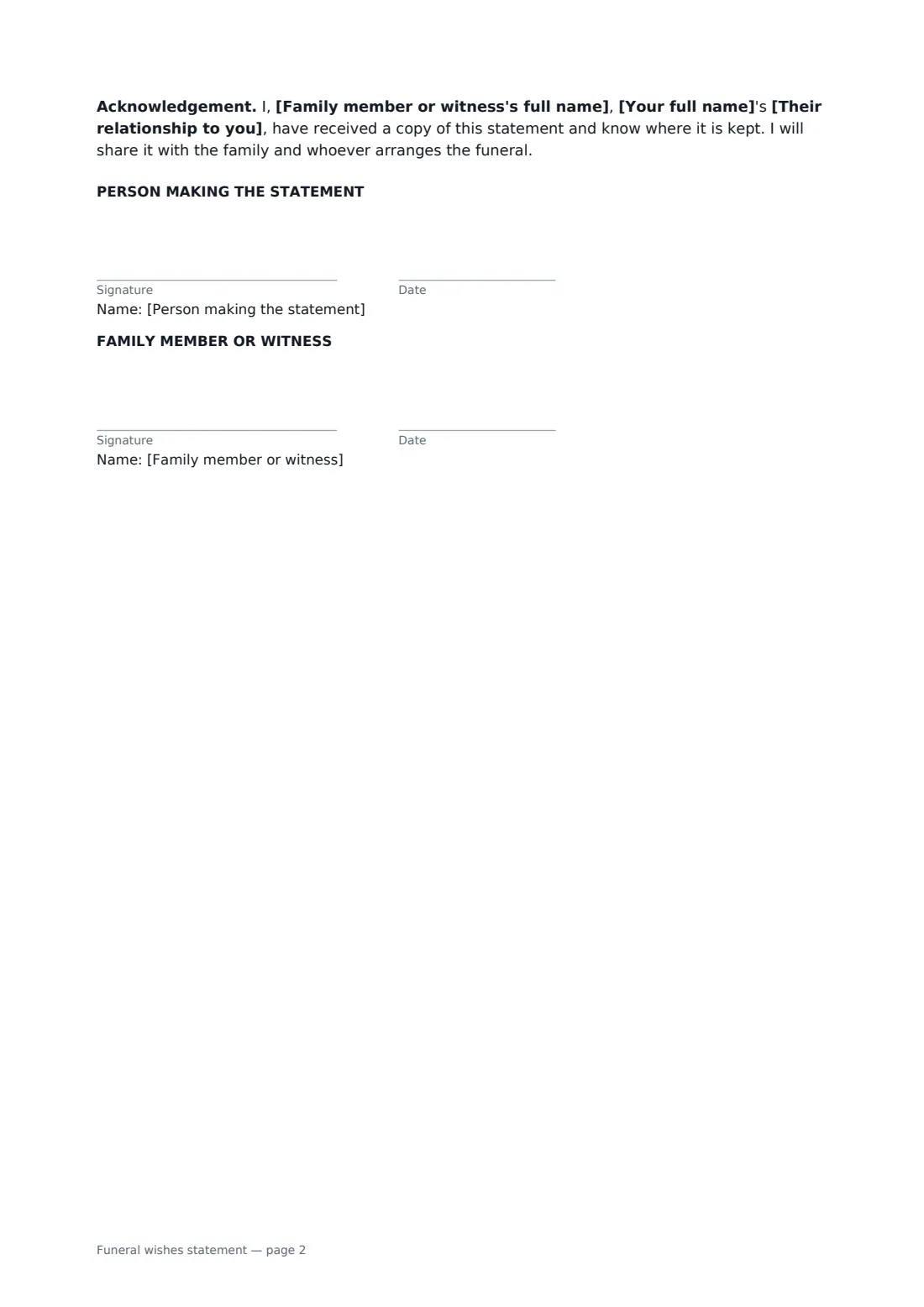
This template also records any prepaid plan or chosen funeral director, where your papers are kept and who should be told. It says plainly that it is a statement of wishes, not a will, and that in many places the executor or next of kin has the final say. A family member or witness signs to confirm they have received a copy and will share it, which is what makes sure your wishes are actually found in time.
- Best for
- Anyone planning ahead, whatever their age or health
- Signed by
- You, and a family member or witness who receives a copy
- Covers
- Burial or cremation, resting place, service, music, readings, flowers, prepaid plan, people to tell
- Legal status
- A statement of wishes, not a will
- Length
- 2 pages
When to use a funeral wishes statement
- Writing down wishes after a diagnosis or before major surgery
- Making sure a humanist or religious ceremony is respected
- Recording a prepaid funeral plan so the family calls the right firm
- Older parents telling adult children what they want
- Asking for a celebration of life instead of a formal funeral
What you fill in
18 blanks, then the name and email of each person who signs: person making the statement, family member or witness.
1 About you
- Your full name*
- Your date of birth
- Your address*
- Faith, tradition or beliefs to respect
- Family member or witness's full name*
- Their relationship to you*
2 Your wishes
- Burial or cremation* cremation · burial · natural or woodland burial · donation of my body to medical science, if accepted · whatever my family feels is best
- Resting place or what to do with ashes
3 The service
- Kind of service* a funeral service followed by a gathering · a small private funeral, then a memorial or celebration of life later · a celebration of life only, no formal funeral · no service · whatever my family feels is best
- Where the service should be held
- Who should lead it
- Music
- Readings, poems or speakers
- Flowers or donations
- Anything else
4 Arrangements
- Prepaid plan or funeral director
- Where the papers are kept
- People to tell
5 Who signs
- Person making the statement signature and date
- Family member or witness signature and date · The person who receives a copy and confirms they know where to find it. Ideally the person likely to arrange the funeral.
What the funeral wishes statement covers
- My body
- The service
- Arrangements
- About this statement
Using the funeral wishes statement, step by step
1 Start with the essentials
Enter your name and address, any faith or beliefs to respect, and choose burial, cremation, natural burial or body donation. Add where you'd like to rest or what to do with your ashes.
2 Describe the service
Pick the kind of service, then add the place, who should lead it, music, readings and flowers or donations. Skip anything you don't mind about. It prints as a blank line your family can fill in.
3 Note the practical details
Add your prepaid plan or funeral director, where your papers are kept and the people who should be told.
4 Send it to the person who'll need it
Choose the family member most likely to arrange things. They sign online to confirm they have a copy. Keep the signed PDF with your will and in your FileIt vault.
Tips before you send it
- Tell your executor this statement exists. A copy only in a safe deposit box may not be opened until after the funeral.
- Organ donation and body donation need their own registration. Write your wish here as well, but register it separately.
- If you have a prepaid plan, put the plan number in, not just the company name.
- Leaving a choice as "whatever my family feels is best" is a kindness too. It tells them they won't be getting it wrong.
- Review it every few years, or after a move, a bereavement or a change of faith.
Sign it online in minutes
- Fill in the blanks. Names, dates and amounts go straight into the agreement — the preview shows exactly where.
- Name who signs. Tick “This is me” for your own part. FileIt builds the PDF with every signature, date box on the right line, and you can check or move anything before sending.
- Send it. Each signer gets a secure link and signs from any device — no account needed. The signed PDF, with an audit trail and a Certificate of Completion, is filed in your vault and emailed to everyone.
Funeral wishes statement: frequently asked questions
Is a funeral wishes statement legally binding?
Usually not. In many places the executor or nearest relative decides the funeral arrangements, and they are not legally bound to follow written wishes. In practice families almost always follow them when they know about them, and that's what this statement is for.
Should I put my funeral wishes in my will instead?
You can mention them in your will too, but wills are often read after the funeral has taken place. A separate statement that a family member already has is more likely to be seen in time.
Who should sign as the family member or witness?
Ideally the person who is likely to arrange your funeral, such as your partner, an adult child or your executor. Their signature confirms they have a copy and know where it is kept.
Can I change my wishes later?
Yes. Fill in a new statement, send it for signature again and let the family member know the old one is replaced.