What is a event co-hosting agreement?
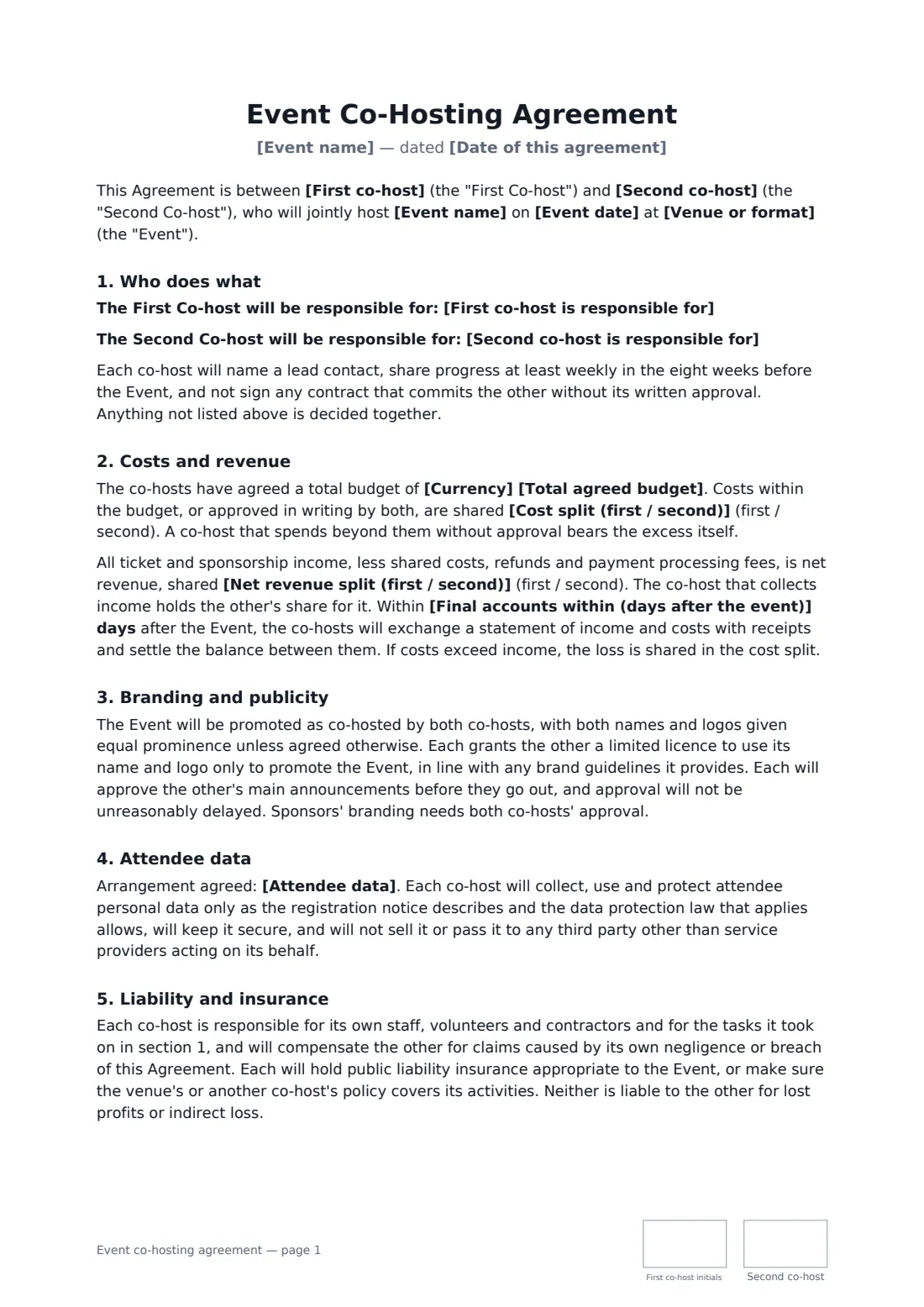
Co-hosting an event doubles your audience and halves the work, until one side books a more expensive caterer, the other quietly adds every attendee to its newsletter, and nobody agreed what happens to the deposit if the venue floods. A short co-hosting agreement keeps the partnership friendly by settling these points while everyone is still excited about the event.
This template names the event, date and venue and splits responsibilities between the two co-hosts. It sets a total budget, a cost split and a net revenue split, with a settlement deadline after the event. Branding is equal, with mutual approval of announcements, and you choose one of three options for attendee data. Each side is responsible for its own staff and carries insurance, and there are rules for one side withdrawing or the event being cancelled for reasons outside your control.
- Best for
- Conferences, meetups, workshops, launches and community events
- Signed by
- Both co-hosting organisations
- Money
- Agreed budget, cost split and net revenue split
- Length
- About 2 to 3 pages, initialled on every page
When to use a event co-hosting agreement
- Two start-up communities running a joint founders' meetup
- A venue and a promoter co-hosting a ticketed evening event
- A charity and a local business putting on a fundraising day together
- Two software companies hosting a joint customer conference
- A co-working space and a trade association running a workshop series
What you fill in
16 blanks, then the name and email of each person who signs: first co-host, second co-host.
1 The parties
- Date of this agreement*
- First co-host*
- Second co-host*
2 The event
- Event name*
- Event date*
- Venue or format*
3 Responsibilities
- First co-host is responsible for*
- Second co-host is responsible for*
4 Money
- Total agreed budget*
- Currency*
- Cost split (first / second)*
- Net revenue split (first / second)*
- Final accounts within (days after the event)*
5 Brands and data
- Attendee data* Each co-host may contact attendees who opted in to hear from it · Only the co-host running ticketing holds attendee data; it shares totals only · Both co-hosts receive the full attendee list
6 Cancellation
- Either co-host may withdraw up to (days before the event)*
- Governing law*
7 Who signs
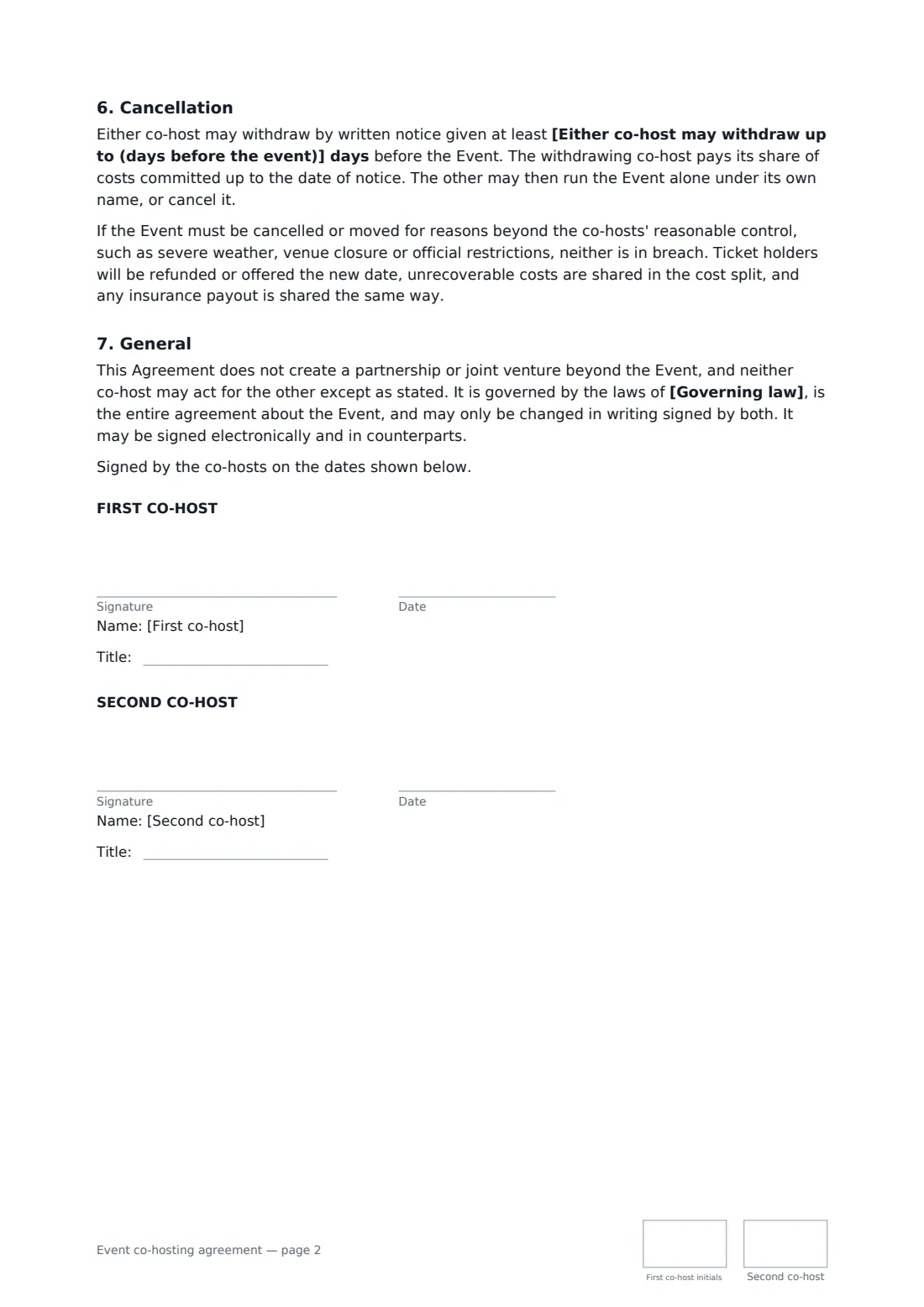
- First co-host signature and date, job title, initials on every page
- Second co-host signature and date, job title, initials on every page
What the event co-hosting agreement covers
- Who does what
- Costs and revenue
- Branding and publicity
- Attendee data
- Liability and insurance
- Cancellation
- General
Using the event co-hosting agreement, step by step
1 Describe the event
Enter the event name, date and venue, or online if it is virtual.
2 Split the work
List what each co-host is responsible for, such as venue and catering, speakers, sponsorship or marketing. Anything not listed is decided together.
3 Agree the money
Enter the total budget, how costs are split and how net ticket and sponsor revenue is shared, plus how soon after the event the accounts are settled.
4 Choose data and cancellation terms
Pick how attendee data is shared and how late either side can withdraw. Enter the governing law and send it to your co-host to sign.
Tips before you send it
- Use one ticketing account and one bank account for event money where you can. It makes the final statement much simpler.
- Word the registration form to match the attendee data option you chose, so attendees know which organisations will contact them.
- Check the venue contract's cancellation terms before you set the withdrawal deadline. Venue deposits are often the largest sunk cost.
- Agree how sponsor packages are priced and who sells them before either side starts approaching sponsors.
Sign it online in minutes
- Fill in the blanks. Names, dates and amounts go straight into the agreement — the preview shows exactly where.
- Name who signs. Tick “This is me” for your own part. FileIt builds the PDF with every signature, date and initials box on the right line, and you can check or move anything before sending.
- Send it. Each signer gets a secure link and signs from any device — no account needed. The signed PDF, with an audit trail and a Certificate of Completion, is filed in your vault and emailed to everyone.
Event co-hosting agreement: frequently asked questions
What if one co-host overspends?
Only costs within the agreed budget, or approved in writing by both co-hosts, are shared. A co-host that spends beyond that without approval pays the excess itself.
Who owns the attendee list?
That depends on the option you choose: each co-host contacts only attendees who opted in to hear from it, only the ticketing co-host holds the data, or both receive the full list. Either way, the registration notice must say so.
What if the event loses money?
The loss is shared in the same proportions as the costs. The final statement is due within the number of days you set after the event.
Does co-hosting make us business partners?
No. The agreement says it does not create a partnership or joint venture beyond the event, and neither side can commit the other without written approval.