What is a nanny agreement?
A nanny is usually the family's employee, not a casual babysitter, and most of the friction in nanny relationships comes from things nobody wrote down: what happens to pay when the family goes on holiday, who decides the nanny's vacation dates, whether laundry for the adults is part of the job, how much notice either side gives. A clear written agreement settles those questions early, while everyone is still on good terms.
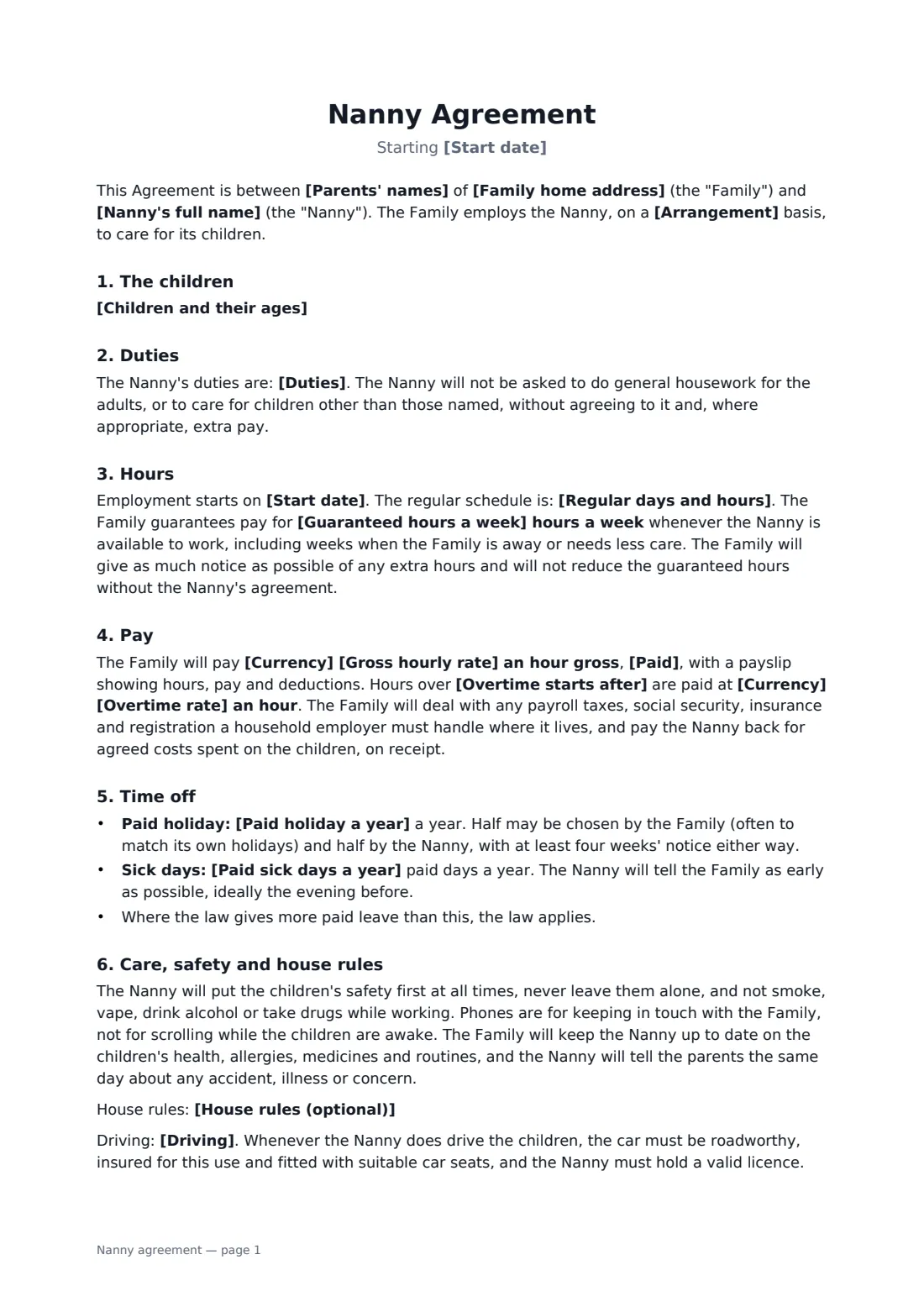
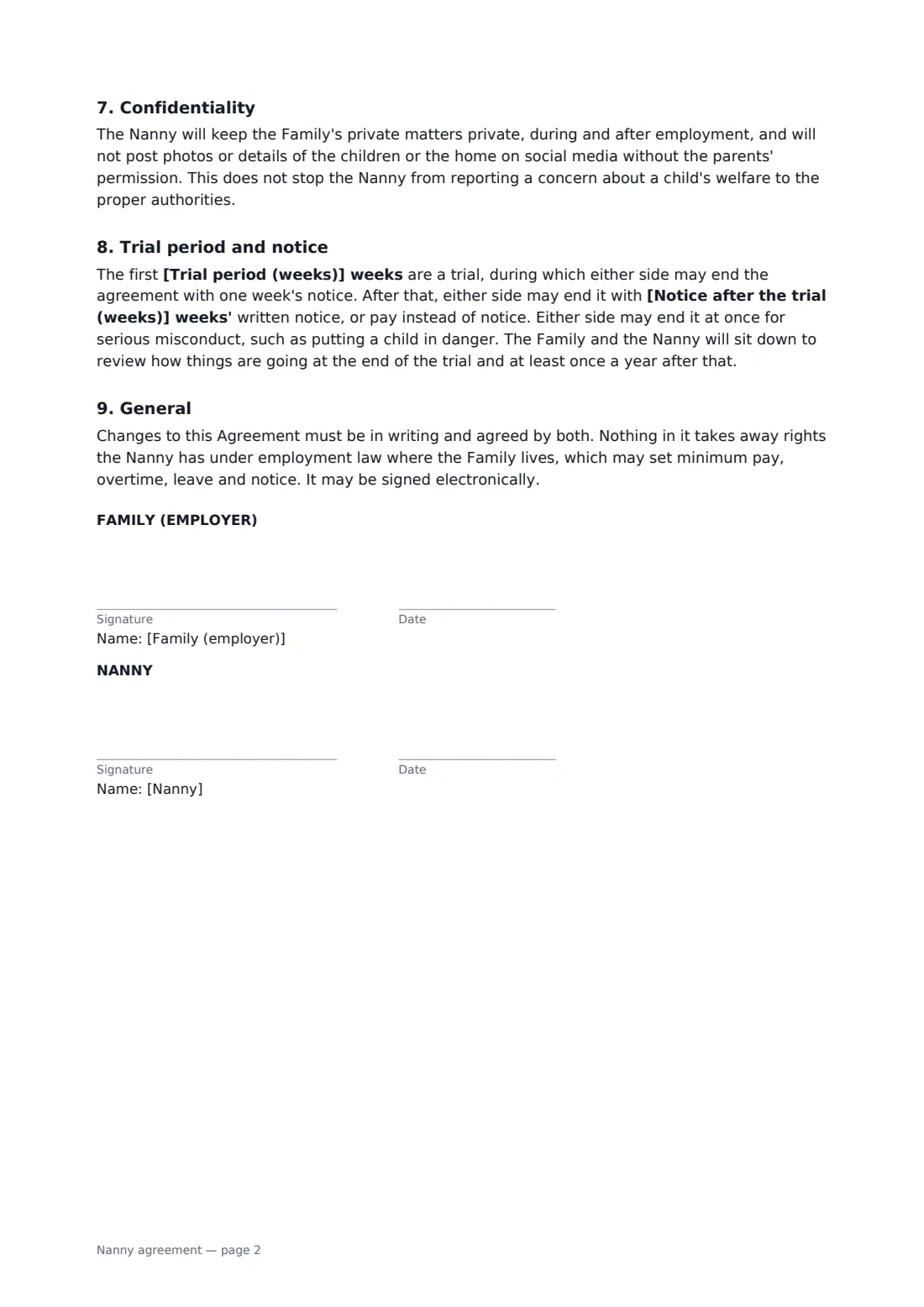
This agreement covers a live-in or live-out nanny caring for the children you name. It sets duties, the weekly schedule and guaranteed hours, so pay doesn't drop when the family needs less care, and gross hourly pay with an overtime rate. It covers paid holiday and sick days, house rules, safety and phone use, driving and mileage, confidentiality and social media, a trial period and notice. For live-in nannies it adds a private room and off-duty time. It reminds the family of its payroll and tax duties as a household employer, and never cuts across the nanny's legal rights.
- Best for
- Families employing a full-time or part-time nanny, live-in or live-out
- Signed by
- The family (as employer) and the nanny
- You set
- Children, duties, schedule, guaranteed hours, pay, overtime, time off, driving, trial, notice
- Length
- About 2 pages
When to use a nanny agreement
- Hiring a full-time nanny when parental leave ends
- A live-in nanny with their own room in the family home
- Putting an existing, informal nanny arrangement in writing
- A part-time after-school nanny with school runs and homework help
- Agreeing new terms when the family's needs change
What you fill in
21 blanks, then the name and email of each person who signs: family (employer), nanny.
1 The family and the nanny
- Parents' names*
- Family home address*
- Nanny's full name*
- Children and their ages*
- Arrangement* live-out · live-in
2 Schedule
- Start date*
- Regular days and hours*
- Guaranteed hours a week*
3 Pay
- Currency*
- Gross hourly rate*
- Overtime rate*
- Overtime starts after*
- Paid* weekly · every two weeks · twice a month · monthly
4 Time off
- Paid holiday a year*
- Paid sick days a year*
5 Duties and rules
- Duties*
- House rules (optional)
- Driving* the nanny will not drive the children · the nanny may drive the children in the family's car · the nanny may drive the children in their own car, and is paid mileage
- Mileage rate (optional)
6 Ending
- Trial period (weeks)*
- Notice after the trial (weeks)*
7 Who signs
- Family (employer) signature and date · A parent or guardian signing for the family.
- Nanny signature and date
What the nanny agreement covers
- The children
- Duties
- Hours
- Pay
- Time off
- Care, safety and house rules
- Confidentiality
- Trial period and notice
- General
Using the nanny agreement, step by step
1 The family and the nanny
Your name fills in from your account. Add the home address, the nanny's name, the children and their ages, and choose live-in or live-out.
2 Hours and pay
Write the regular schedule, set guaranteed weekly hours, and enter the gross hourly rate, the overtime rate and when overtime starts. Pick how often the nanny is paid.
3 Time off and duties
Set paid holiday and sick days, edit the duties so they match the job, and add house rules and the driving arrangement.
4 Trial, notice and signing
Choose the trial length and notice period, then send the agreement to the nanny. They sign on their phone without a FileIt account, and the signed copy is filed in your vault.
Tips before you send it
- Agree pay as a gross hourly rate. "Net" agreements leave the family carrying tax changes and cause arguments later.
- Household employers often have tax and registration duties — in the US, for example, "nanny tax" rules apply above a yearly wage threshold. Check yours, or use a nanny payroll service.
- Guaranteed hours are standard and fair: a nanny can't easily find other work for the days you don't need them.
- If there are cameras in the home, use the nanny camera consent alongside this agreement.
- Review the agreement together at the end of the trial, and at least once a year.
Sign it online in minutes
- Fill in the blanks. Names, dates and amounts go straight into the agreement — the preview shows exactly where.
- Name who signs. Tick “This is me” for your own part. FileIt builds the PDF with every signature, date box on the right line, and you can check or move anything before sending.
- Send it. Each signer gets a secure link and signs from any device — no account needed. The signed PDF, with an audit trail and a Certificate of Completion, is filed in your vault and emailed to everyone.
Nanny agreement: frequently asked questions
Is a nanny an employee or a contractor?
In most places a nanny who works in the family's home, on the family's schedule and following its rules is treated as the family's employee. That brings tax, insurance and minimum wage duties. The agreement reminds the family of them.
What are guaranteed hours?
The hours you pay every week the nanny is available, even if you need less care — for example when you're on holiday or a child is ill. It's standard in nanny contracts.
How is this different from the babysitting agreement?
A babysitting agreement suits occasional or part-time sitters paid by the session. This nanny agreement is a regular employment arrangement, with guaranteed hours, overtime, paid leave and a notice period.
What if two families share the nanny?
Use the nanny share agreement between the families, and this agreement, or one like it, with the nanny.
Can we sign it electronically?
Yes. Electronic signatures are generally valid for employment agreements like this. FileIt adds an audit trail and Certificate of Completion to the signed PDF.