What is a hardship letter?
Losing a job, a serious illness, a divorce, a death in the family or a sudden drop in hours can make it impossible to keep up with a mortgage, a loan, rent or a utility bill. Most lenders and many landlords have hardship options, but they need to understand what happened before they can offer one. A hardship letter tells them, in writing, early, and shows you are taking it seriously.
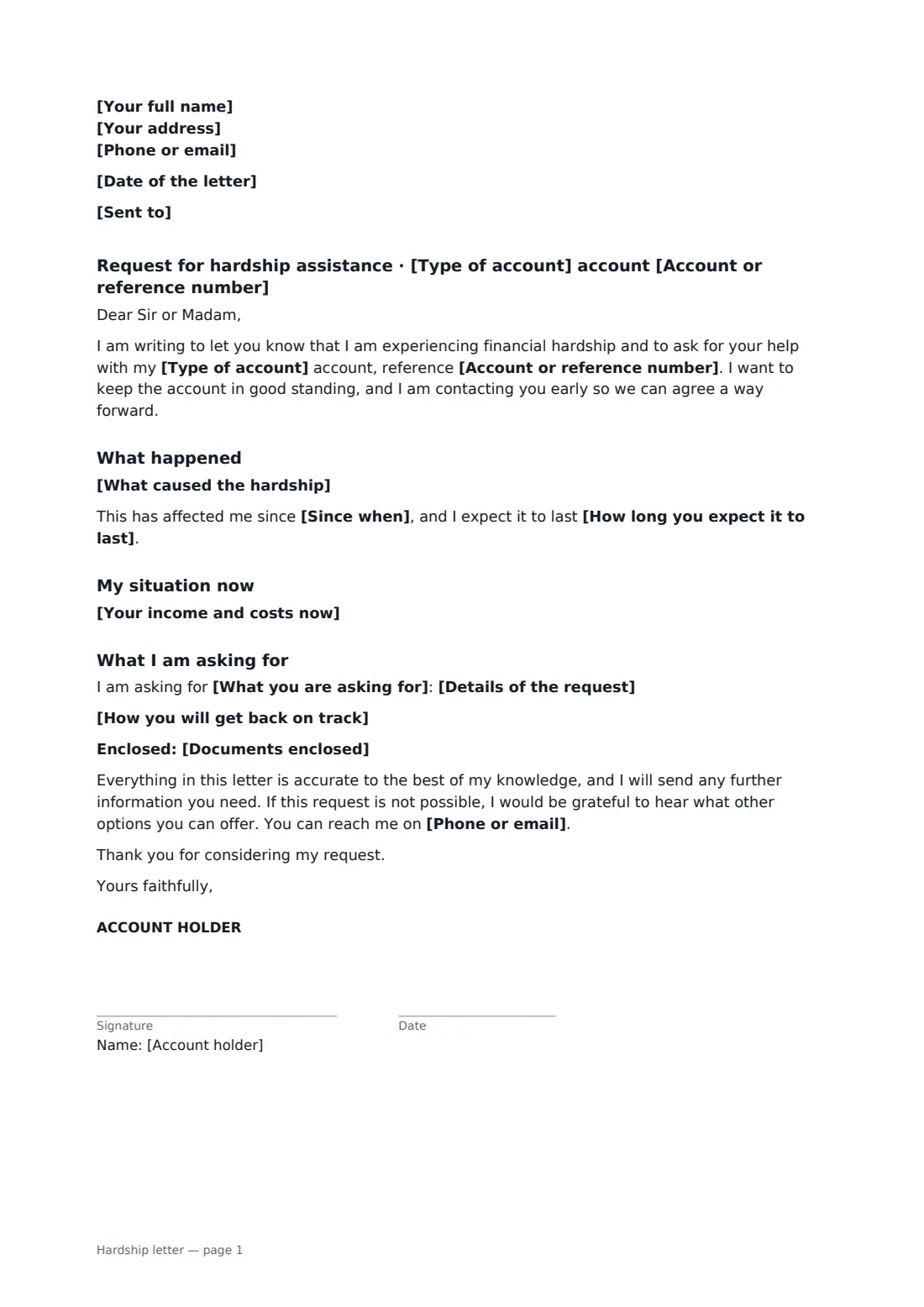
This template guides you through what a hardship team usually looks for: your details and account reference, what caused the hardship and since when, how long you expect it to last, your income and essential costs now, the specific help you are asking for (a pause, reduced payments, a payment plan for arrears, a fee waiver, a change to the loan terms or more time), the details of that request, and your plan to get back on track. It lists the documents you're enclosing and asks for other options if your request isn't possible.
- Best for
- Mortgages, loans, credit cards, rent and utility accounts
- Signed by
- The account holder, plus any joint holder
- Requests
- Payment pause, reduced payments, payment plan, fee waiver, new terms, more time
- Length
- 1 page
When to use a hardship letter
- Asking a mortgage lender for reduced payments after a redundancy
- Asking a landlord for a payment plan to clear rent arrears after an illness
- Requesting a pause on car loan payments while waiting for an insurance payout
- Asking a credit card company to freeze interest and waive late fees
- Asking a utility company for more time to pay a large winter bill
What you fill in
15 blanks, then the name and email of each person who signs: account holder.
1 You
- Date of the letter*
- Your full name*
- Your address*
- Phone or email*
2 The account
- Sent to*
- Type of account* mortgage · personal loan · car loan · credit card · student loan · tenancy · utility account · other account
- Account or reference number*
3 What happened
- What caused the hardship*
- Since when*
- How long you expect it to last*
- Your income and costs now*
4 Your request
- What you are asking for* a pause in payments for a set period · reduced payments for a set period · a payment plan to clear the arrears · a waiver of late fees and charges · a permanent change to the loan terms · more time to pay
- Details of the request*
- How you will get back on track*
- Documents enclosed
5 Who signs
- Account holder signature and date · The borrower or tenant. If the account is in joint names, add the other holder as an extra signer in the editor.
What the hardship letter covers
- What happened
- My situation now
- What I am asking for
Using the hardship letter, step by step
1 Say who you are and which account
Your name and the date are filled in. Add your address and contact details, who the letter goes to, the type of account and its reference number. Many lenders have a hardship or loss mitigation team with its own address.
2 Explain what happened
Describe the cause in a few factual sentences, the date it started and how long you expect it to last. Then set out your income and essential costs now. Real figures make the request credible.
3 Make a specific request
Choose the kind of help you need and spell it out, such as "$600 a month for January to March, then back to $1,450". A specific request is easier to approve than "any help you can give".
4 Show your plan and sign
Explain how you'll get back on track and list the documents you're enclosing. Add a joint account holder as an extra signer if there is one, sign, and download the PDF to send. A copy stays in your FileIt vault.
Tips before you send it
- Write as early as you can. Lenders have more options before payments are missed.
- Be honest and specific. A realistic request is more likely to be agreed than an optimistic one.
- Keep copies of everything you send, and a note of every call: date, name and what was said.
- Ask whether any arrangement will be reported to credit reference agencies before you agree to it.
- Free, independent debt advice services can help you prepare a budget and talk to creditors. Look for one where you live.
Sign it online in minutes
- Fill in the blanks. Names, dates and amounts go straight into the agreement — the preview shows exactly where.
- Name who signs. Tick “This is me” for your own part. FileIt builds the PDF with every signature, date box on the right line, and you can check or move anything before sending.
- Send it. Each signer gets a secure link and signs from any device — no account needed. The signed PDF, with an audit trail and a Certificate of Completion, is filed in your vault and emailed to everyone.
Hardship letter: frequently asked questions
What should a hardship letter include?
What caused the hardship and when, how long it is likely to last, your current income and costs, the specific help you're asking for, and your plan to get back on track, with documents that back it up. This template covers each of those.
Will a hardship letter stop late fees or collection?
Not on its own. It's a request. The lender, landlord or provider decides what they can offer, and you should keep paying what you can while you wait for an answer.
Does my lender have a hardship form?
Many do, especially mortgage servicers. If yours does, fill it in and send this letter alongside it as your written explanation.
Can I use it for rent?
Yes. Choose "tenancy" as the account type and send it to your landlord or letting agent. If they agree, a temporary rent reduction agreement can record the new terms.
Is this template free?
Yes. It is free with the eSignature app in FileIt.