What is a vehicle release authorization?
Repair garages, impound lots, storage yards and dealers won't hand a vehicle to anyone but the owner without written authority — and with good reason. If you're working, travelling, unwell or simply in another city, you need a letter that tells the facility exactly which vehicle to release, to whom, and on what terms.
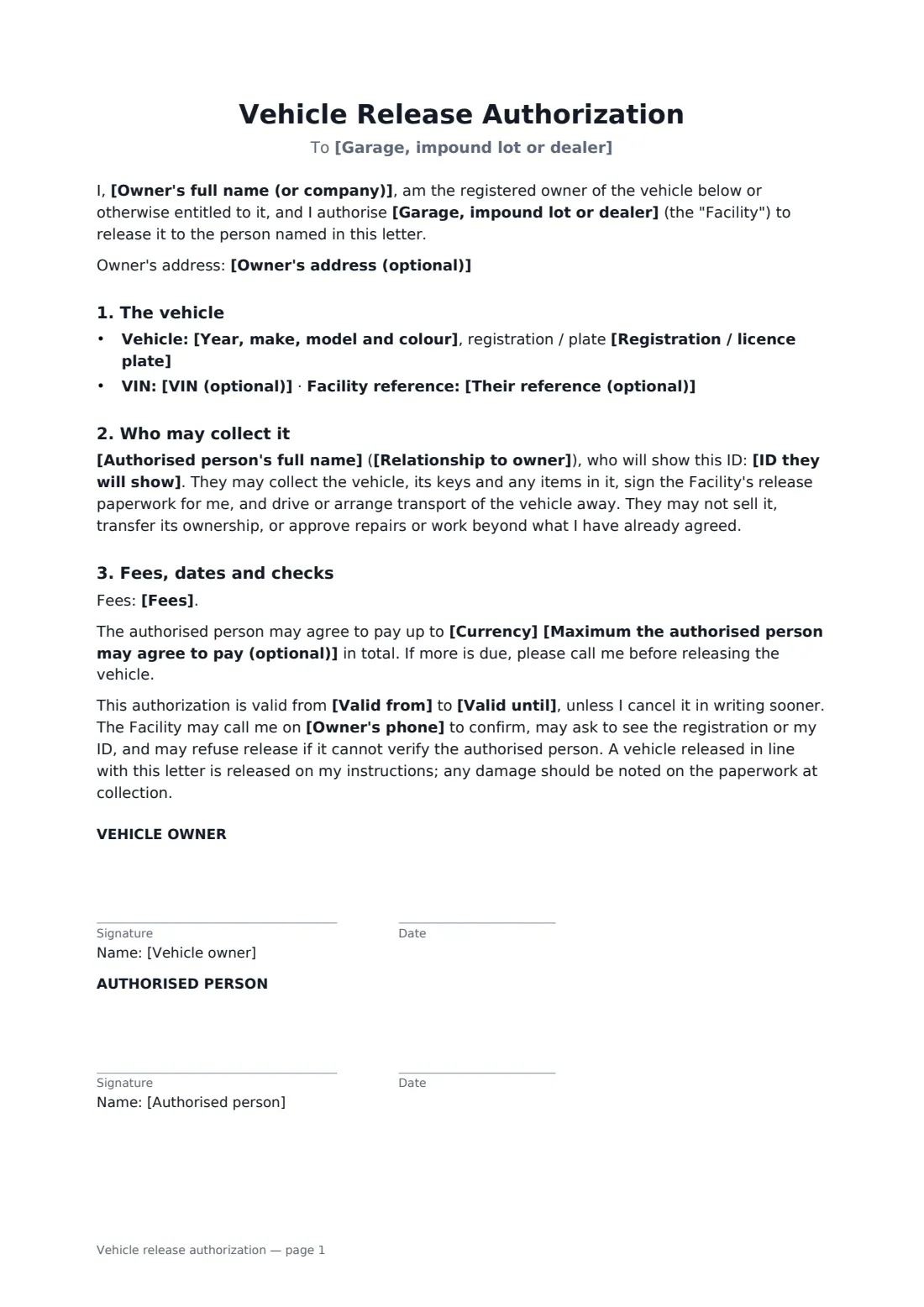
This one-page authorization identifies the vehicle by make, model, plate and VIN, and quotes the facility's job or impound reference. It names the person collecting, their relationship to you and the ID they'll show, and lets them take the keys and belongings, sign the release paperwork and drive or arrange transport — but not sell the car or approve extra work. You say who pays the fees, can cap what the collector may agree to pay, and set the dates the letter is valid. Your phone number is on it so the facility can call you to confirm. The person collecting signs too, so staff can compare signatures at the counter.
- Best for
- Repair garages, impound and tow yards, storage, dealerships, body shops
- Signed by
- The vehicle owner, and the person collecting
- You set
- Vehicle, facility, collector and ID, who pays fees, fee cap, valid dates
- Length
- 1 page
When to use a vehicle release authorization
- A family member collecting your car from the repair garage while you're at work
- A friend retrieving your towed car from an impound lot
- A transport driver collecting a vehicle from a dealer for delivery
- An employee picking up a company van after a service
- Collecting a car from storage while the owner is abroad
What you fill in
16 blanks, then the name and email of each person who signs: vehicle owner, authorised person.
1 The owner
- Owner's full name (or company)*
- Owner's phone*
- Owner's address (optional)
2 Where the vehicle is
- Garage, impound lot or dealer*
- Their reference (optional)
3 The vehicle
- Year, make, model and colour*
- Registration / licence plate*
- VIN (optional)
4 The authorised person
- Authorised person's full name*
- Relationship to owner*
- ID they will show*
5 Fees and dates
- Fees* the authorised person will pay any fees due on collection · all fees have already been paid by the owner · the owner will pay any fees due directly to the facility
- Currency
- Maximum the authorised person may agree to pay (optional)
- Valid from*
- Valid until*
6 Who signs
- Vehicle owner signature and date
- Authorised person signature and date · The person who will collect the vehicle. Their signature here is a sample the facility can compare.
What the vehicle release authorization covers
- The vehicle
- Who may collect it
- Fees, dates and checks
Using the vehicle release authorization, step by step
1 Identify the vehicle
Enter year, make, model and colour, and the plate. Add the VIN and the facility's reference if you have them — they make it much quicker for staff to find the right vehicle.
2 Name who is collecting
Enter their full name, how they're related to you and the ID they'll bring. They can collect keys and belongings and sign the release paperwork, but not sell the vehicle or approve extra work.
3 Sort out fees and dates
Choose who pays any fees, add a maximum if you want to avoid surprises at a garage, and set the dates the authorization is valid.
4 Sign and send
You sign first, then the person collecting signs on their phone. They take the signed PDF to the facility, on paper or on screen.
Tips before you send it
- Call the facility first. Impound lots in particular often have their own release form or require proof of ownership, insurance and the owner's ID.
- Keep the validity window short — a few days is usually enough.
- Tell the person collecting to check the vehicle for damage before signing anything at the counter.
- Use the fee cap at repair garages so extra work isn't approved at collection.
- For a company vehicle, sign as the company and add your job title.
Sign it online in minutes
- Fill in the blanks. Names, dates and amounts go straight into the agreement — the preview shows exactly where.
- Name who signs. Tick “This is me” for your own part. FileIt builds the PDF with every signature, date box on the right line, and you can check or move anything before sending.
- Send it. Each signer gets a secure link and signs from any device — no account needed. The signed PDF, with an audit trail and a Certificate of Completion, is filed in your vault and emailed to everyone.
Vehicle release authorization: frequently asked questions
Can someone else pick up my car from impound?
Usually, with written authorization from the owner and their own ID, though many impound lots also want proof of ownership and insurance. Check the lot's own requirements before sending someone.
Will a garage accept an e-signed letter?
Most garages and dealers accept a signed letter on paper or on a phone. The signed PDF from FileIt includes an audit trail and Certificate of Completion showing who signed and when. If a facility insists on its own form, use theirs.
Can the person collecting approve more repairs?
No. The letter says they may not approve repairs or work beyond what you've already agreed, and you can set a maximum they may pay.
Why does the person collecting sign too?
So the facility has a sample of their signature to compare at the counter, alongside their ID.
How long is the authorization valid?
Between the dates you set, or until you cancel it in writing, whichever comes first.