What is a relieving letter?
In India, the Gulf, parts of South and South-East Asia and in many multinational companies, a new employer asks to see a relieving letter before a joiner starts. It proves the person resigned properly, served their notice and left with nothing outstanding. Without one, an offer can be delayed or withdrawn.
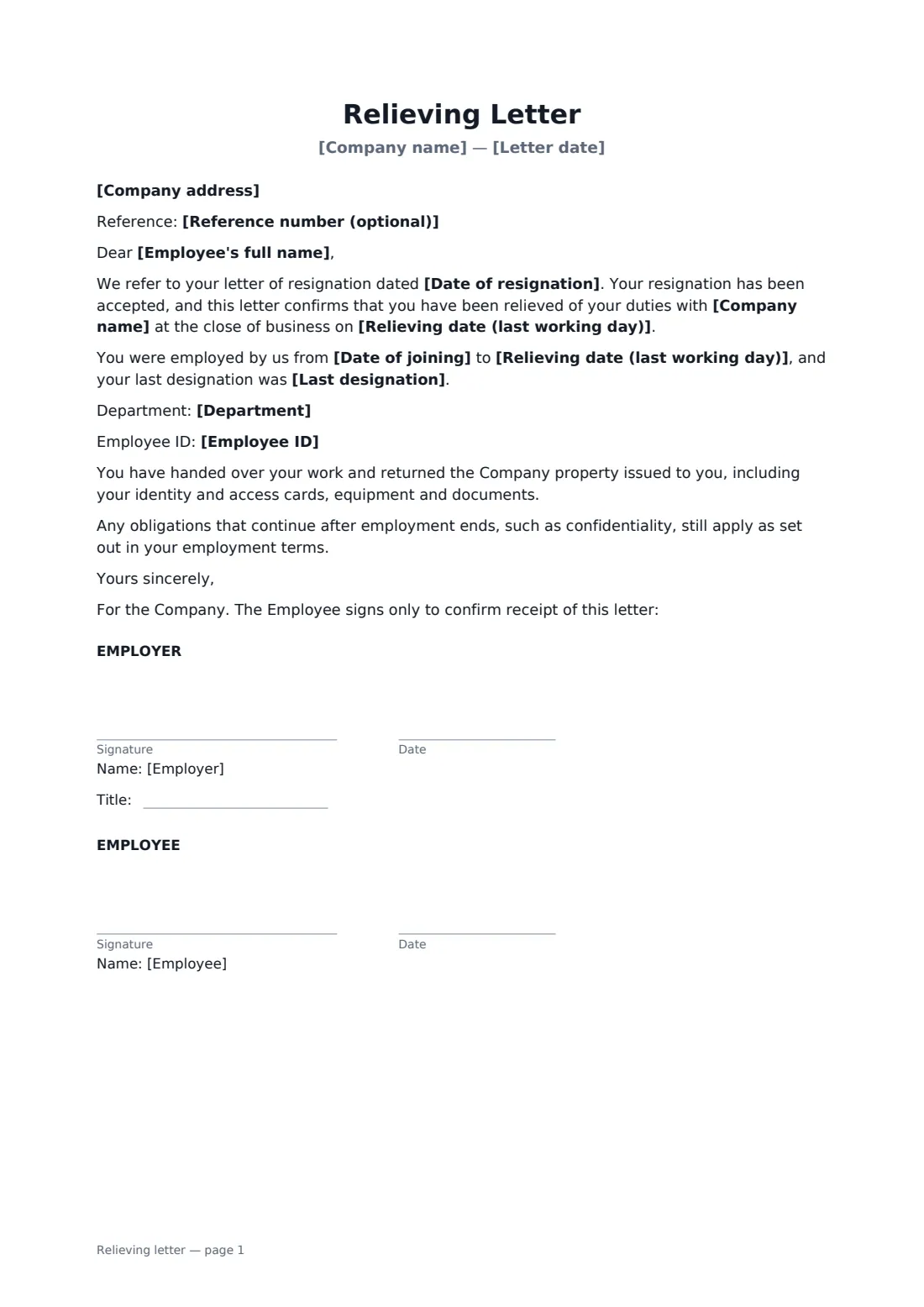
This letter refers to the resignation date, confirms the employee was relieved of duties on their last working day, and states the date of joining and last designation, with optional department and employee ID. It confirms the handover and return of company property, and that the full and final settlement has been paid or will be paid by a date you set. You choose whether to add a line about good conduct, and the employee signs only to confirm they received it.
- Best for
- Employees leaving after resignation and notice
- Signed by
- The employer, then the employee to confirm receipt
- Confirms
- Dates, last designation, handover, settlement of dues
- Length
- One page
When to use a relieving letter
- Issuing the standard exit letter for every resignation
- An employee whose new employer has asked for a relieving letter
- Confirming that the full and final settlement has been paid
- Recording the relieving date after a shortened notice period
- Replacing a lost relieving letter for a former employee
What you fill in
14 blanks, then the name and email of each person who signs: employer, employee.
1 The letter
- Company name*
- Company address
- Letter date*
- Reference number (optional)
2 The employee
- Employee's full name*
- Employee ID
- Last designation*
- Department
3 Dates
- Date of joining*
- Date of resignation*
- Relieving date (last working day)*
4 Dues
- Final settlement* has been completed and paid · is being processed and will be paid on or before the date below
- Settlement to be paid by (if still being processed)
- Add a line about conduct?* Yes · No
5 Who signs
- Employer signature and date, job title · The HR manager or authorised signatory issuing the letter.
- Employee signature and date · Signs to confirm they received the letter.
Using the relieving letter, step by step
1 Add the letter details
Enter the company, address, letter date and an optional reference number.
2 Enter the employee and dates
Add the employee's name, last designation and optional department and ID, then the joining, resignation and relieving dates.
3 Confirm dues and conduct
Choose whether the settlement has been paid or is still being processed — with a date it will be paid — and whether to include the conduct line.
4 Send for signature
Sign for the company, then the employee signs to acknowledge receipt. Both of you get the signed PDF.
Tips before you send it
- Issue the letter on or soon after the last working day — joiners often need it for their first day elsewhere.
- Only include the conduct line if you're willing to stand behind it.
- Check the handover and property return are actually complete before you send it.
- If the employee also wants a statement of their duties or performance, send an experience or reference letter alongside.
Sign it online in minutes
- Fill in the blanks. Names, dates and amounts go straight into the agreement — the preview shows exactly where.
- Name who signs. Tick “This is me” for your own part. FileIt builds the PDF with every signature, date box on the right line, and you can check or move anything before sending.
- Send it. Each signer gets a secure link and signs from any device — no account needed. The signed PDF, with an audit trail and a Certificate of Completion, is filed in your vault and emailed to everyone.
Relieving letter: frequently asked questions
What's the difference between a relieving letter and an experience letter?
A relieving letter confirms the employee resigned and was released from their duties with nothing outstanding. An experience letter describes their role and time with you. Many employers issue both.
Does the employee have to sign?
They sign only to confirm they received the letter. It doesn't ask them to agree to anything.
What if the final settlement isn't paid yet?
Choose "is being processed" and enter the date it will be paid. The letter then says so, while still confirming no dues are outstanding from the employee.
Can I leave out the line about conduct?
Yes. Choose "No" and the letter closes with a neutral thank-you instead.