What is a real estate lockbox authorization?
A lockbox makes showings easy, and it means people you've never met will walk through your home while you're out. Owners and tenants are right to want the rules agreed first: which hours, how much notice, who is allowed in, and who answers for it if something goes missing.
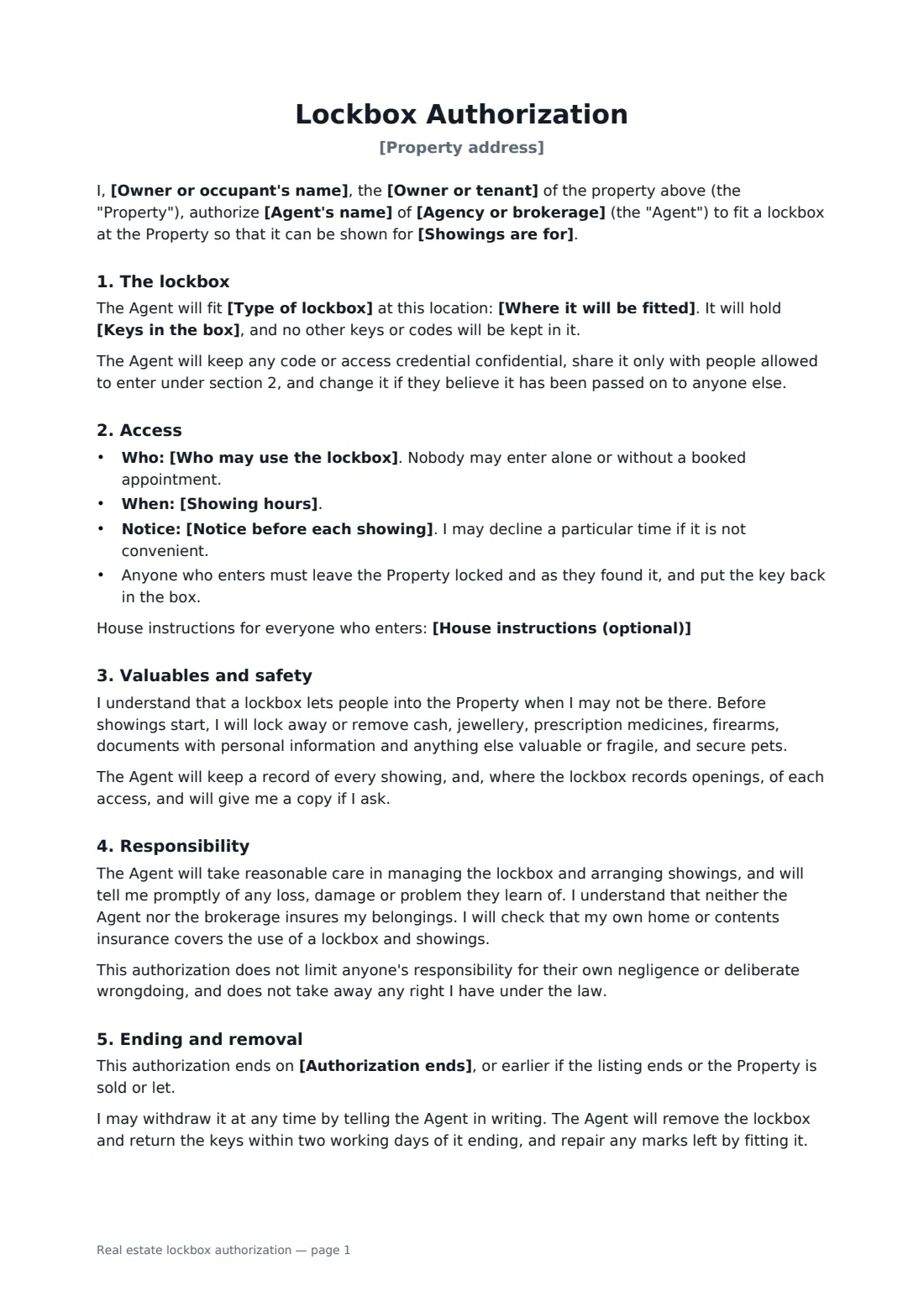
This authorization names the owner or tenant, the agent and brokerage, the property and whether it's for sale or to let. It records the lockbox type and where it goes, which keys are inside, showing hours, notice, who may use it and any house instructions. It asks the occupant to lock away valuables, medicines and firearms, has the agent keep a showing log, notes that the agency doesn't insure belongings, and covers withdrawal, removal of the box and return of keys. A tenant version keeps the lease and any legal notice for entry in place.
- Best for
- Listing and letting agents, homeowners and tenants in occupation
- Signed by
- The owner or occupant, and the agent
- Sets
- Showing hours, notice, who may enter, and when the box comes off
- Length
- 2 pages
When to use a real estate lockbox authorization
- A seller who works all day and can't let buyers in
- Showing a tenant-occupied flat to buyers or new tenants
- Electronic lockboxes that log every opening
- A holiday home being sold while the owners live elsewhere
- Agreeing inspector and appraiser access as well as showings
What you fill in
14 blanks, then the name and email of each person who signs: owner or occupant, agent.
1 The parties
- Owner or occupant's name*
- Owner or tenant* owner · tenant in occupation
- Agent's name*
- Agency or brokerage*
2 The property
- Property address*
- Showings are for* the sale of the property · letting the property to a new tenant
3 The lockbox
- Type of lockbox* an electronic lockbox that records each opening · a combination key safe · a keyed lockbox
- Where it will be fitted*
- Keys in the box*
4 Access
- Showing hours*
- Notice before each showing*
- Who may use the lockbox* licensed agents with a booked showing, accompanying their clients · only the Agent and staff of the Agent's brokerage · licensed agents, inspectors and appraisers with a booked appointment
- House instructions (optional)
5 Ending
- Authorization ends
6 Who signs
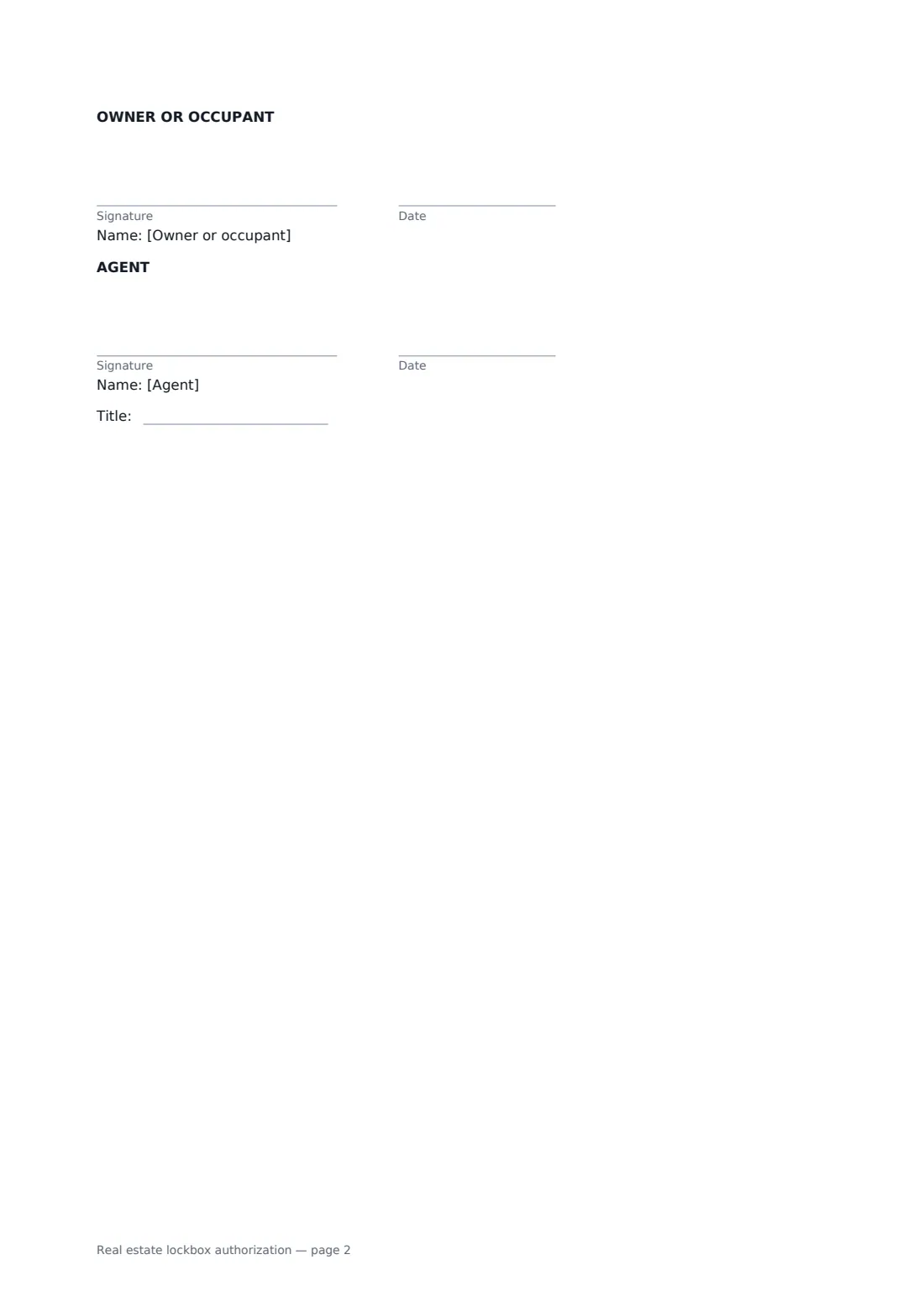
- Owner or occupant signature and date · The owner, or the tenant who lives there. If a tenant signs, the owner's permission for the sale or letting is usually needed too.
- Agent signature and date, job title · The listing or letting agent responsible for the lockbox.
What the real estate lockbox authorization covers
- The lockbox
- Access
- Valuables and safety
- Responsibility
- Ending and removal
Using the real estate lockbox authorization, step by step
1 Parties and property
Your brokerage fills in from your account. Add your name, the owner or tenant, whether they own the home or rent it, the address and whether you're selling or letting.
2 The lockbox
Pick the box type, say where it will hang, and list the keys inside. Codes are never written into the form.
3 Access rules
Set showing hours and notice, choose who may use the box, and add house instructions such as pets, shoes or locking the back door.
4 Send for signature
The owner or tenant signs on their phone, you countersign, and the signed authorization is stored with the listing file in FileIt.
Tips before you send it
- If a tenant lives there, get the owner's go-ahead too, and respect any notice the lease or local law requires.
- Hand over alarm codes separately rather than in the lockbox or this form.
- Change the code if it may have been shared, and after the listing ends.
- Check your brokerage's and MLS's own lockbox rules, which may add requirements.
Sign it online in minutes
- Fill in the blanks. Names, dates and amounts go straight into the agreement — the preview shows exactly where.
- Name who signs. Tick “This is me” for your own part. FileIt builds the PDF with every signature, date box on the right line, and you can check or move anything before sending.
- Send it. Each signer gets a secure link and signs from any device — no account needed. The signed PDF, with an audit trail and a Certificate of Completion, is filed in your vault and emailed to everyone.
Real estate lockbox authorization: frequently asked questions
Can a tenant sign this?
Yes. Choose 'tenant in occupation'. The form then says it doesn't change the lease, the tenant's right to quiet enjoyment or any legal notice for entry. The owner usually needs to agree to the sale or letting separately.
Who is responsible if something goes missing?
The agent agrees to take reasonable care and report problems; the agency doesn't insure belongings, and the occupant checks their own insurance. Nobody's responsibility for their own negligence is limited.
Can the owner change their mind?
Yes. They can withdraw permission in writing at any time, and the box comes off within two working days.
Does the owner need a FileIt account?
No. They open the link, review and sign. FileIt adds an audit trail and Certificate of Completion to the signed PDF.