What is a security deposit return request letter?
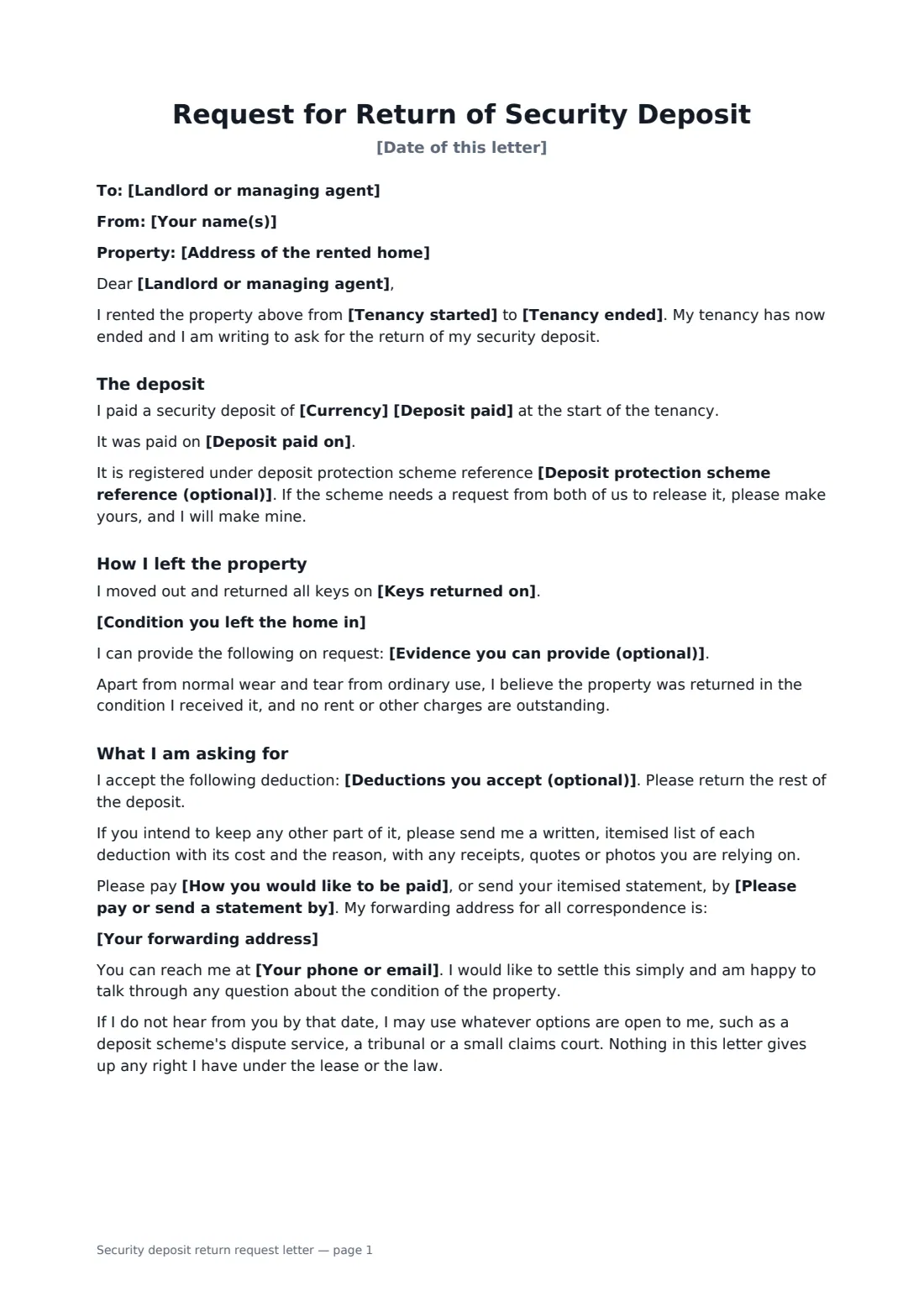
Most deposit disputes start with silence: the tenant leaves, weeks pass, and nobody has written anything down. A short, polite letter sent soon after move-out changes that. It gives the landlord your forwarding address, says what condition you left the home in, and sets a clear date for either the refund or an itemised list of deductions.
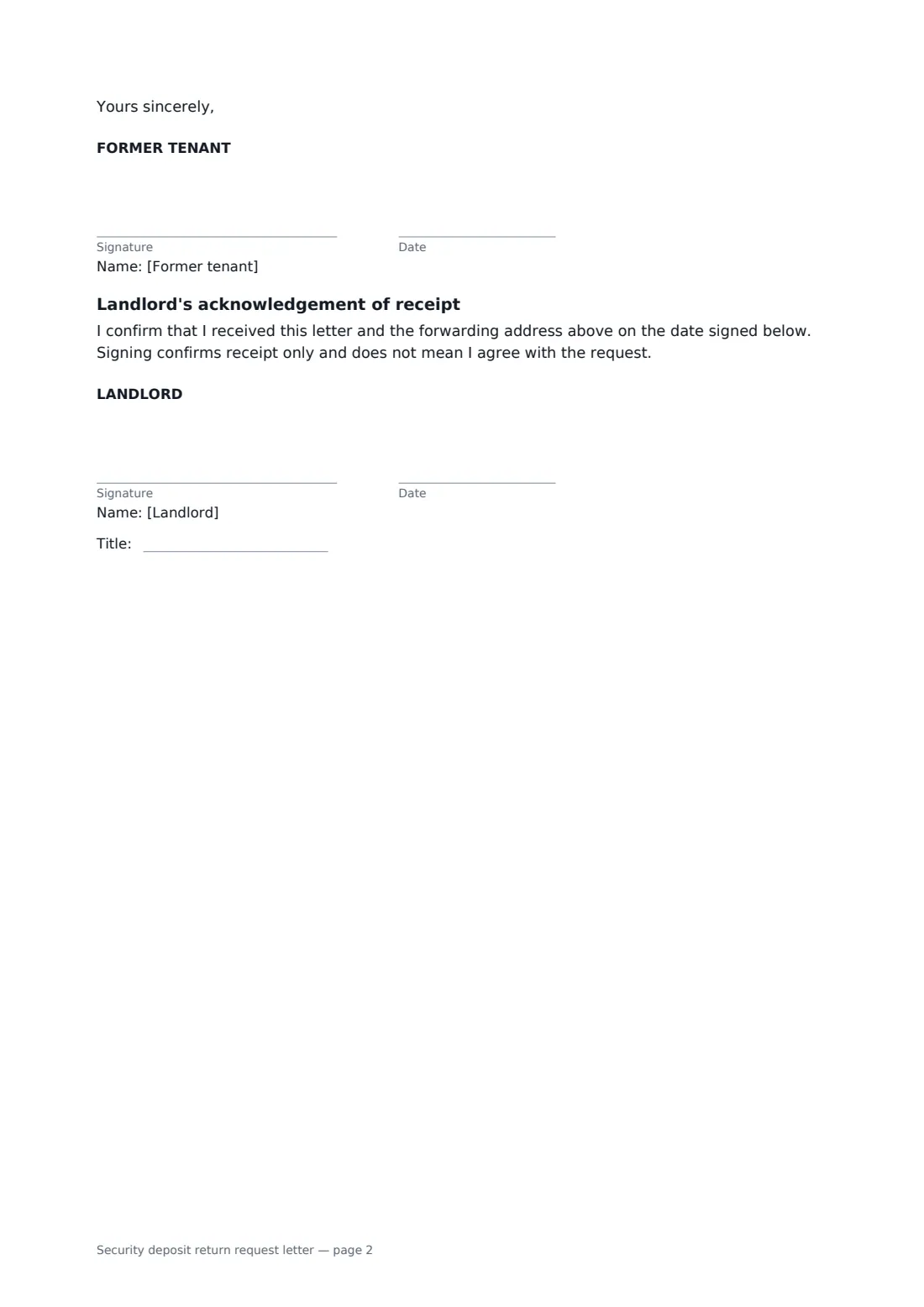
This letter sets out the tenancy dates, the deposit you paid and when, any deposit scheme reference, the day you returned the keys and how you left the property, with the evidence you can provide. You can ask for the full amount or accept a specific deduction, choose how you'd like to be paid, and give a deadline. It asks for an itemised statement if anything is kept back, and says you may use a scheme dispute service, tribunal or small claims court if you hear nothing. The landlord signs a separate line to confirm receipt only.
- Best for
- Tenants and former tenants chasing a deposit refund
- Signed by
- You, plus the landlord's acknowledgement of receipt
- Asks for
- The full deposit, or the balance after a deduction you accept
- Length
- 1 to 2 pages
When to use a security deposit return request letter
- A month after moving out and still no refund
- Giving the landlord your new address so the refund and any statement reach you
- Accepting a small deduction for a lost key while asking for the rest
- Room renters and sharers asking a live-in landlord for their deposit
- Putting a request on record before using a deposit scheme's dispute service
What you fill in
18 blanks, then the name and email of each person who signs: former tenant, landlord.
1 The letter
- Date of this letter*
- Your name(s)*
- Landlord or managing agent*
2 The tenancy
- Address of the rented home*
- Tenancy started*
- Tenancy ended*
- Keys returned on
3 The deposit
- Currency*
- Deposit paid*
- Deposit paid on
- Deposit protection scheme reference (optional)
4 Move-out
- Condition you left the home in*
- Evidence you can provide (optional)
- Deductions you accept (optional)
5 Payment
- Your forwarding address*
- How you would like to be paid*
- Please pay or send a statement by*
- Your phone or email*
6 Who signs
- Former tenant signature and date · The tenant asking for the deposit. If several tenants were on the lease, add the others as signers in the editor.
- Landlord signature and date, job title · The landlord or managing agent. They sign only to confirm they received the letter.
What the security deposit return request letter covers
- The deposit
- How I left the property
- What I am asking for
- Landlord's acknowledgement of receipt
Using the security deposit return request letter, step by step
1 The tenancy
Your name fills in from your account. Add the landlord or agent, the property address, and when the tenancy started and ended. The date you handed back the keys matters, because deposit deadlines often run from it.
2 The deposit and the move-out
Enter the amount, when you paid it and any scheme reference. Describe the state you left the home in, plainly and specifically, and list your photos or receipts.
3 What you want
Leave deductions empty to ask for the full amount, or name one you accept. Add your forwarding address, how you'd like to be paid and the date you expect an answer by.
4 Sign and send
Sign the letter, then send it to your landlord through FileIt. Their signature on the acknowledgement line confirms when they received it, and the signed copy is kept in your vault with your lease.
Tips before you send it
- Look up the deposit return deadline where you live before choosing your date. Many places set one in law.
- Keep the tone factual. A calm letter with dates and photos is far more persuasive than an angry one.
- Attach or offer your move-in checklist and move-out photos. They're your best evidence.
- If your deposit was in a protection scheme, the scheme's own process for releasing it applies alongside this letter.
Sign it online in minutes
- Fill in the blanks. Names, dates and amounts go straight into the agreement — the preview shows exactly where.
- Name who signs. Tick “This is me” for your own part. FileIt builds the PDF with every signature, date box on the right line, and you can check or move anything before sending.
- Send it. Each signer gets a secure link and signs from any device — no account needed. The signed PDF, with an audit trail and a Certificate of Completion, is filed in your vault and emailed to everyone.
Security deposit return request letter: frequently asked questions
Does the landlord have to sign?
No. Their signature only confirms they received the letter, and the wording says it doesn't mean they agree. If they don't sign, the FileIt audit trail still shows when the letter was sent and opened.
How long does a landlord have to return a deposit?
It depends on where the property is. Many places set a deadline in law, often counted from the end of the tenancy. Check your local rules and set your date no earlier than that.
Can I accept some deductions and not others?
Yes. Name the deduction you accept and the letter asks for the rest. It also asks for an itemised list of anything else the landlord wants to keep.
What if the landlord ignores the letter?
The letter says you may use a deposit scheme's dispute service, a tribunal or a small claims court, depending on what is open to you locally. It isn't legal advice on which to choose.
Is an emailed, e-signed letter good enough?
For most purposes a signed electronic letter is accepted as a written request. If your lease says notices must be posted to a particular address, send a printed copy there as well.