What is a child behavior contract?
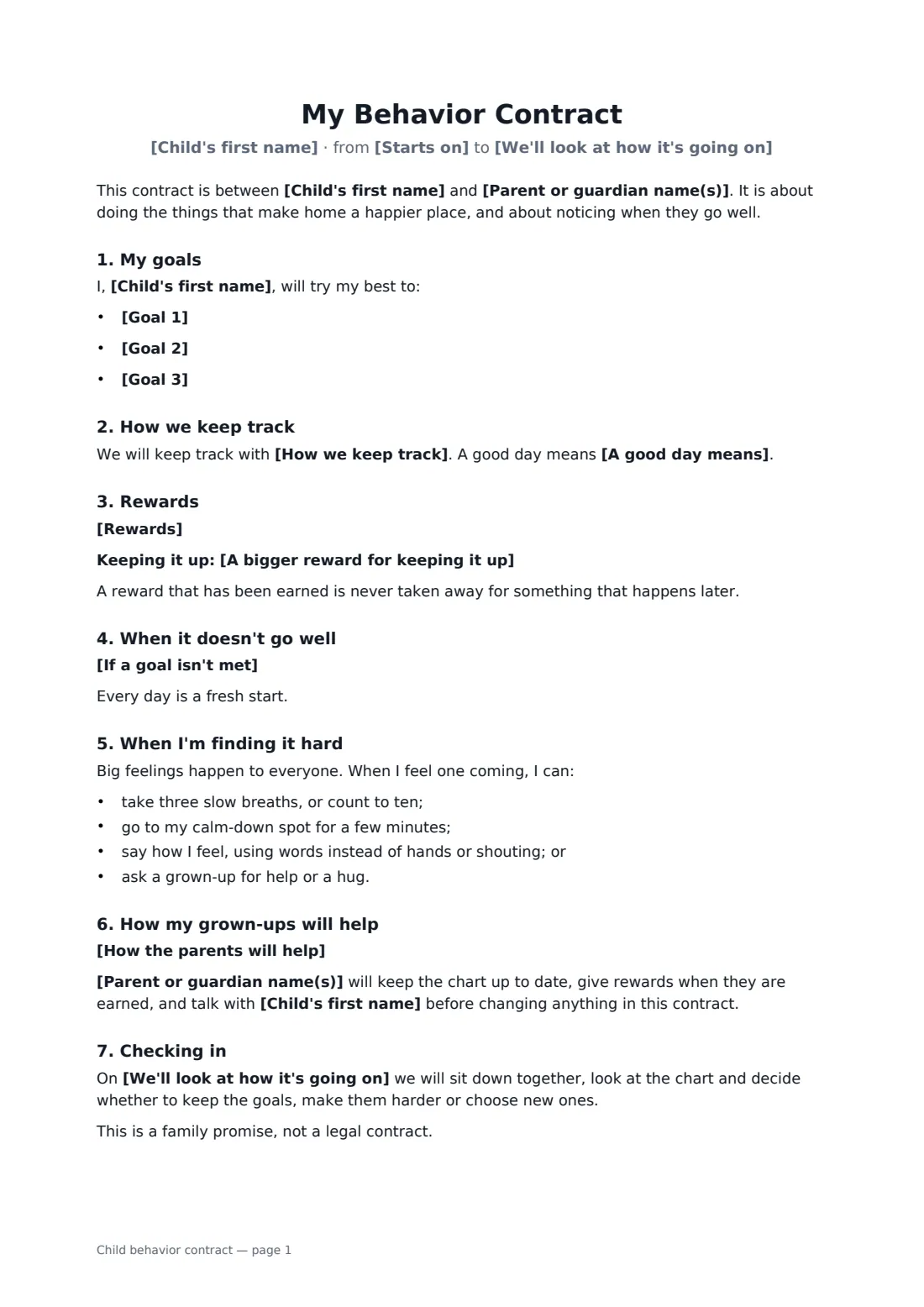
A behavior contract turns "be good" into something a child can actually do. Instead of a long list of things to stop, you agree a few clear goals, phrased as what to do, such as using kind words with a sibling or turning off the tablet the first time you ask. You track them every day and celebrate the good days. Children respond to that kind of clarity, and parents get a calmer way to talk about behavior than shouting.
This template is written in the child's voice, so they can read it and own it. It covers up to three goals, how you keep track (a sticker chart, points, marbles in a jar or a bedtime chat), what counts as a good day, small rewards and a bigger one for keeping it up, what happens when a goal isn't met, simple ways to cope with big feelings, how the parents will help, and a review date when you decide together what comes next. It suits children from about 4 to 12.
- Best for
- Children aged about 4 to 12
- Signed by
- A parent or guardian and the child
- Goals
- One to three, phrased positively
- Length
- About 2 pages
When to use a child behavior contract
- Bedtime or morning routines that end in a battle every day
- Sibling fighting, hitting or unkind words
- Screen time that never ends when it's supposed to
- A new school year, a new baby or a move that has unsettled a child
- Following up on a behavior plan suggested by a teacher or counsellor
What you fill in
13 blanks, then the name and email of each person who signs: parent, child.
1 Who it's for
- Parent or guardian name(s)*
- Child's first name*
- Starts on*
- We'll look at how it's going on*
2 The goals
- Goal 1*
- Goal 2
- Goal 3
3 Tracking and rewards
- How we keep track* a sticker chart on the fridge · a points chart we fill in together · a quick talk at bedtime about how the day went · marbles in a jar
- A good day means*
- Rewards*
- A bigger reward for keeping it up
4 Consequences
- If a goal isn't met*
- How the parents will help
5 Who signs
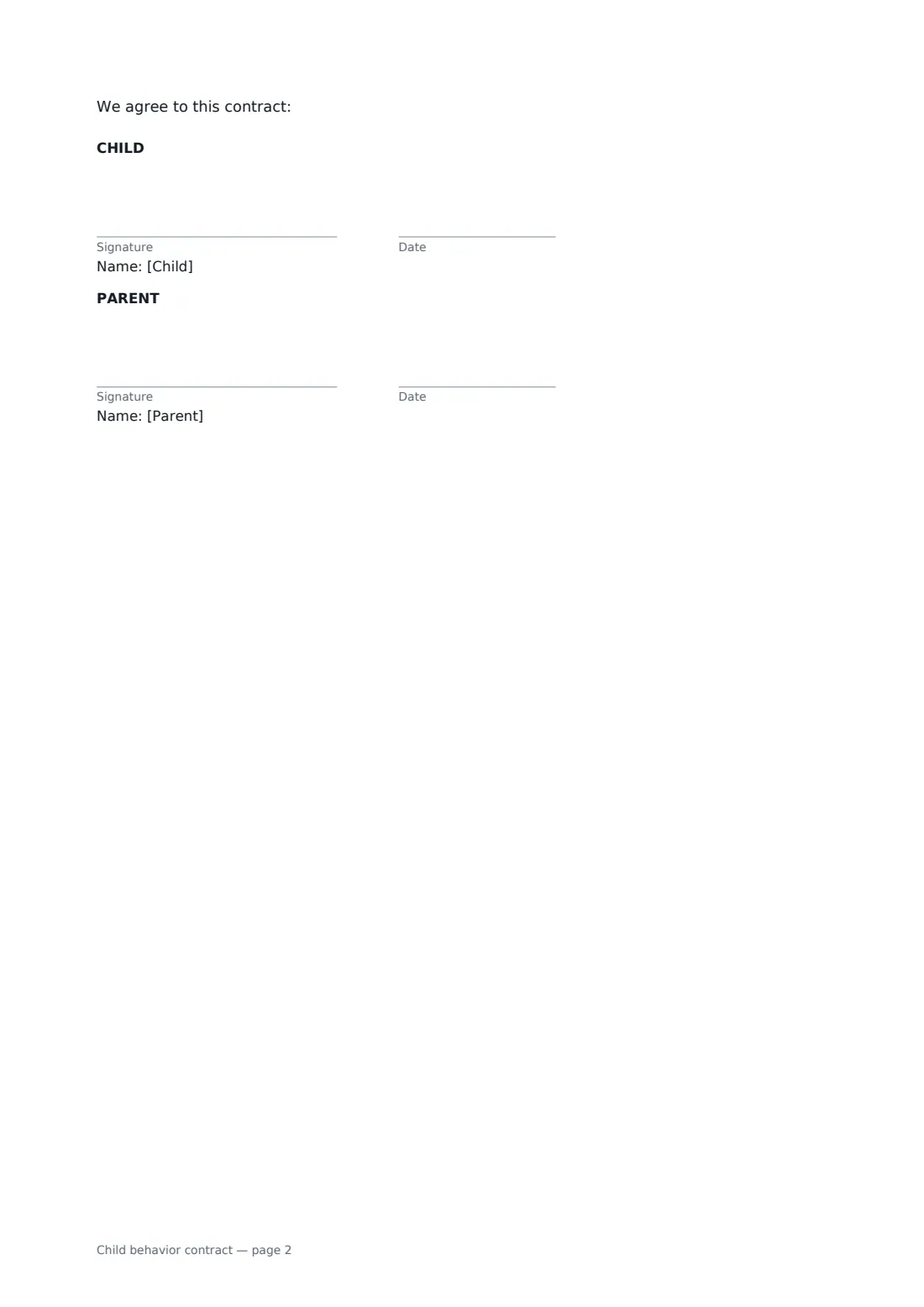
- Parent signature and date · The parent or guardian who will track progress and give the rewards.
- Child signature and date · Your child signs or writes their name. Use a parent's email if they don't have one and sign together on your device.
What the child behavior contract covers
- My goals
- How we keep track
- Rewards
- When it doesn't go well
- When I'm finding it hard
- How my grown-ups will help
- Checking in
Using the child behavior contract, step by step
1 Choose the goals together
Pick one to three behaviors that matter most right now and write each as something to do, not something to stop. Small and specific works best: "come down for breakfast by 7:45" rather than "be good in the morning".
2 Decide how you'll track it
Choose a sticker chart, a points chart, marbles in a jar or a quick talk at bedtime, and say what a good day means, for example every goal met with no more than one reminder.
3 Agree rewards and consequences
Write small rewards your child can earn within the week, plus an optional bigger reward for keeping it up. Then agree a calm, fair response when a goal isn't met. The contract says earned rewards are never taken away.
4 Sign and put it up
Set a review date two to four weeks away, tick "This is me" and add your child as a signer using your own email. Print the signed copy for the fridge, next to the chart. It is also saved in your FileIt vault.
Tips before you send it
- Start with one goal for younger children. Success with one makes the next easier.
- Catch the good moments and say them out loud. Praise does more than the stickers.
- Give rewards straight away. A treat promised for next month means little to a six-year-old.
- Keep consequences small and calm, and start each day fresh, as the contract says.
- If behavior worries you or doesn't improve, talk to your child's doctor, school or a family counsellor.
Sign it online in minutes
- Fill in the blanks. Names, dates and amounts go straight into the agreement — the preview shows exactly where.
- Name who signs. Tick “This is me” for your own part. FileIt builds the PDF with every signature, date box on the right line, and you can check or move anything before sending.
- Send it. Each signer gets a secure link and signs from any device — no account needed. The signed PDF, with an audit trail and a Certificate of Completion, is filed in your vault and emailed to everyone.
Child behavior contract: frequently asked questions
What age is a behavior contract for?
Roughly 4 to 12. Younger children do well with one goal and a sticker chart. Older children can manage three goals and points towards a bigger reward. For teenagers, the teen house rules contract fits better.
Should I use rewards at all?
Short-term rewards help a new habit get started. The contract pairs them with praise and a review, so you can fade the rewards once the behavior sticks.
Is it a legal contract?
No. It is a family promise, and the document says so. Signing it simply helps a child take it seriously.
Can I use this with a plan from school?
Yes. Copy the goals your child's teacher or counsellor suggested into the template so home and school are working on the same thing.
Is this template free?
Yes. It is free with the eSignature app in FileIt.