
What is IR833 Bright-line property sale information?
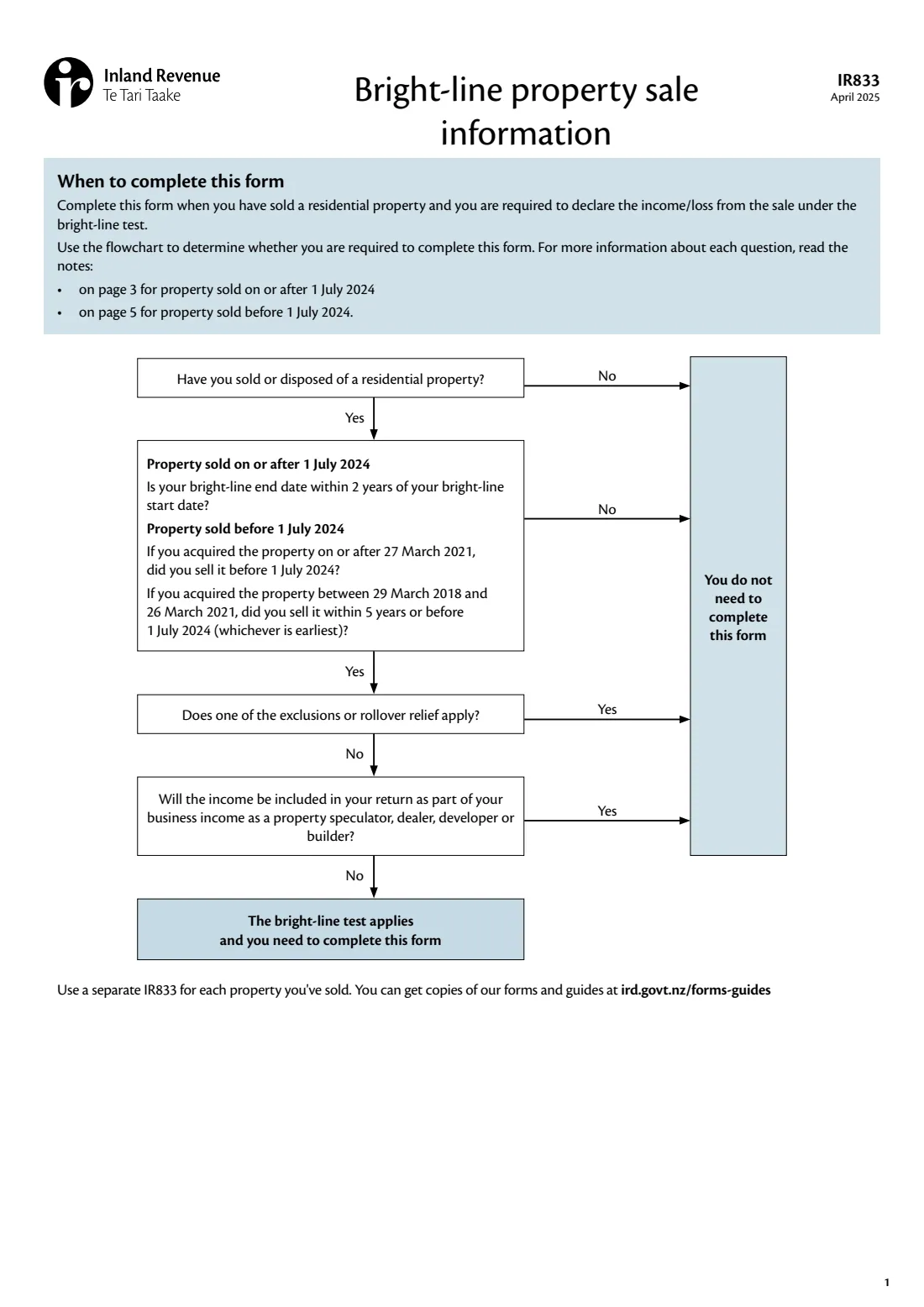
Under New Zealand's bright-line test, selling a residential property can be taxable even if you didn't buy it to resell. The April 2025 IR833, Bright-line property sale information, is where you declare such a sale. For property sold on or after 1 July 2024, the test applies if your bright-line end date is within 2 years of your bright-line start date; for property sold before 1 July 2024, the earlier rules for property acquired from 29 March 2018 apply. The form's flowchart helps you check whether you need it.
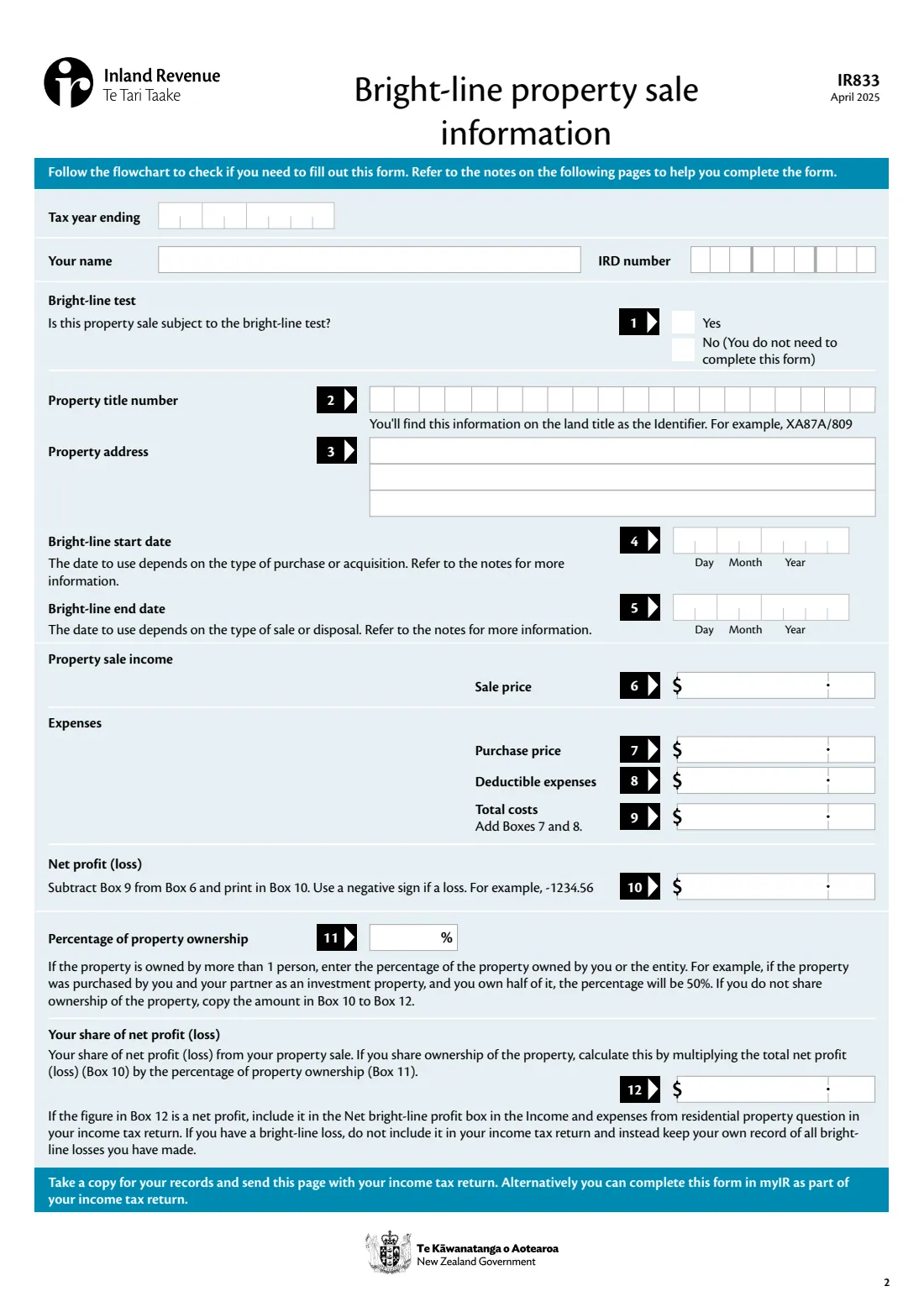
You give the property's title number and address, its bright-line start date (usually when the transfer was registered to you with LINZ) and end date (usually when you entered into the sale and purchase agreement), the sale price, purchase price and deductible expenses. The form works out total costs, net profit or loss, and your share if you co-own the property. The main home exclusion and rollover relief (for example for inherited property) can mean the test doesn't apply at all.
FileIt fills in Inland Revenue's own IR833 PDF from a guided form. It adds up total costs, works out net profit (loss) and your share by ownership percentage as the form describes, prints a negative sign for a loss, and places 8-digit IRD numbers from the second box. It saves the completed form to your vault. You send it with your return yourself; FileIt never submits anything.
- Who fills it
- Sellers of New Zealand residential property taxable under the bright-line test
- Test for sales on or after 1 July 2024
- Bright-line end date within 2 years of the start date
- One form per
- Property sold
- Sent with
- Your income tax return — or complete it in myIR as part of your return
- Guides
- Bright-line property tax (IR1227) and Tax and your property transactions (IR361)
- Edition
- IR833 April 2025
Who needs to fill out IR833 Bright-line property sale information?
- People who sold a residential property — including land with a house on it or that can be built on — within the bright-line period.
- Co-owners, who each declare their share of the net profit or loss.
- Trustees selling residential property held in a trust, where no exclusion applies.
When to use IR833 Bright-line property sale information
- When you file the income tax return for the year the property was sold, if the bright-line test applies.
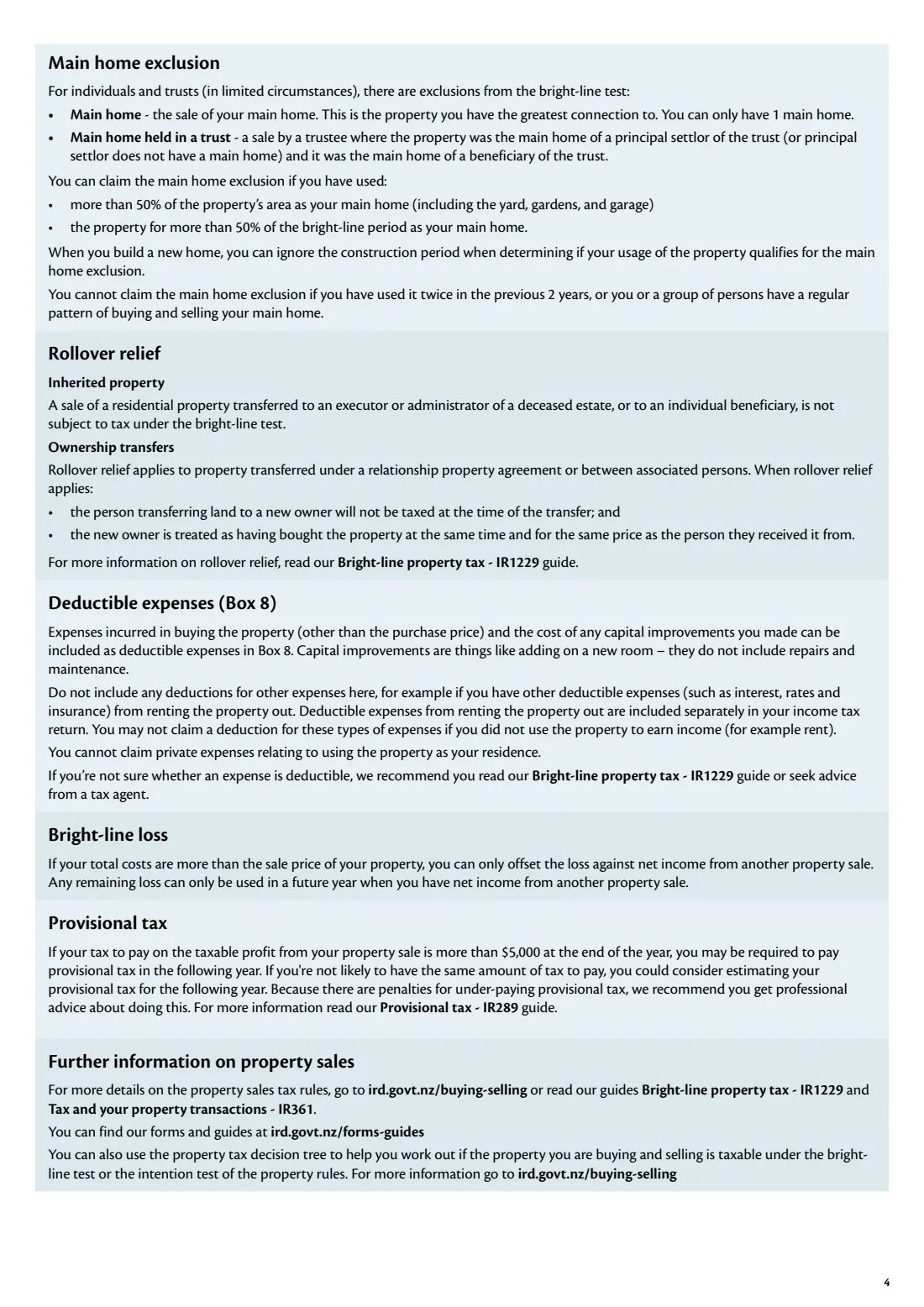
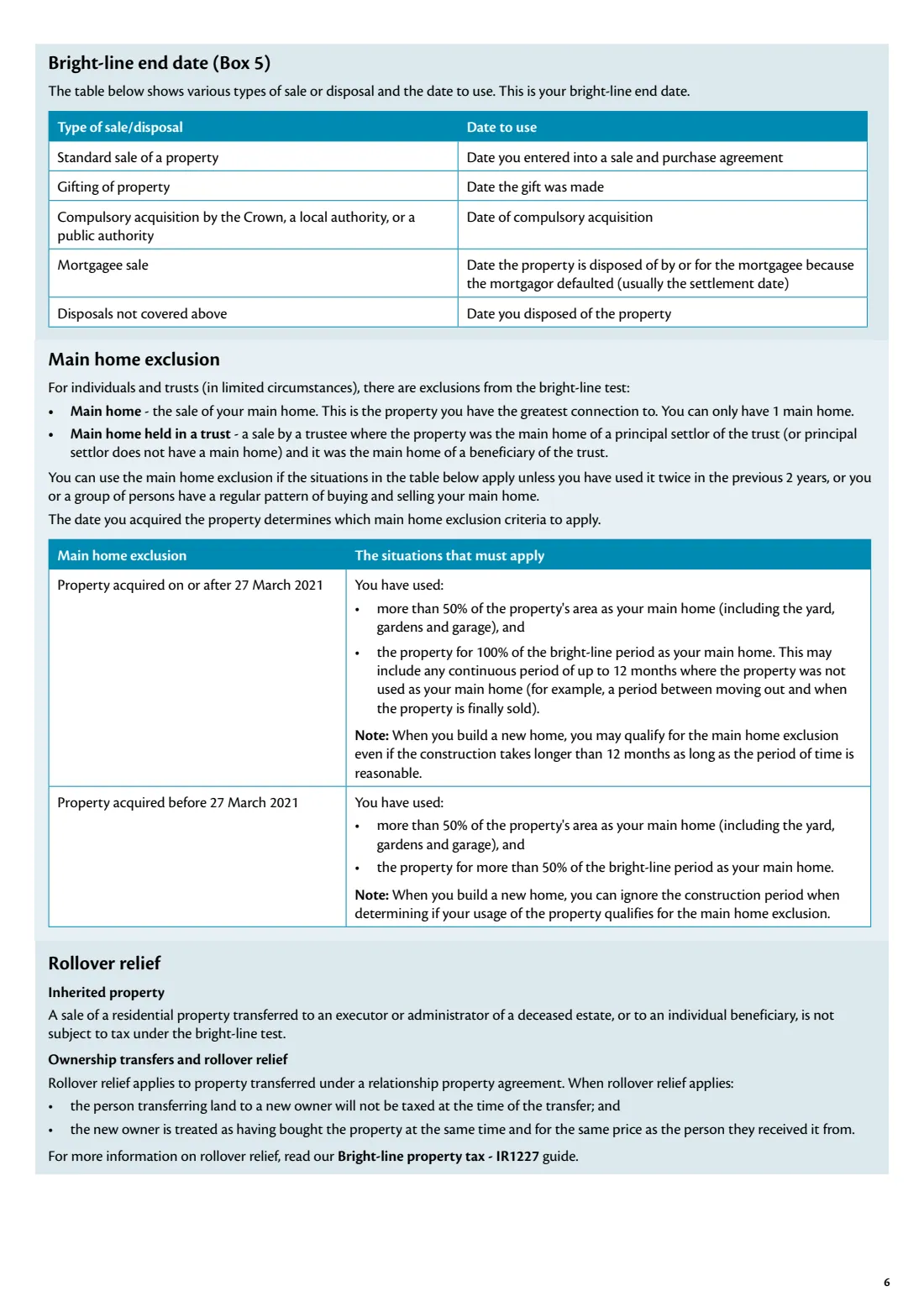
- Not if the main home exclusion or rollover relief applies, or the property was transferred to an executor, administrator or beneficiary of a deceased estate.
- Not if the sale is already included in your return as business income as a property speculator, dealer, developer or builder.
What you need before you start
- Your IRD number and the tax year the sale falls in.
- The property's title number (the Identifier on the land title, for example XA87A/809) and address.
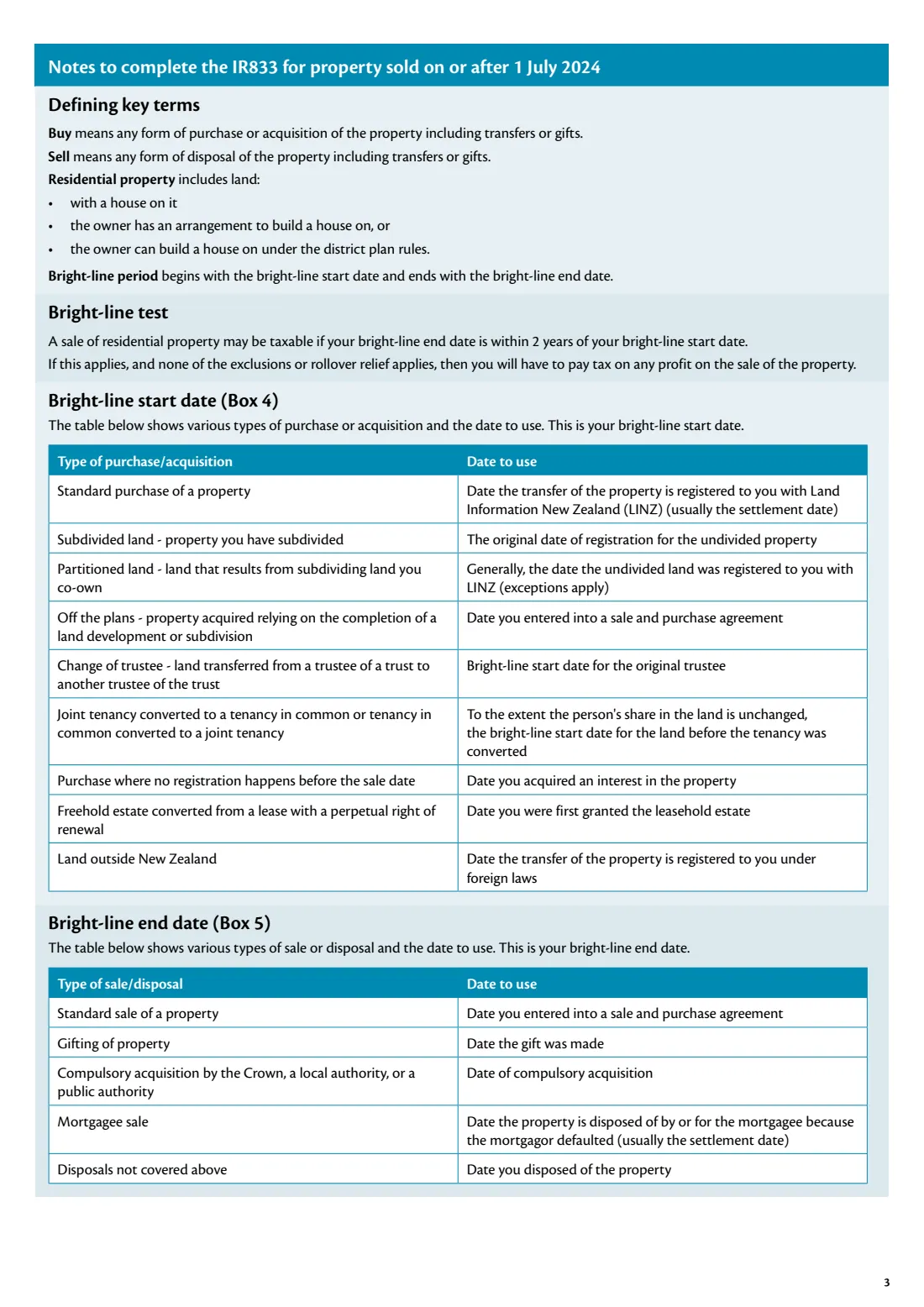
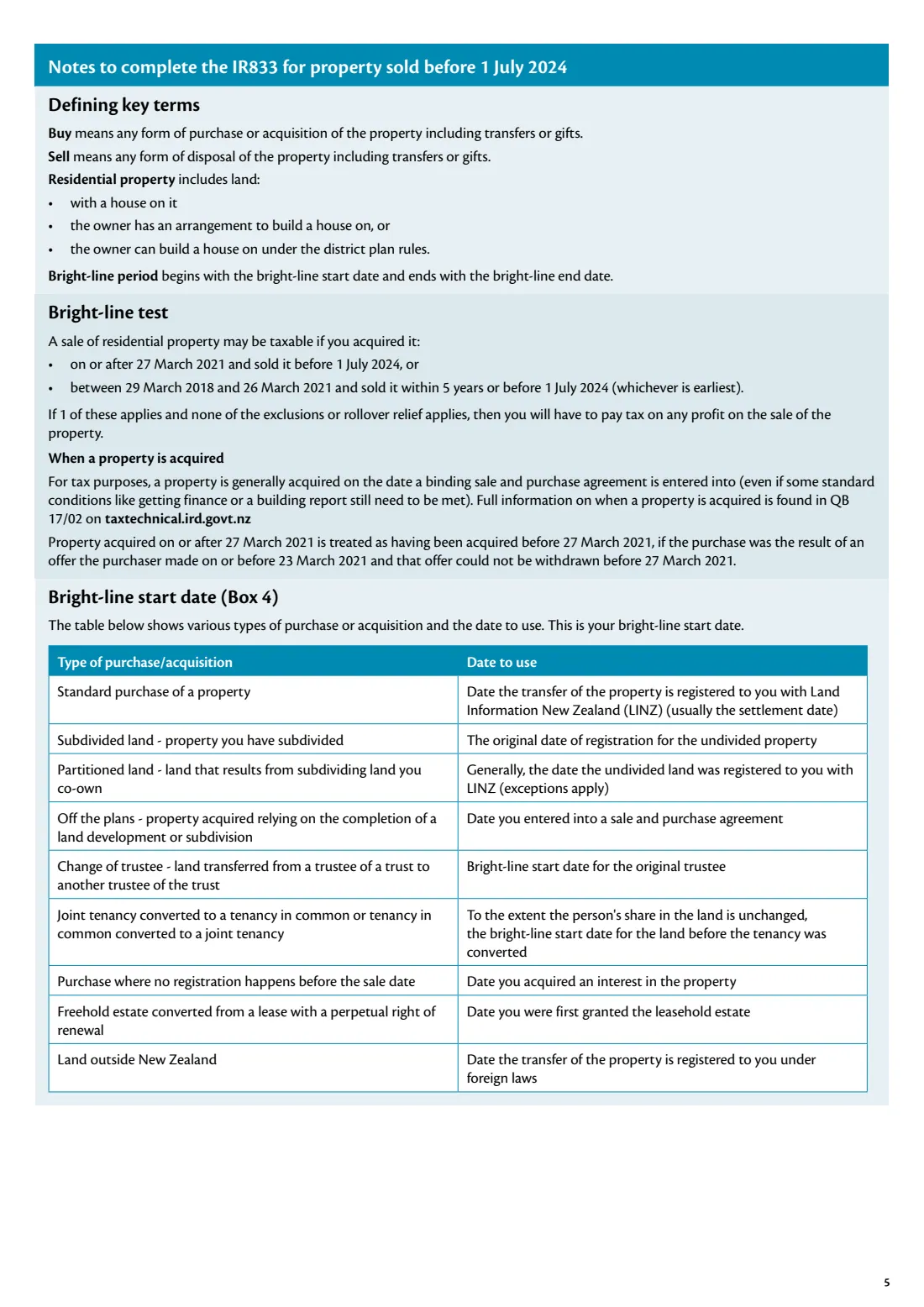
- Your bright-line start date and end date — the notes list which date to use for each type of purchase and sale.
- The sale price, the purchase price, and deductible expenses: buying costs (other than the purchase price) and capital improvements.
- Your percentage of ownership, if you co-own the property.
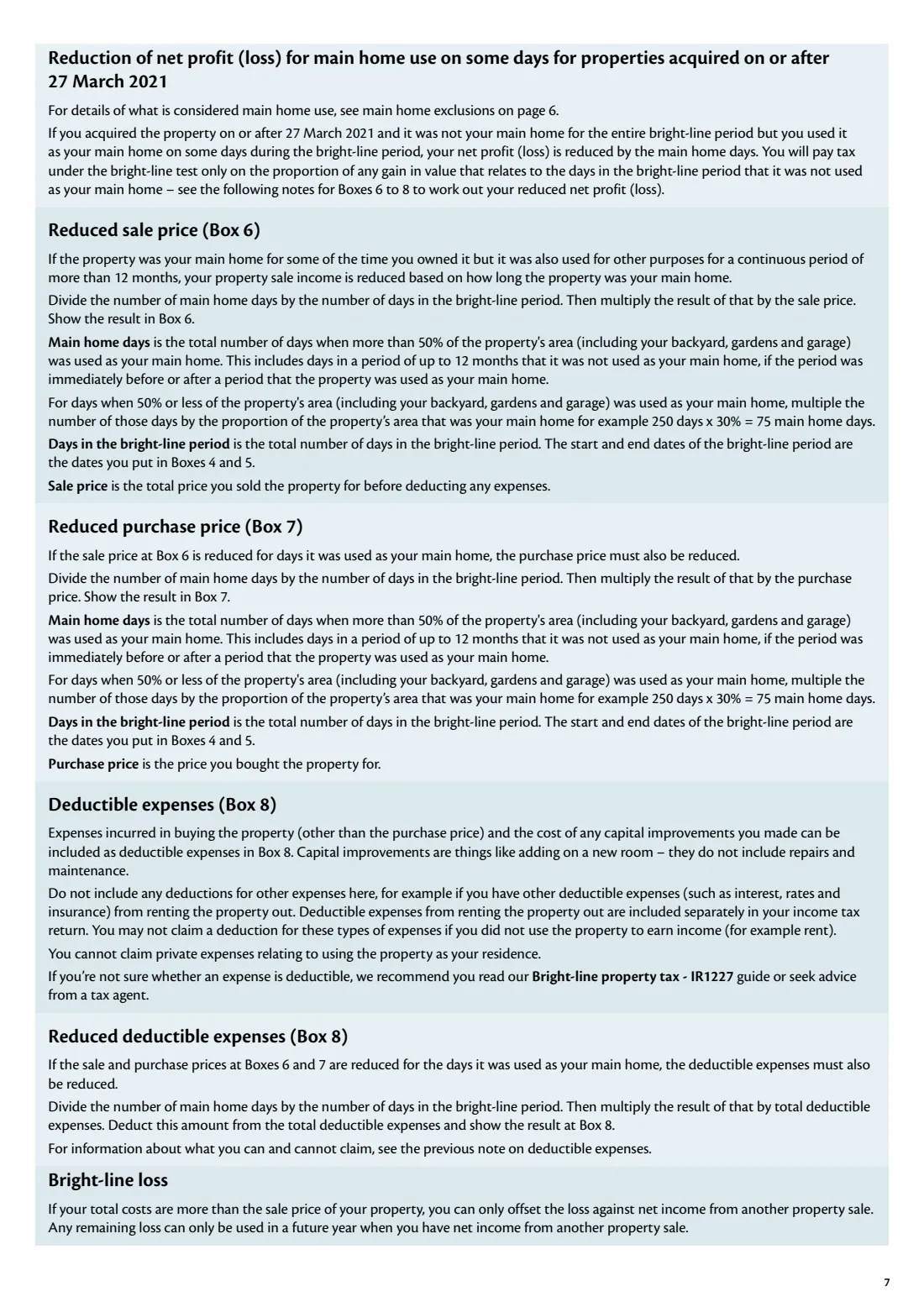
- If the property was your main home for part of the bright-line period, the main home days, to reduce the sale and purchase prices as the notes explain.
What’s on IR833 Bright-line property sale information
The 2025 edition has 8 pages. FileIt asks for it in 3 parts:
- Tax year and your detailsTaxpayer
- The property (questions 1–5)Taxpayer
- Property sale income and expenses (questions 6–12)Taxpayer
How to fill out IR833 Bright-line property sale information, step by step
1 Tax year and your details
The tax year ending date, your name and IRD number.
2 Questions 1 to 5: the property
Confirm the sale is subject to the bright-line test, then give the property's title number and address, and the bright-line start and end dates.
3 Questions 6 to 9: income and expenses
The sale price, purchase price and deductible expenses. Total costs (Box 9) is the purchase price plus deductible expenses.
4 Questions 10 to 12: profit and your share
Net profit (loss) is the sale price less total costs, with a negative sign for a loss. If you co-own the property, enter your percentage of ownership; your share is Box 10 multiplied by that percentage, otherwise Box 12 is the same as Box 10.
Common mistakes to avoid
- Including repairs and maintenance, or interest, rates and insurance, as deductible expenses — Box 8 is only buying costs and capital improvements.
- Using the settlement date as the end date — for a standard sale it's the date you entered into the sale and purchase agreement.
- Using the agreement date as the start date for a standard purchase — it's usually the date the transfer was registered to you with LINZ.
- Putting a bright-line loss in your return — the form says to keep your own record of it instead.
- Using one form for several properties — use a separate IR833 for each property sold.
After you fill it out
If Box 12 is a net profit, include it in the Net bright-line profit box in the 'Income and expenses from residential property' question of your income tax return.
Send the form page with your income tax return and keep a copy for your records.
If you have a loss, keep your own record — it can only be offset against net income from another property sale. FileIt keeps the completed PDF in your vault.
Fill out IR833 Bright-line property sale information online with FileIt
- Pick the person. Choose someone from People and FileIt fills in their name, date of birth, address and other details it already knows.
- Answer plain-language questions. One part of the form at a time, with the official help text beside each question — 19 fields in all. Your answers save as you go.
- Check the live preview. Watch your answers land on the real Inland Revenue (Te Tari Taake) form, and let FileIt do any worksheet arithmetic.
- Generate the official PDF. FileIt prints your answers into the agency’s own PDF and files it in that person’s folder in your vault.
FileIt fills the form — it never files or submits anything for you. Deliver the finished form to whoever asked for it, the way the form’s instructions say.
Start IR833 Bright-line property sale information now — it’s freeIR833 Bright-line property sale information: frequently asked questions
What is the bright-line test in New Zealand?
A rule that taxes the profit from selling residential property within a set period. For property sold on or after 1 July 2024, the IR833 says the sale may be taxable if your bright-line end date is within 2 years of your bright-line start date.
Do I pay bright-line tax on my main home?
Generally not. The form explains the main home exclusion — for sales on or after 1 July 2024, where you used more than 50% of the property's area as your main home for more than 50% of the bright-line period — with limits if you've used it twice in the previous 2 years or have a regular pattern of buying and selling.
What counts as a deductible expense?
Expenses of buying the property (other than the purchase price) and the cost of capital improvements, like adding a new room. Repairs and maintenance, private expenses, and rental expenses such as interest, rates and insurance don't go in Box 8.
What if I made a loss?
Show it in Box 10 with a negative sign. The form says not to include a bright-line loss in your return; it can only be offset against net income from another property sale, now or in a future year.
Can I fill in the IR833 online?
Yes. FileIt guides you through the questions, does the form's arithmetic, and prints your answers into Inland Revenue's official PDF. You can also complete it in myIR as part of your return.
Official sources
- Blank form (PDF), published by Inland Revenue (Te Tari Taake): https://www.ird.govt.nz/-/media/project/ir/home/documents/forms-and-guides/ir800---ir899/ir833/ir833-2025.pdf
- Official instructions and guidance: https://www.ird.govt.nz/property/buying-and-selling-property
- Edition shown on this page: IR833 April 2025 (checked 2026-10-01).
FileIt is not affiliated with or endorsed by Inland Revenue (Te Tari Taake) or any government. This page explains the form in general terms and is not legal, tax or immigration advice. Always read the official instructions, and check that you are using the edition the recipient accepts. Page last reviewed 2026-10-01.